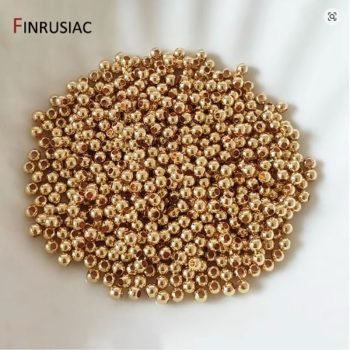

14K 18K Gold Plated Brass Spacer Beads Jewelry Guide
Small spacer beads can completely change the balance, rhythm, and finish of a handmade jewelry design. The 30–100PCS 14K/18K Gold Plated Brass Spacer Beads are designed for bracelet, necklace, anklet, earring, charm, and other DIY jewelry projects where makers want a polished gold-tone separator between gemstones, pearls, glass beads, charms, or larger focal components. Their compact round format makes them useful for both minimalist jewelry and more layered designs, while the brass core provides a practical base for the gold-plated surface.
Check Current Gold Spacer Bead Options
For U.S. shoppers searching for gold spacer beads for jewelry making, 14K gold plated brass beads, 18K gold plated spacer beads, round jewelry spacer beads, DIY bracelet making supplies, or small gold beads for necklaces, this product family covers a practical range of diameters from about 2 mm through 6 mm. Matching listings for the same product format show pack quantities that commonly vary by size: 2 mm, 2.5 mm, and 3 mm options are often offered in 100-piece packs, 4 mm in 50-piece packs, and 5 mm or 6 mm in 30-piece packs.
The important distinction is that these are gold-plated brass beads, not solid 14K or 18K gold beads. The 14K or 18K description refers to the color or gold-plated finish option applied over the brass base. That gives jewelry makers the visual effect of warm gold while keeping the findings much more affordable than solid-gold components.
Because bead-hole specifications can differ slightly among visually identical supplier versions, buyers should verify the exact hole diameter for the selected bead size before purchasing cord, elastic, wire, chain, or multiple-strand stringing material. That single detail can determine whether a bead threads easily or becomes unusable in a planned project.

What Are Gold Plated Brass Spacer Beads?
Spacer beads are small jewelry-making components used to create separation between larger decorative elements. Instead of allowing gemstones, pearls, crystals, wood beads, or charms to sit directly against one another, a spacer bead can introduce a narrow gold accent and improve the visual pacing of the finished piece.
Brass Provides the Base Structure
Brass is commonly used in jewelry findings because it is workable, reasonably strong, and capable of taking decorative finishes. In this product, the brass forms the core while the outer surface receives a gold-colored plating treatment.
Gold Plating Provides the Finish
The gold-plated exterior gives the beads their bright yellow-gold appearance. The exact tone can vary between a 14K-style and an 18K-style finish, with 18K tones often appearing somewhat richer or warmer.
Spacer Beads Are Functional and Decorative
A spacer is not merely filler. Its diameter, color, shine, and placement can control how dense or airy a design appears. Even a 2 mm bead can change the visual transition between two larger stones.
Key Product Options and Sizes
| Option | Typical Matching Pack Quantity | Common Use |
|---|---|---|
| 2 mm | 100 pieces | Fine bracelets, delicate necklaces, tiny separators |
| 2.5 mm | 100 pieces | Delicate gemstone strands and layering |
| 3 mm | 100 pieces | General bracelet and necklace spacing |
| 4 mm | 50 pieces | Medium beads, statement bracelets, larger strands |
| 5 mm | 30 pieces | Bold designs and larger gemstone combinations |
| 6 mm | 30 pieces | Chunkier bracelets, necklaces, and focal spacing |
These quantities reflect matching listings for the same 2–6 mm, 30–100-piece product format. Always confirm the current quantity shown for the exact selection before checkout because marketplace variants can change.
Why Smaller Beads Usually Come in Larger Packs
Small 2–3 mm spacers are often used frequently throughout a strand, so larger piece counts are practical. Larger 5–6 mm beads take up more visual and physical space, meaning a single project may require fewer pieces.
Hole Size Should Be Checked Separately
Bead diameter does not tell you the hole diameter. A 4 mm bead could have a relatively narrow or generous opening depending on the supplier. If you plan to use thick stretch cord, leather, waxed cord, multiple strands, or heavy beading wire, verify the hole before ordering.

14K vs 18K Gold Plated Color
The product family is marketed with 14K and 18K gold-plated choices. These terms refer to the plated finish rather than the brass core itself.
14K-Style Gold Tone
A 14K-style finish is often slightly lighter or more restrained in color. It can coordinate well with many commercially available 14K gold jewelry pieces, although exact shade matching is never guaranteed across manufacturers.
18K-Style Gold Tone
An 18K-style finish is often richer and deeper in yellow. This can create a stronger luxury look in jewelry that uses dark gemstones, pearls, black beads, green stones, or saturated colors.
Do Not Expect Perfect Color Matching
Plating batches, photography, lighting, monitor settings, and the base material can all influence perceived color. If exact matching is essential for a custom order, test a small batch before producing an entire jewelry collection.
Gold Plated vs Gold Filled vs Solid Gold Beads
| Material Type | Basic Construction | Typical Cost | Best For |
|---|---|---|---|
| Gold Plated Brass | Thin gold-colored or gold layer over brass | Lower | Fashion jewelry, DIY projects, affordable designs |
| Gold Filled | Thicker mechanically bonded gold layer over base metal | Medium | Higher-wear handmade jewelry |
| Solid Gold | Gold alloy throughout | High | Fine jewelry and heirloom pieces |
Why Choose Gold Plated Brass?
Gold-plated brass is useful when appearance and design flexibility matter more than precious-metal value. A maker can use dozens of spacers without turning a bracelet into an expensive fine-jewelry project.
When Gold Filled May Be Better
Jewelry intended for frequent daily wear, higher retail pricing, or customers who expect greater plating longevity may justify gold-filled findings instead.
When Solid Gold Makes Sense
Solid gold is appropriate for fine jewelry where material value, long-term wear, repairability, and precious-metal content are central to the product.
Why Spacer Beads Improve Bracelet Design
Bracelets are one of the most common applications for small round spacer beads because the components remain visible around the entire wrist.
They Separate Gemstones
Two large gemstone beads placed directly together can visually blend into one block of color. A small gold spacer creates definition between them.
They Add Repeating Metallic Accents
A designer can place one gold spacer after every gemstone, every three beads, or only around a focal section.
They Can Make a Simple Strand Look More Finished
Even inexpensive glass or stone beads can look more deliberate when spacing and color repetition are carefully planned.
Using Gold Spacer Beads in Stretch Bracelets
Stretch bracelets are popular because they require no clasp and can be relatively beginner-friendly.
Check the Elastic Diameter
The elastic must pass through the smallest bead hole in the design. The spacer beads often become the limiting component because they are smaller than the gemstones.
Use Strong Jewelry Elastic
Choose elastic designed for beading rather than household thread or sewing elastic.
Test Before Making Multiple Bracelets
Thread a few beads onto the chosen elastic and stretch the sample several times. This confirms that the hole edges do not damage the cord and that the finished bracelet flexes comfortably.
Using Spacer Beads With Gemstone Bracelets
Black Onyx and Gold
Black beads create a dramatic contrast with bright gold spacers and work well in both women’s and men’s-inspired bracelet designs.
Green Gemstones and Gold
Malachite-style, jade, aventurine, or other green stones pair naturally with warm gold tones.
White and Cream Stones
Howlite, moonstone-style beads, quartz, and pale neutral stones can create a softer luxury appearance.
Blue Stones and Gold
Lapis, sodalite, turquoise-style beads, and navy glass create a classic blue-and-gold combination that is visually strong without needing many different materials.

Using Gold Spacer Beads in Necklaces
Necklaces give makers more room to create repeating sequences and graduated designs.
Create a Repeating Pattern
For example, use three gemstone beads followed by one small gold spacer, then repeat the sequence around the necklace.
Frame a Focal Pendant
Larger 4–6 mm gold spacers can sit on either side of a central pendant or focal bead to create a deliberate transition.
Use Tiny Spacers in Delicate Strands
Two-millimeter beads can introduce metallic detail without overwhelming small pearls, seed beads, or faceted stones.
Using the Beads in Earrings
Place a Spacer Above a Drop Bead
A small gold bead can create a neat transition between an ear wire and a gemstone drop.
Use on Head Pins
Round spacers can sit above or below focal beads on simple dangle earrings.
Check Head-Pin Compatibility
The hole must be large enough to slide over the wire but small enough that the bead does not slip over the head or decorative stop.
Using Spacer Beads in Anklets
Anklets generally experience more movement and contact than necklaces, so construction strength matters.
Use Flexible Beading Wire or Strong Cord
Select stringing material designed for repeated movement.
Keep the Design Lightweight
Smaller gold spacers can add shine without making the anklet bulky.
Consider Wear Exposure
Anklets may contact shoes, socks, sand, water, and skin products more often than necklaces. Gold-plated surfaces can wear faster under those conditions.
Using Gold Beads in Pearl Jewelry
Gold and pearls create one of the most familiar combinations in classic jewelry design.
Separate Every Pearl
Small spacers can turn a traditional pearl strand into a modern mixed-metal design.
Use Gold Only Near the Center
A few gold beads near the focal area create a more subtle update.
Match Scale Carefully
Tiny 2–3 mm spacers are often enough beside medium pearls. Larger spacers may visually compete with the pearl rather than simply separate it.
Using Spacer Beads With Polymer Clay
Polymer clay jewelry often uses bold color and playful shapes. Gold spacer beads can make handmade clay pieces feel more finished.
Use Between Clay Beads
A bright metallic separator breaks up large blocks of color.
Pair With Neutral Clay
White, cream, beige, terracotta, olive, and black clay colors can work especially well with warm gold.
Check Hole Alignment
Handmade clay beads can have inconsistent holes, so confirm that the same cord works through both the clay components and metal spacers.
Using Gold Spacers With Seed Beads
Seed-bead jewelry can include thousands of tiny components, so larger metal spacers can serve as visual markers.
Create Section Breaks
Use one 3–4 mm gold bead after a group of smaller seed beads to create repeated divisions.
Use as Focal Accents
A short cluster of gold beads can become a small metallic centerpiece within a colorful pattern.
Do Not Force Thick Thread Through Small Holes
Seed-bead designs sometimes use multiple thread passes. Confirm that the spacer hole can accommodate the total number of passes required by the stitch.
Choosing 2 mm Gold Spacer Beads
Two-millimeter beads are ideal when the metallic detail should remain subtle.
Best for Delicate Jewelry
They work well with fine chains, small pearls, seed beads, and minimalist gemstone bracelets.
Useful for Frequent Repetition
Because they occupy little space, many 2 mm beads can be used without significantly increasing the final length.
Check Stringing Material Carefully
The smaller the bead, the more likely its hole will limit cord thickness.
Choosing 2.5 mm Gold Spacer Beads
Two-and-a-half-millimeter beads provide slightly more visibility while still appearing refined.
A Good Transitional Size
They can bridge the visual gap between seed-bead-scale components and medium gemstone beads.
Useful for Layered Necklaces
Small gold accents can help multiple strands look coordinated without making every strand identical.
Choosing 3 mm Gold Spacer Beads
Three-millimeter beads are among the most versatile choices for general jewelry making.
Suitable for Bracelets
They are noticeable beside 6–10 mm gemstones without dominating the design.
Suitable for Necklaces
They can repeat throughout a strand or frame focal sections.
Good Beginner Size
Three-millimeter spacers are large enough to handle more easily than tiny findings while still working in delicate designs.
Choosing 4 mm Gold Spacer Beads
Four-millimeter beads begin to act as visible design components rather than purely subtle separators.
Great With 8–12 mm Gemstones
The size creates a balanced metallic accent between larger round stones.
Useful for Men’s-Inspired Bracelet Designs
Gold spacers between black, brown, green, or dark-blue beads can add contrast without looking overly delicate.
Check Finished Bracelet Length
Larger spacers add length quickly. Recalculate bead count before stringing the full design.

Choosing 5 mm Gold Spacer Beads
Five-millimeter beads create a much stronger gold presence.
Use as Statement Separators
They work well between large gemstone beads where tiny spacers might disappear visually.
Use as Mini Focal Beads
Several 5 mm gold beads grouped together can create a central metallic section.
Consider Weight and Balance
Larger solid-brass beads can add noticeable weight when used in quantity. Make sure the stringing material and clasp are appropriate.
Choosing 6 mm Gold Spacer Beads
Six-millimeter beads can function almost like primary beads rather than minor spacers.
Best for Bold Bracelets
They can be mixed with 8–12 mm stones to create an upscale, structured appearance.
Useful in Chunky Necklaces
Large gold beads can provide visual breaks between oversized focal materials.
Use Sparingly in Delicate Designs
A 6 mm spacer can overwhelm tiny pearls or seed beads unless the contrast is intentionally dramatic.
How to Calculate Bead Quantity for a Bracelet
Before cutting cord, estimate the total length contributed by each component.
Convert Millimeters to Inches When Needed
One inch equals 25.4 mm. A 7-inch bracelet therefore has a nominal circumference of about 177.8 mm before considering clasp style, bead thickness around the curve, and desired looseness.
Add the Width of Every Component
If a pattern uses ten 8 mm gemstones and ten 3 mm spacers, the theoretical straight-line bead length is 110 mm before adding other components.
Make a Test Layout
Real beads and wrist curvature can change the fit. Lay the full pattern on a bead board or ruler before final assembly.
Designing a 7-Inch Stretch Bracelet
A practical approach is to begin with the intended gemstone pattern and add gold spacers until the design reaches the required length.
Do Not Overstretch the Elastic
A bracelet should expand enough to pass over the hand but should not remain under extreme tension while worn.
Leave Room for the Knot
Some designs hide the elastic knot inside a larger bead hole or knot cover.
Measure the Wearer’s Wrist
Standard bracelet sizes are only starting points. A customized fit feels more professional.
Why Seamless-Looking Round Beads Are Popular
Smooth round spacer beads work with almost every jewelry style because they do not introduce a strong motif.
They Do Not Compete With Gemstones
The gold accent supports the focal materials rather than distracting from them.
They Reflect Light Cleanly
A polished round surface creates small points of shine as the jewelry moves.
Simple Shapes Are Easier to Reuse Across Collections
A maker can use the same spacer bead in bridal jewelry, minimalist bracelets, gemstone designs, boho pieces, and modern layered necklaces.
How Gold Plating Wears Over Time
Gold plating is a surface finish, so friction and chemical exposure can eventually reduce its appearance.
High-Contact Jewelry Wears Faster
Bracelets and rings usually experience more rubbing than earrings or pendants.
Skin Chemistry Can Affect Longevity
Perspiration, body oils, lotions, and acidity vary from person to person.
Plating Life Cannot Be Guaranteed by Color Alone
The terms 14K and 18K describe the gold finish style, not how long that finish will last. Plating thickness and use conditions are more important for durability.
How to Care for Gold Plated Brass Beads
Keep Them Dry
Remove finished jewelry before swimming, showering, bathing, or prolonged water exposure.
Avoid Perfume and Lotion Contact
Apply cosmetics and fragrances first, allow them to dry, and put jewelry on afterward.
Wipe After Wearing
A soft dry cloth can remove surface oils and moisture.
Store Separately
Keeping finished pieces in individual pouches reduces friction and helps protect the plated surface from harder jewelry.
Can Gold Plated Brass Tarnish?
Yes. Gold-plated brass can change appearance as the plating wears or as exposed base metal reacts with the environment.
The Brass Core Can Oxidize
If plating becomes thin or damaged, the brass beneath may darken or develop a different tone.
Moisture Speeds Surface Changes
Humidity, sweat, and water exposure can shorten the attractive life of plated jewelry.
Care Matters More Than Aggressive Cleaning
Harsh polishing can remove plating. Gentle prevention is usually better than trying to restore a worn plated layer with abrasive products.
How to Clean Finished Jewelry Made With These Beads
Use a Soft Dry Cloth First
This is the safest routine maintenance method.
Use Minimal Moisture When Necessary
If the jewelry needs deeper cleaning, use a mild method appropriate for every component in the design.
Avoid Silver Polishing Cloths on Gold Plating
Many polishing cloths are mildly abrasive or chemically treated. A product designed to polish solid metal may gradually remove a plated finish.

Are Gold Plated Brass Beads Hypoallergenic?
Do not assume they are hypoallergenic unless the specific listing provides verified material information about nickel, lead, cadmium, and other relevant metals.
Brass Is an Alloy
Brass is generally based on copper and zinc, but exact formulations and plating underlayers can vary.
Individual Skin Sensitivity Varies
Some wearers can use plated brass comfortably, while others may react to exposed base metal or specific alloy components.
Use Verified Findings for Sensitive Customers
If you sell jewelry to people with known metal sensitivities, source components with documented material and compliance information rather than relying on appearance or generic “premium” wording.
Important Safety Considerations
These beads are small craft components and should be handled accordingly.
Choking Hazard
Small beads can be dangerous if swallowed. Keep them away from babies and young children.
Keep Away From Pets
Dropped beads can be swallowed by cats, dogs, or other animals.
Store in Closed Containers
Compartment organizers with secure lids reduce spills and make different sizes easier to manage.
Organizing Multiple Bead Sizes
Label Every Compartment
Two-millimeter and 2.5-millimeter beads can look very similar when mixed.
Keep 14K and 18K Tones Separate
Even small color differences become obvious when the beads are combined in one design.
Record Supplier and Batch Information
Professional makers can save a label or order number with each batch so they know where to reorder matching components later.
Gold Spacer Beads for Small Jewelry Businesses
Spacer beads are particularly useful for Etsy-style shops, craft sellers, boutique jewelry makers, and custom gift businesses because one component can appear across many product lines.
Create Multiple Collections From the Same Finding
The same gold spacers can be used with birthstone colors, pearl collections, men’s bracelets, bridal jewelry, and personalized charm designs.
Bulk Packs Help Control Cost
A 30–100-piece pack makes it possible to produce several items while keeping per-piece material cost predictable.
Track Actual Bead Cost
Include shipping, packaging, damaged pieces, and unused leftovers when calculating product profit margins.
Using the Beads for Personalized Jewelry
Name Bracelets
Gold spacers can separate letter beads from color beads or birthstones.
Initial Necklaces
Small gold beads can frame alphabet charms or center sections.
Birthstone Bracelets
Use gold spacers between different gemstone colors representing family members.
Couples and Friendship Jewelry
Matching designs can use the same gold spacers while changing the main bead colors for each person.
Using the Beads for Bridal Jewelry
Gold accents can work beautifully with ivory, champagne, cream, blush, pearl, and clear crystal bridal palettes.
Bridesmaid Bracelets
A simple strand of pearls or glass beads separated by gold spacers can create coordinated gifts.
Wedding Favor Jewelry
Small handmade bracelets can be produced in matching colors for bridal parties.
Test Plating Color Against Other Accessories
If the bride wears yellow gold, compare the spacer beads with earrings, necklace, hair accessories, and dress hardware before making the full set.
Using Gold Spacers in Men’s Jewelry
Gold-plated spacer beads are not limited to women’s jewelry.
Pair With Matte Black Beads
Black onyx-style or lava-style beads create a strong masculine-inspired contrast.
Pair With Tiger-Eye Colors
Brown and amber tones coordinate naturally with warm gold.
Use Fewer, Larger Spacers
Four-, five-, or six-millimeter gold beads can act as strategic accents rather than repeating around the entire bracelet.

DIY Necklace Pattern Ideas
Minimalist Pearl Pattern
Use one small gold spacer between every three or five pearls to add subtle warmth.
Gemstone Gradient Pattern
Arrange stones from light to dark and use gold spacers to separate each color transition.
Center-Focal Pattern
Place larger gold beads on either side of a pendant, then use smaller spacers toward the back of the necklace.
Mixed-Size Gold Pattern
Combine 2 mm and 4 mm gold beads strategically to create rhythm without introducing another color.
DIY Bracelet Pattern Ideas
One-to-One Pattern
Alternate one gemstone and one gold spacer throughout the bracelet.
Three-to-One Pattern
Use three stones, then one spacer. This reduces the amount of metal while keeping a repeating structure.
Center Cluster
Group three to five gold beads at the center of a bracelet and use gemstones around the rest.
Symmetrical Focal Design
Place the largest spacer beside a central charm and mirror the pattern on both sides.
Common Jewelry-Making Mistakes With Spacer Beads
Buying Without Checking the Hole
A beautiful spacer is useless if it cannot fit the chosen cord or wire.
Ignoring Added Length
Twenty 4 mm spacers add 80 mm of theoretical length before any gemstones are counted.
Mixing Gold Tones Accidentally
14K-style and 18K-style colors can look noticeably different under daylight.
Using Harsh Adhesive
Some chemicals can affect plating or create discoloration.
Overpolishing the Finished Jewelry
Plated components should not be treated like solid gold. Aggressive polishing can shorten the life of the finish.
How to Test a New Batch Before Selling Jewelry
Inspect Color Consistency
Spread several beads on white paper and compare them under daylight.
Inspect Hole Quality
Look for blocked holes, sharp edges, burrs, or irregular openings.
Test With Your Actual Cord
Do not rely solely on listed measurements.
Wear-Test a Sample
If you sell finished jewelry, wear a test bracelet for several days to understand how the beads behave with your other materials.
How to Photograph Gold Spacer Bead Jewelry
Use Soft Light
Direct flash can create harsh reflections on polished metal.
Use Neutral Backgrounds
White, cream, charcoal, or soft gray can help gold stand out.
Show Scale
A wrist photo or ruler reference helps customers understand bead size.
Photograph the Hole When Selling Supplies
For bead listings, customers care about both the outside diameter and threading opening.
How to Choose Between 14K and 18K Tone for Your Collection
Choose 14K Tone for a Lighter Gold Look
This can work well with pastel gemstones, pearls, and minimalist designs.
Choose 18K Tone for a Richer Gold Look
Deeper yellow gold can pair beautifully with black, green, burgundy, navy, and saturated jewel tones.
Keep One Tone Consistent Across a Product Line
Consistency helps handmade jewelry look professionally planned and makes it easier to photograph a coordinated collection.
What to Check Before Buying These Spacer Beads
Confirm the Bead Diameter
Select 2 mm, 2.5 mm, 3 mm, 4 mm, 5 mm, or 6 mm according to the design.
Confirm the Pack Quantity
The matching product format commonly offers 100 pieces for smaller sizes, 50 pieces for 4 mm, and 30 pieces for 5–6 mm, but check the current selection.
Confirm 14K or 18K Finish
Choose the gold tone that best matches your other findings.
Confirm the Hole Diameter
This is essential for elastic, wire, leather, waxed cord, or multi-strand projects.
Confirm the Base Material
The product is positioned as gold-plated brass rather than solid gold.
Review Current Shipping and Return Terms
Marketplace pricing, stock, delivery time, and return conditions can change.
Advantages of 14K/18K Gold Plated Brass Spacer Beads
- Warm gold-tone appearance
- Brass base material
- 14K-style and 18K-style plated options
- Multiple diameters from about 2 mm to 6 mm
- Pack quantities suited to small DIY projects
- Useful for bracelets
- Useful for necklaces
- Useful for anklets
- Useful for earrings
- Works with gemstones
- Works with pearls
- Works with glass and crystal beads
- Works with polymer clay and handmade beads
- Can create visual separation between focal components
- More affordable than solid-gold spacer beads
- Suitable for beginners and experienced jewelry makers
- Useful for small handmade-jewelry businesses
- Simple round shape works across many styles
Important Considerations
- These are plated brass beads, not solid 14K or 18K gold
- Plating can wear with friction and chemical exposure
- Exact hole diameter should be verified
- Pack quantity varies by selected size
- Gold tone can vary between production batches
- Do not assume hypoallergenic status without verified material documentation
- Keep away from small children because the beads are a choking hazard
- Finished jewelry should be kept away from chlorine, salt water, perfume, and harsh cleaners
- Larger brass beads can add noticeable weight
- Test compatibility with cord or wire before producing multiple items
Who Gets the Most Value?
The ideal buyer is a jewelry maker who wants an affordable gold-tone metal spacer for bracelets, necklaces, anklets, earrings, personalized gifts, gemstone jewelry, or small-batch handmade products and understands that the finish is plated over brass rather than solid gold.
Frequently Asked Questions About Gold Plated Spacer Beads
What are these beads made from?
They are marketed as brass spacer beads with a 14K- or 18K-style gold-plated finish.
Are they solid 14K gold?
No. The product is gold-plated brass, not solid 14K gold.
Are they solid 18K gold?
No. The 18K description refers to the plated gold-tone finish option rather than a solid 18K-gold bead.
What sizes are available?
Matching versions of this product format are offered in approximately 2 mm, 2.5 mm, 3 mm, 4 mm, 5 mm, and 6 mm diameters.
How many beads are in a pack?
Matching listings commonly show 100 pieces for 2 mm, 2.5 mm, and 3 mm; 50 pieces for 4 mm; and 30 pieces for 5 mm and 6 mm. Confirm the current selected option before ordering.
What is the hole size?
Hole diameter varies among near-identical supplier versions. Check the current product variant before choosing your stringing material.
Can I use them with stretch cord?
Yes, if the selected cord fits through the bead hole and is strong enough for the finished bracelet.
Can I use them with beading wire?
Yes. Confirm the wire diameter and any required multiple passes through the bead.
Can I use them with leather cord?
Only if the hole is large enough. Many small spacer beads have holes intended for fine wire or elastic rather than thick leather.
Are they good for bracelets?
Yes. Bracelets are one of the most common applications for round spacer beads.
Are they good for necklaces?
Yes. They can separate gemstones, pearls, charms, or focal beads throughout a necklace.
Can I use them in earrings?
Yes. They can be threaded on head pins or wire when the hole size is compatible.
Can I use them in anklets?
Yes, but anklets experience frequent friction, so plating may wear more quickly than in low-contact jewelry.
Do they work with pearls?
Yes. Gold spacer beads can add a modern metallic accent to pearl strands.
Do they work with gemstones?
Yes. They pair easily with black, white, blue, green, red, brown, and multicolor gemstones.
Can I use them with polymer clay beads?
Yes, provided the cord and holes are compatible.
Which size is best for delicate jewelry?
Two-millimeter to 3 mm spacers are usually better for subtle, delicate designs.
Which size is best for large gemstone bracelets?
Four-millimeter to 6 mm beads can provide stronger separation between larger stones.
Can 6 mm beads be used as regular beads?
Yes. At that size, they can function as primary accent beads rather than merely tiny spacers.
What is the difference between 14K and 18K color?
The 14K-style tone is often slightly lighter, while 18K-style plating can appear richer or more yellow. Exact color depends on the manufacturer and batch.
Will the color match my real gold jewelry?
It may coordinate, but a perfect match is not guaranteed because alloy composition, plating, lighting, and finish all affect color.
Can gold plating wear off?
Yes. Friction, moisture, chemicals, sweat, and repeated use can eventually wear a plated surface.
How long will the plating last?
There is no universal lifespan. It depends on plating thickness, wear frequency, skin chemistry, care, and contact with water or chemicals.
Can I shower with jewelry made from these beads?
Removing plated jewelry before showering generally helps preserve the finish.
Can I swim with the beads?
Chlorine and salt water can shorten plating life, so swimming with finished jewelry is not recommended.
Can perfume damage the finish?
Perfume and other cosmetics can contribute to surface changes. Apply them before wearing jewelry.
Can I use a silver polishing cloth?
It is better to avoid abrasive or chemically treated polishing products unless they are specifically safe for gold-plated components.
How should I clean them?
Wipe gently with a soft dry cloth. Use the least aggressive cleaning method necessary.
How should I store them?
Keep unused beads dry in labeled sealed containers or small bags, separated by size and finish.
Can the brass tarnish?
Yes. If the plating wears or the base metal becomes exposed, brass can oxidize and change color.
Are they tarnish proof?
No plated brass finding should be assumed completely tarnish proof for unlimited wear.
Are they hypoallergenic?
Do not assume hypoallergenic status unless the exact supplier provides verified material information for the plating, brass alloy, and any underlayers.
Are they nickel free?
The exact listing information available here does not reliably confirm nickel-free status, so buyers with sensitivities should request documentation.
Can I sell jewelry made with these beads?
Yes, but describe the components accurately as gold-plated brass rather than solid gold unless you have verified otherwise.
Can I call the finished bracelet 14K gold?
No. If the component is 14K gold plated over brass, describe it as 14K gold-plated brass to avoid misleading customers.
Are these good for Etsy jewelry making?
They can be useful for handmade jewelry products, provided your listings accurately disclose the component materials and care requirements.
Can I make bridesmaid bracelets with them?
Yes. Gold spacers work well with pearls, crystals, and neutral bridal colors.
Can I make men’s bracelets?
Yes. Larger gold spacers pair well with dark gemstone or matte beads.
Can I use them for phone charms?
Potentially, if the stringing system fits the bead holes and the design is protected from heavy abrasion.
Can they be used for keychains?
They can be decorative components, but keychains experience heavy friction that may wear gold plating quickly.
Are they suitable for children’s jewelry?
Small beads are a choking hazard. Use age-appropriate design and safety practices, and keep loose beads away from young children.
How do I keep 14K and 18K tones organized?
Store them in separate labeled compartments and avoid mixing batches unless the color match has been checked.
How do I calculate how many I need?
Determine your pattern, count spacers per finished item, then multiply by the number of items you plan to make and add extras for testing or loss.
How many bracelets can I make from 100 beads?
If a design uses ten spacers per bracelet, 100 beads theoretically covers ten bracelets before allowing for defects, loss, or design changes.
What should I inspect when the package arrives?
Check color consistency, bead diameter, hole openings, scratches, blocked holes, plating defects, and the actual quantity received.
Can bead sizes vary slightly?
Minor manufacturing variation is possible. Precision projects should be tested before large-scale assembly.
What should I check before buying?
Confirm size, quantity, plating color, base material, hole diameter, shipping terms, return conditions, and compatibility with your selected cord or wire.

USA SEO Buying Guide for Gold Spacer Beads
U.S. jewelry makers frequently search for products in this category using phrases such as gold spacer beads for jewelry making, 14K gold plated beads for bracelets, 18K gold plated brass beads, round gold spacer beads, small gold beads for necklaces, DIY jewelry making supplies, gold beads for gemstone bracelets, and brass spacer beads for handmade jewelry.
The 30–100PCS 14K/18K Gold Plated Brass Spacer Beads fit naturally within these searches because the product combines several useful features: multiple small diameters, affordable plated-brass construction, warm gold color, round styling, and quantities suitable for both individual craft projects and small-batch handmade jewelry production.
Choose Size Based on the Main Beads
Small spacers should support rather than overwhelm the gemstone, pearl, glass, or clay beads around them.
Choose the Gold Tone Based on Your Other Findings
Compare clasps, chains, jump rings, charms, ear wires, and spacer beads under the same lighting.
Check the Hole Before Choosing Cord
This avoids one of the most common jewelry-supply purchasing mistakes.
Buy Enough for Testing and Replacements
Order slightly more than the exact mathematical requirement so you have extra beads for color matching, dropped pieces, damaged holes, and future repairs.
Shop 14K/18K Gold Plated Brass Spacer Beads
If you want small gold-tone separators for bracelets, necklaces, earrings, anklets, pearl strands, gemstone jewelry, personalized gifts, or handmade product collections, these gold-plated brass spacer beads provide a versatile and affordable option across multiple diameters.
Before ordering, choose the correct 2–6 mm size, verify the current pack quantity, select the preferred 14K- or 18K-style finish, and confirm the bead-hole diameter against your elastic, wire, thread, or cord.
Check Current Gold Spacer Bead Options
Final Thoughts on Gold Plated Brass Spacer Beads
The 30–100PCS 14K/18K Gold Plated Brass Spacer Beads are small components, but they can make a significant difference in how handmade jewelry looks and feels. Their main advantage is versatility. The same simple round spacer can support a minimalist pearl bracelet, a bold black gemstone design, a personalized name bracelet, a layered necklace, a bridal gift, or a men’s-inspired stretch bracelet.
For U.S. shoppers researching gold plated brass spacer beads, gold beads for bracelet making, small round jewelry beads, or DIY jewelry making supplies, understanding the material is the first step. These beads should be viewed as gold-plated brass rather than solid 14K or 18K gold.
That distinction matters for care, pricing, product descriptions, and customer expectations. Gold plating provides the visual effect of gold at a fraction of the cost, but it is still a surface finish. Water, perfume, sweat, chlorine, salt, abrasion, and repeated contact can gradually change that finish.
Size selection is equally important. Two- and 2.5-millimeter beads provide a subtle metallic flash and work especially well with delicate jewelry. Three-millimeter spacers are highly versatile and suit many standard gemstone bracelets. Four-millimeter beads create a more visible separator. Five- and 6-millimeter versions become strong design elements that can stand beside larger stones or function as small focal beads themselves.
Pack quantity should be considered together with bead size. Matching versions of this 30–100-piece product format typically provide more pieces in the smaller sizes and fewer in the largest diameters. That structure is practical because larger beads consume more space and are generally used in smaller numbers.
The bead hole is one specification that deserves special attention. Visually similar 14K and 18K gold-plated brass bead listings can use slightly different hole diameters, even when the outside bead diameter is identical. A maker using fine beading wire may never notice this variation, while someone working with thick stretch cord or leather could discover that the chosen material does not fit.
For that reason, confirm the actual opening before ordering large quantities or planning a commercial jewelry run.
Color consistency is another professional consideration. A 14K-style finish from one supplier may not perfectly match a 14K-style clasp, chain, or charm from another manufacturer. An 18K-style bead may also vary slightly between production batches. If a seamless color match is essential, buy the required quantity at one time and test all findings together under daylight.
For handmade-jewelry sellers, these beads can be especially efficient because one finding can support many product categories. A small business can use the same spacer in birthstone bracelets, bridal jewelry, men’s gemstone bracelets, pearl pieces, personalized name designs, charm jewelry, and custom color collections.
That consistency can become part of a recognizable visual style while also simplifying inventory.
Care information should be passed on to customers when the finished jewelry is sold. Explain that the beads are plated brass and should be kept away from prolonged water exposure, swimming pools, perfume, lotions, harsh cleaners, and abrasive polishing.
Accurate material descriptions also build trust. A product made with 14K gold-plated brass should be described as 14K gold plated, not simply “14K gold.” The same applies to an 18K-style plated component. Clear wording helps buyers understand what they are purchasing and prevents plated fashion jewelry from being confused with solid-gold fine jewelry.
When the package arrives, inspect the beads before beginning a project. Check that the gold tone looks consistent, holes are open, surfaces are reasonably smooth, and the selected size matches the order. Separate any beads with obvious plating damage, blocked holes, sharp edges, or dimensional irregularities.
Professional makers may also want to produce a small test bracelet before using a new batch in customer orders. Wear it briefly, observe how the finish behaves, and confirm that the beads work smoothly with the chosen stringing material.
Storage is simple but important. Keep unused spacer beads dry and separated by size, plating tone, and supplier batch. A compartment organizer or labeled zip pouch makes it easier to reorder matching components and prevents tiny 2 mm beads from becoming mixed with 2.5 or 3 mm options.
The basic round form is what makes these beads so useful. Highly decorative findings can limit design possibilities because they introduce a specific flower, star, geometric pattern, or theme. A simple polished ball spacer is neutral enough to support almost any concept.
It can disappear quietly between pearls or become a repeating gold feature across an entire bracelet. It can add warmth to cool blue stones, luxury contrast to black beads, brightness to white pearls, or richness to green and burgundy gemstones.
For beginner jewelry makers, a selection of 2–4 mm gold spacer beads can provide an easy way to experiment with spacing and color. For experienced makers, larger packs can become dependable inventory for repeated product lines.
Ultimately, the best choice comes down to four details: bead diameter, hole diameter, plating color, and quantity.
If those four specifications match your project, the 30–100PCS 14K/18K Gold Plated Brass Spacer Beads can provide an affordable and flexible way to add polished gold-tone detail to handmade jewelry without the cost of solid-gold findings.