
ST-180 Automatic Kubba Making Machine – Commercial Mochi and Food Encrusting Machine

ST-180 **Kubba Machine** features automatic **Food Encrusting** operation for commercial production. The versatile **Mochi Machine** is suitable for kubba, mochi, filled snacks, bakery items, and other stuffed food applications.

The ST-180 Automatic Kubba Making Machine is a commercial food processing machine designed for the production of selected stuffed, filled, and shaped food products. Featuring an automatic forming mechanism, touchscreen control system, stainless steel-style construction, and a supplier-listed production capacity of 20 to 80 pieces per minute, this machine offers a practical solution for commercial kitchens, bakeries, and food manufacturing businesses.
Designed for food businesses that require repeated production of filled food items, the ST-180 encrusting machine is marketed for making kubba, mochi, and other compatible stuffed food products. Its automatic operating design can help reduce manual shaping requirements while supporting more consistent production processes.
The supplier lists a power rating of 1.5kW, an operating voltage of 220V, overall machine dimensions of approximately 100 × 100 × 138 cm, and a machine weight of approximately 180kg.
Whether you operate a commercial bakery, specialty food shop, catering business, restaurant, or food production facility, this automatic encrusting machine may provide a useful option for producing suitable filled food products in repeated batches.
Before purchasing, customers should verify the machine’s compatibility with their intended dough, filling ingredients, product dimensions, and production requirements.
Key Features and Benefits
- Automatic Food Encrusting System: Designed to form compatible food products with an outer dough or coating and an internal filling.
- 20 to 80 Pieces per Minute: The supplier advertises a production capacity ranging from 20 to 80 pieces per minute, depending on product configuration and operating conditions.
- ST-180 Commercial Model: Features an industrial-style design intended for suitable commercial food processing applications.
- Touchscreen Control System: The supplier identifies touchscreen operation as a special feature for managing supported machine functions.
- 1.5kW Electric Power: Operates with a supplier-listed electrical power rating of 1.5 kilowatts.
- 220V Power Requirement: Designed for an electrical supply matching the manufacturer’s specified 220V requirement.
- Automatic Product Forming: Intended to simplify selected dough wrapping, filling, and shaping operations.
- Commercial Production Applications: Marketed for kubba, mochi, and related encrusted food products.
- Compact Industrial Configuration: Overall dimensions of approximately 100 × 100 × 138 cm provide a defined equipment footprint for workspace planning.
- 180kg Machine Weight: The supplier lists a substantial machine weight consistent with industrial food processing equipment.
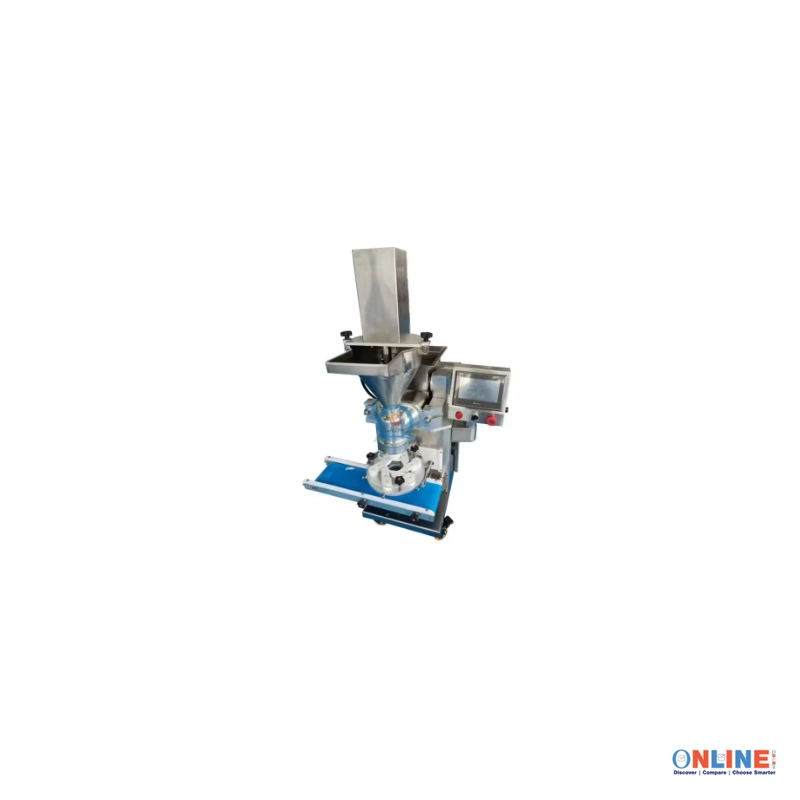
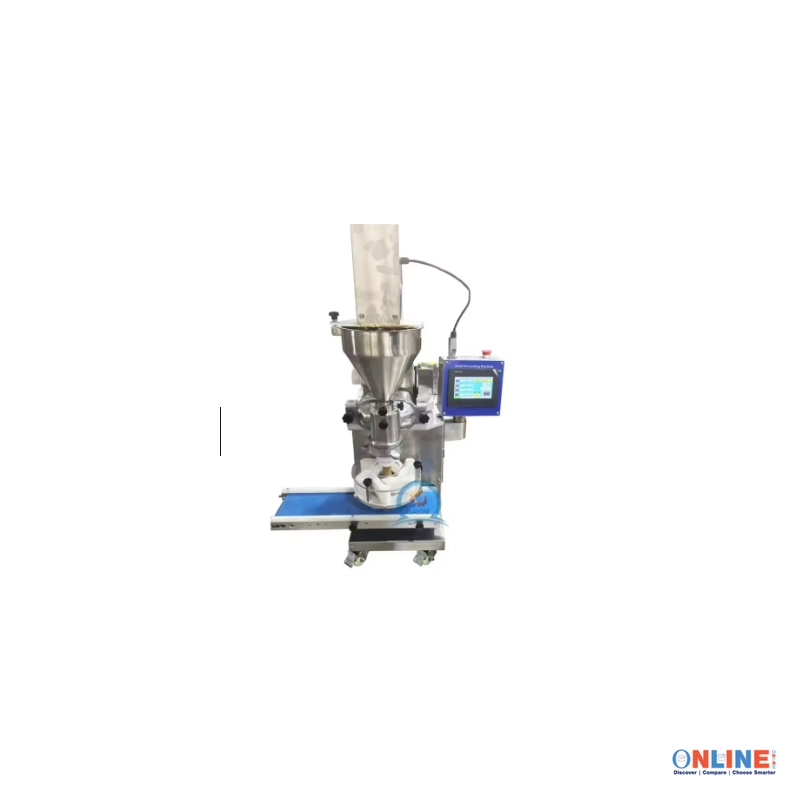
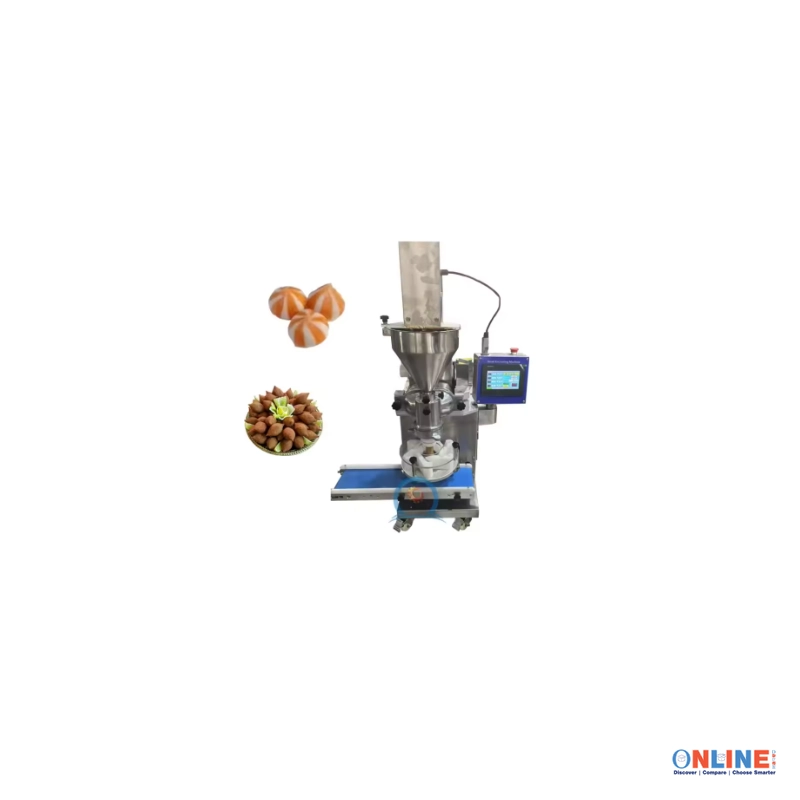
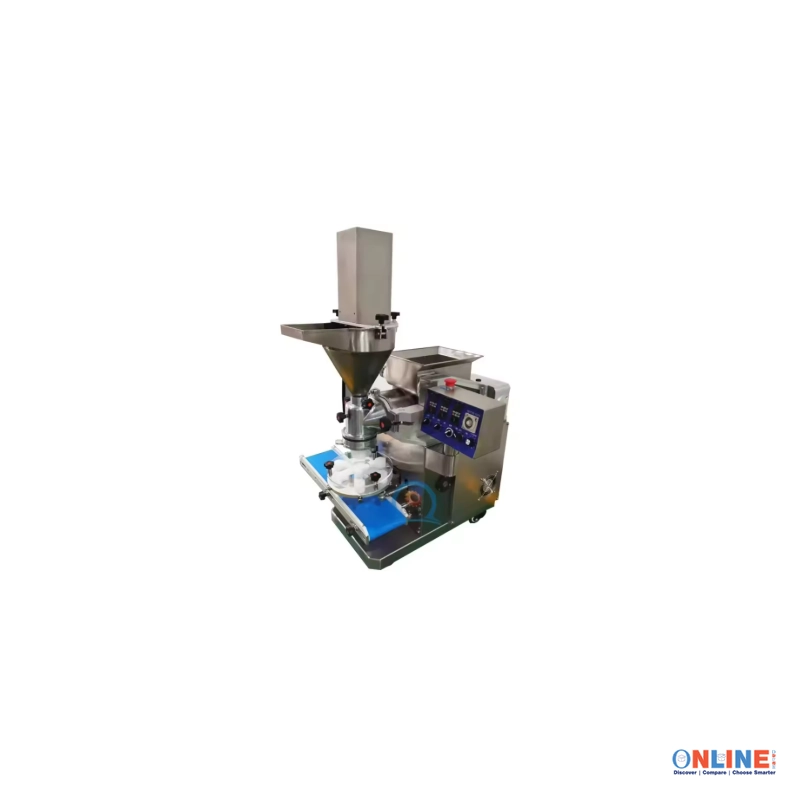
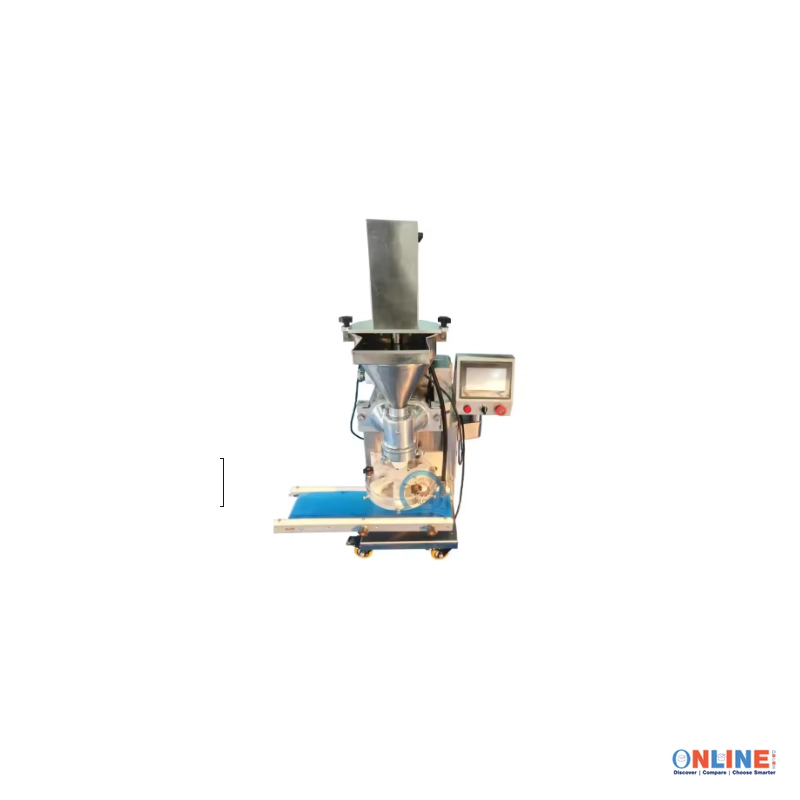
- Multiple Feeding Components: Product images show an upper hopper, a separate material feeding area, and a forming assembly.
- Commercial Control Panel: A front-mounted control panel is visible in the supplied product images.
- High Productivity: The supplier identifies high productivity as a primary selling point.
- One-Year Warranty: The machine is advertised with a one-year warranty, subject to seller terms.
Applications and Recommended Uses
1. Traditional Kubba and Kibbeh Production
The ST-180 is marketed as a kubba making machine for selected traditional stuffed food production applications.
Kubba, also commonly known as kibbeh in various regional cuisines, can be prepared using combinations of outer dough or meat-based mixtures and internal fillings.
Automatic encrusting equipment may help form compatible mixtures into repeated filled shapes, depending on the machine’s forming mechanism and food material characteristics.
For kubba production, businesses should confirm the machine’s compatibility with their specific outer mixture, filling texture, moisture content, and desired product weight.
2. Mochi Production
The supplier advertises the ST-180 for mochi production.
Mochi is a Japanese rice-based food that may be prepared in different forms, including filled varieties.
Commercial encrusting machines may be used to form selected filled mochi products when the equipment is compatible with the dough texture and filling characteristics.
Customers should verify whether the machine supports their intended mochi formulation and whether additional equipment is required for dough preparation.
3. Stuffed Dessert Production
Commercial bakeries and dessert manufacturers may evaluate this machine for selected filled dessert products.
Potential applications include compatible dough-based sweets, filled confectionery products, and other foods that require an outer layer surrounding a filling.
The exact product types depend on the machine’s supported material properties, forming components, and filling capabilities.
4. Bakery Production
Bakeries producing compatible filled products may benefit from automated encrusting equipment that reduces repetitive manual shaping work.
The ST-180 machine may support selected production workflows involving prepared outer dough and filling materials.
Businesses should evaluate the machine’s actual output rate, supported product dimensions, and cleaning requirements before selecting it for regular bakery production.
5. Commercial Catering Operations
Catering businesses preparing large quantities of similar stuffed food products may consider automatic encrusting equipment for suitable production processes.
Automated forming may help streamline selected preparation tasks when ingredients and production conditions are compatible with the machine.
6. Frozen Food Manufacturing
Some commercial food manufacturers produce formed and filled products for subsequent chilling, freezing, cooking, or packaging.
The ST-180 may be evaluated as one component of a broader production system for compatible products.
The supplied specifications do not establish integrated freezing, cooking, or packaging capabilities.
7. Specialty Food Businesses
Businesses producing regional stuffed foods, specialty snacks, and handmade-style products may evaluate this machine for automating selected forming operations.
The machine’s suitability should be confirmed with actual production samples using the intended ingredients.
8. Restaurant Central Kitchens
Restaurants operating centralized preparation kitchens may consider automatic encrusting equipment for producing suitable filled food items in repeated batches.
The equipment can be evaluated as part of a larger food preparation workflow that includes ingredient preparation, cooking, cooling, and storage.
Product Technical Specifications
| Specification | Details |
|---|---|
| Product Name | ST-180 Automatic Kubba and Mochi Encrusting Machine |
| Model Number | ST-180 |
| Product Type | Automatic Food Encrusting Machine |
| Machine Category | Commercial Food Processing Equipment |
| Operating Function | Automatic Encrusting and Forming |
| Advertised Production Capacity | 20 to 80 Pieces per Minute |
| Electrical Power | 1.5kW |
| Operating Voltage | 220V |
| Power Source | Electric |
| Heat Source | Electric, According to Supplier Listing |
| Control Feature | Touchscreen |
| Machine Dimensions | 100 × 100 × 138 cm |
| Machine Weight | Approximately 180kg |
| Product Condition | New |
| Key Selling Point | High Productivity |
| Outer Material Feeding System | Hopper and Feeding Assembly Shown in Images |
| Filling System | Product Advertised for Filled Food Production |
| Forming Mechanism | Automatic, Exact Configuration Not Specified |
| Food Contact Material | Not Confirmed by Supplier Specifications |
| Product Weight Adjustment | Not Specified |
| Supported Product Diameter | Not Specified |
| Maximum Filling Capacity | Not Specified |
| Electrical Frequency | Not Specified |
| Warranty | 1 Year, According to Supplier |
| Advertised Applications | Kubba, Mochi, and Compatible Encrusted Foods |
| Country of Origin | Mainland China |
Understanding the Automatic Encrusting Process
Encrusting is a food production process in which an outer food material surrounds an internal filling.
Automatic encrusting machines are used in selected commercial food operations to help form products with more consistent shapes and filling distribution.
Outer Dough Preparation
The outer material provides the surrounding layer of the finished food product.
Depending on the recipe, this material may consist of prepared dough, rice-based mixtures, or other compatible food formulations.
The mixture must have suitable texture and consistency for the machine’s feeding and forming system.
Filling Preparation
The internal filling may consist of a suitable prepared food mixture, depending on the intended product.
For example, certain kubba recipes use savory fillings, while filled mochi products may use sweet fillings.
The machine’s compatibility with coarse, sticky, liquid, or particulate fillings has not been established by the supplied specifications.
Automatic Material Feeding
The product images show a large upper hopper and associated material feeding components.
These components appear designed to introduce prepared food materials into the forming system.
The exact feeding arrangement should be confirmed through the manufacturer documentation.
Product Forming
The machine is advertised for automatically forming filled food products.
Actual product shape, dimensions, filling distribution, and consistency depend on the machine’s forming components and material characteristics.
Finished Product Collection
After forming, products must be handled according to the manufacturer’s approved process.
The product images show a lower work area associated with the forming assembly.
The exact finished-product transfer and collection mechanism should be verified before purchasing.
Production Capacity of 20 to 80 Pieces per Minute
The ST-180 machine is advertised with a production rate ranging from 20 to 80 pieces per minute.
This capacity may be useful for businesses planning repeated production of compatible stuffed food items.
Lower Production Rate
At 20 pieces per minute, the machine would theoretically form approximately 1,200 pieces per hour during uninterrupted operation.
Higher Production Rate
At 80 pieces per minute, the theoretical hourly output would be approximately 4,800 pieces during uninterrupted operation.
Factors That Affect Production Speed
- Type of outer dough or food mixture.
- Texture and consistency of the filling.
- Desired product size.
- Product weight and filling ratio.
- Machine operating settings.
- Material feeding performance.
- Cleaning and preparation interruptions.
- Operator experience.
- Production quality requirements.
Important: These hourly figures are mathematical estimates based on the supplier’s advertised pieces-per-minute range. They do not represent verified continuous production performance or guaranteed saleable output.
Businesses should request a machine demonstration using their intended recipe before making production capacity commitments.
Touchscreen Control System
The supplier identifies touchscreen control as a special feature of the ST-180 machine.
A control panel is visible on the front of the machine in the supplied product photographs.
Convenient Operating Interface
The touchscreen feature is intended to support interaction with the machine’s available operating functions.
The exact screen menus and available controls depend on the installed system.
Production Adjustments
Automatic encrusting equipment may require changes to operational settings when producing different product sizes or working with different materials.
However, the supplied specifications do not confirm which individual adjustments are available through the ST-180 control system.
Operator Training
Commercial food production personnel should receive training in the machine’s approved operating procedures.
Operators should understand startup, material feeding, emergency stopping, cleaning, and safe shutdown requirements before using the equipment.
Control Panel Protection
The control panel should be protected from excessive moisture, food residue, and physical damage.
Cleaning should follow the manufacturer’s approved procedures.
1.5kW Electrical Power System
The ST-180 machine is listed with an electrical power rating of 1.5 kilowatts.
This is equivalent to 1,500 watts.
Understanding the Power Rating
The supplier’s 1.5kW specification identifies a machine power value, but the listing does not clearly distinguish between rated electrical input and individual component power.
Customers should request the official equipment nameplate and complete electrical specifications.
Estimated Electricity Consumption
If the machine continuously draws 1.5kW of electrical power for one hour, it would consume approximately 1.5 kilowatt-hours of electricity.
Actual consumption depends on operating load, machine duty cycle, and the installed electrical components.
220V Operating Voltage
The machine is advertised for 220V electrical operation.
Before installation, verify electrical frequency, current requirements, grounding, circuit protection, and plug or connection type.
Professional Electrical Installation
Commercial food machinery should be connected using manufacturer-approved electrical arrangements.
A qualified electrical professional should assess the installation before operation.
Machine Size and Workspace Planning
The ST-180 encrusting machine measures approximately 100 × 100 × 138 cm according to the supplier.
Its listed weight is approximately 180kg.
Machine Footprint
The nominal length and width measurements indicate a footprint of approximately one square meter.
Additional space is required for operators, material loading, finished-product handling, maintenance access, and cleaning.
Machine Height
The listed height is approximately 138 cm.
Customers should provide adequate overhead clearance for material loading, inspection, and servicing.
Equipment Weight
At approximately 180kg, this machine requires a suitable supporting floor or equipment base.
Customers should confirm the floor’s capacity and the manufacturer’s installation requirements.
Production Layout
A commercial food production area should provide separate space for raw material preparation, machine operation, finished-product handling, cleaning, and storage.
Appropriate workflow planning can help reduce unnecessary material movement and support hygienic food processing.
Main Machine Components and Construction
Upper Material Hopper
The product images show a large metal hopper mounted above the forming area.
This component appears intended for feeding prepared food material into the machine.
Material Feeding Assembly
The machine includes visible feeding components connected to the upper structure.
The manufacturer’s documentation should identify the permitted materials and recommended feeding procedures.
Forming Mechanism
The lower central section of the machine contains components associated with the forming process.
These parts must remain guarded and operated according to the manufacturer’s safety instructions.
Control Panel
A control panel is mounted on the front side of the machine.
The panel is associated with the automatic operating functions advertised by the supplier.
Machine Base
The machine features a substantial lower frame supporting its processing components.
The actual construction materials and structural load ratings should be confirmed with the manufacturer.
Product Handling Area
The images show a work area beneath the forming section, including a blue surface.
Customers should confirm the purpose and food-contact suitability of this component.
Product Demonstration Video
Watch the supplied product demonstration video to explore the ST-180 automatic encrusting machine, its construction, and the food forming operations shown by the seller.
General Operating Procedure
The following steps provide a general overview of automatic encrusting machine operation. Actual operating procedures must follow the manufacturer’s official manual.
Step 1: Prepare the Installation Area
Place the machine on a stable, level surface or approved equipment foundation.
Ensure that the installation area provides adequate space for material handling, cleaning, and safe operator movement.
Step 2: Verify Electrical Requirements
Confirm that the available electrical supply matches the machine’s rated specifications.
The supplier lists 220V and 1.5kW, but complete electrical installation requirements must be verified.
Step 3: Inspect the Equipment
Before operation, inspect the hopper, feeding components, forming assembly, guards, and electrical connections.
Do not use the machine if any component is damaged, missing, or improperly installed.
Step 4: Prepare the Food Materials
Prepare the outer dough and filling ingredients according to the intended recipe.
Confirm that both materials meet the manufacturer’s recommended consistency and handling requirements.
Step 5: Load the Materials
Load prepared food materials into the appropriate feeding compartments using the manufacturer-approved procedure.
Do not introduce hands or utensils into moving machine components.
Step 6: Configure the Machine
Select the approved operating settings for the intended product.
The exact adjustable parameters depend on the machine’s installed controls and forming system.
Step 7: Conduct a Test Production Run
Begin with a controlled test run according to the manufacturer’s instructions.
Inspect the finished products for shape, consistency, filling distribution, and suitability for further processing.
Step 8: Begin Production
After completing the required checks, operate the machine within its approved production limits.
Monitor material feeding and finished-product quality throughout the process.
Step 9: Stop the Machine Safely
Follow the manufacturer’s approved stopping and shutdown procedure.
Do not attempt to remove obstructions or access moving components while the machine is operating.
Step 10: Clean and Sanitize
After operation, isolate the equipment as required and follow the manufacturer’s approved cleaning and sanitizing procedures.
Food-contact components should be cleaned using methods appropriate for the materials and food production process.
Tips for Consistent Product Quality
- Prepare outer dough using a consistent recipe.
- Maintain suitable ingredient temperatures.
- Use filling materials compatible with the feeding system.
- Follow the manufacturer’s recommended mixing and preparation procedures.
- Conduct a test run before beginning large production batches.
- Inspect formed products regularly for consistency.
- Avoid overloading the material feeding compartments.
- Use suitable food handling and sanitation procedures.
- Clean food-contact components between incompatible products.
- Monitor the machine for abnormal vibration or operating sounds.
- Train operators in the approved control functions.
- Follow the manufacturer’s maintenance and lubrication recommendations.
Food Safety and Hygiene Requirements
Commercial food production equipment must be operated and maintained in a way that supports hygienic food handling.
The supplied specifications do not identify the exact food-contact materials or applicable food equipment sanitation certifications.
Food-Contact Material Verification
Customers should request confirmation that all components contacting food are made from materials suitable for the intended application.
Cleaning and Sanitizing
Food-contact components should be cleaned and sanitized according to the manufacturer instructions and applicable food safety requirements.
Allergen Management
Businesses processing foods containing common allergens should implement suitable cleaning, ingredient separation, and cross-contact prevention procedures.
Temperature Control
Raw fillings and other perishable ingredients must be handled according to appropriate food temperature control requirements.
Automation does not eliminate the need for safe ingredient storage and handling.
Finished Product Handling
After forming, food products should be cooked, chilled, frozen, packaged, or otherwise processed according to the approved recipe and food safety plan.
Operator Hygiene
Operators should follow established hand hygiene, protective clothing, cleaning, and sanitation procedures.
Commercial Food Production Safety
Warning: Automatic encrusting equipment contains powered feeding and forming mechanisms that may create entanglement, crushing, and other mechanical hazards.
- Only trained personnel should operate the machine.
- Keep hands away from feeding and forming mechanisms during operation.
- Never bypass safety guards or protective systems.
- Do not remove obstructions while components are moving.
- Disconnect and isolate electrical power before maintenance when required.
- Follow appropriate lockout and tagout procedures.
- Do not operate damaged electrical equipment.
- Use suitable handling equipment when moving the 180kg machine.
- Keep the operating area clean and free from unnecessary obstructions.
- Follow manufacturer instructions for assembly, disassembly, and cleaning.
- Do not use incompatible food materials that may damage the feeding system.
- Keep electrical controls protected during cleaning.
- Stop operation if unusual vibration, noise, overheating, or mechanical faults occur.
Automatic Encrusting Machine vs Manual Food Forming
Production Speed
Manual shaping requires direct involvement for each individual food product.
Automatic encrusting equipment may support faster repeated production when the ingredients and machine settings are suitable.
Product Consistency
Automatic forming can help standardize selected production operations.
However, consistent output depends on stable ingredient properties, machine adjustments, and equipment maintenance.
Labor Requirements
Automated equipment may reduce some repetitive shaping tasks.
Operators are still required for ingredient preparation, machine setup, product inspection, cleaning, and maintenance.
Commercial Production Planning
Food manufacturers should compare equipment capacity, product compatibility, operating costs, maintenance, and quality requirements before selecting automatic machinery.
Cleaning and Maintenance Guidelines
Regular maintenance helps support equipment reliability, food hygiene, and consistent production.
Daily Cleaning
- Follow the approved shutdown and electrical isolation procedure.
- Remove food residues from accessible food-contact surfaces.
- Clean the hopper and approved removable components.
- Inspect the forming area for accumulated material.
- Sanitize appropriate surfaces using approved products.
- Dry components as required before reassembly.
Routine Mechanical Inspection
- Inspect accessible fasteners and mounting components.
- Check for abnormal vibration or unusual mechanical noise.
- Examine manufacturer-approved moving components for wear.
- Inspect seals and food-contact components for damage.
- Verify that safety guards are properly installed.
Electrical Maintenance
Electrical inspection and servicing should be performed by qualified personnel.
Do not expose the control system or electrical components to cleaning methods that are not approved by the manufacturer.
Lubrication and Replacement Parts
Follow the manufacturer’s lubrication schedule and use only approved lubricants where applicable.
Request information about replacement parts, food-contact seals, forming components, and recommended maintenance intervals.
Warranty and After-Sales Support
The ST-180 automatic encrusting machine is advertised with a one-year warranty.
Warranty coverage may depend on operating conditions, installation, maintenance, and the supplier’s terms.
The supplied specifications do not confirm the availability of on-site servicing, replacement components, technical support, or operator training.
Questions to Ask Before Purchasing
- Can the machine process the intended kubba or mochi recipe?
- What is the supported product weight range?
- Can the outer layer thickness be adjusted?
- Can the filling quantity be adjusted?
- What product shapes can the machine produce?
- Are different forming molds available?
- What are the minimum and maximum product dimensions?
- Does the machine support particulate or textured fillings?
- What is the actual output rate for the intended product?
- What are the exact food-contact materials?
- Is a complete English operating manual included?
- What electrical frequency does the machine require?
- Are replacement parts available internationally?
- Does the supplier provide remote technical support?
- What does the one-year warranty cover?
Important Information for United States Customers
The supplier lists a 220V operating voltage and 1.5kW electrical power rating.
United States buyers should verify voltage compatibility, frequency, current requirements, electrical connections, and applicable equipment certifications before purchasing.
Commercial food processing equipment may also be subject to local food safety, workplace safety, electrical, and sanitation requirements.
The supplied specifications do not confirm compliance with NSF sanitation standards or other specific United States food equipment requirements.
Before installation, commercial buyers should request complete manufacturer documentation and confirm suitability with qualified professionals and applicable local authorities.
Frequently Asked Questions
What is the ST-180 automatic kubba making machine?
The ST-180 is a commercial food processing machine marketed for producing compatible kubba, mochi, and other filled food products through an automatic encrusting process.
What is an encrusting machine?
An encrusting machine is equipment designed to form food products with an outer layer surrounding an internal filling.
What is the advertised production capacity?
The supplier lists a production rate of 20 to 80 pieces per minute.
Can the machine produce 80 pieces per minute?
The supplier advertises a maximum rate of 80 pieces per minute. Actual performance depends on the recipe, product size, filling, and operating configuration.
Can this machine make kubba?
Yes. Kubba production is one of the applications advertised by the supplier. Compatibility with a specific recipe should be verified through sample testing.
Can the machine make mochi?
The product is marketed for mochi production. Customers should confirm compatibility with their intended mochi dough and filling.
Can the machine produce other stuffed foods?
It may support additional compatible filled food products, depending on the machine configuration and material characteristics. Confirm supported products with the manufacturer.
What is the model number?
The supplier identifies the machine as model ST-180.
What is the machine’s electrical power?
The supplier lists 1.5kW.
What voltage does the machine require?
The machine is listed for 220V electrical operation.
Can this machine operate in the United States?
Suitability depends on the machine’s complete electrical specifications, certifications, and applicable installation requirements. The 220V rating must be verified against the intended electrical supply.
Does the machine have a touchscreen?
Yes. The supplier lists touchscreen control as a special feature.
Can the machine adjust filling quantity?
The supplied specifications do not confirm the exact adjustment functions. Customers should request a demonstration of the filling controls.
Can the machine make different product shapes?
Different shapes may require specific forming components. The availability of alternative molds or shaping mechanisms is not confirmed in the supplied listing.
Does the machine cook the food?
The product is advertised as an encrusting and forming machine. Integrated cooking capability is not established by the supplied specifications.
Does the machine include a heating system?
The supplier lists electric as the heat source, but does not provide a separate heating capacity or temperature specification. Customers should confirm whether any active heating function is included.
What are the machine dimensions?
The supplier lists dimensions of approximately 100 × 100 × 138 cm.
How much does the machine weigh?
The machine has a supplier-listed weight of approximately 180kg.
Is the machine made from stainless steel?
The product images show metal components with a stainless steel-style finish. However, the exact material grades and food-contact specifications are not provided.
Is the machine suitable for commercial kitchens?
The machine is marketed for commercial food production. Actual suitability depends on its technical specifications, sanitation requirements, and intended food products.
Does the machine require an experienced operator?
Operators should receive appropriate training in machine setup, production, cleaning, and safety procedures.
How should the machine be cleaned?
Follow the manufacturer’s approved cleaning and sanitizing procedures, including electrical isolation and safe access to food-contact components.
Is the machine suitable for frozen food production?
It may be evaluated as a forming component in a frozen food production workflow. However, the supplier does not confirm integrated freezing equipment.
Does the machine include a warranty?
The supplier advertises a one-year warranty, subject to the applicable terms and conditions.
Are replacement parts available?
Replacement part availability is not specified in the supplied listing. Customers should confirm this information with the seller before ordering.
Where is the machine manufactured?
The supplier lists Mainland China as the country of origin.
Important Product Information
The ST-180 automatic kubba making machine is advertised with a production capacity of 20 to 80 pieces per minute, 1.5kW electrical power, 220V operation, touchscreen controls, and dimensions of approximately 100 × 100 × 138 cm.
The machine’s listed weight is approximately 180kg, and the supplier advertises a one-year warranty.
The supplied specifications do not provide the exact supported food weight range, adjustable filling ratio, forming mold specifications, maximum product diameter, food-contact material grade, or verified sanitation certification.
The supplier also lists an electric heat source, but the available information does not establish whether the machine includes a cooking or temperature-controlled heating function.
Customers should request a detailed technical specification sheet, operating manual, food-contact material documentation, and production demonstration before purchasing.
Why Choose the ST-180 Automatic Kubba and Mochi Encrusting Machine?
The ST-180 Automatic Kubba Making Machine combines automated food forming, supplier-listed high productivity, touchscreen operation, and a commercial equipment design for businesses evaluating filled food production machinery.
Its advertised production capacity of 20 to 80 pieces per minute may appeal to commercial kitchens, specialty food manufacturers, and bakeries seeking to reduce repetitive manual forming work.
The machine’s 1.5kW power specification and approximately 100 × 100 × 138 cm dimensions provide useful starting information for electrical planning and production space evaluation.
With applications marketed for kubba, mochi, and compatible encrusted foods, the ST-180 offers a potential equipment option for selected commercial food processing workflows.
Successful production depends on matching the machine’s forming capabilities to the intended ingredients and finished product specifications.
Order Your ST-180 Automatic Kubba Making Machine Today
Explore the ST-180 commercial encrusting machine for suitable kubba, mochi, stuffed food, and specialty food production applications.
Featuring automatic operation, touchscreen controls, an advertised production rate of 20 to 80 pieces per minute, and a 1.5kW electrical power rating, this machine provides an option for businesses evaluating automatic food forming equipment.
Before purchasing, confirm the required product dimensions, supported fillings, available molds, food-contact materials, actual production capacity, electrical compatibility, maintenance requirements, warranty coverage, and shipping arrangements.
Choose the ST-180 Automatic Kubba and Mochi Encrusting Machine and confirm the complete production specifications with the supplier before completing your order.