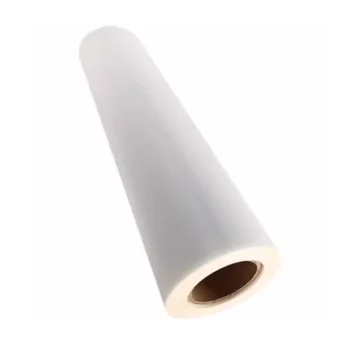
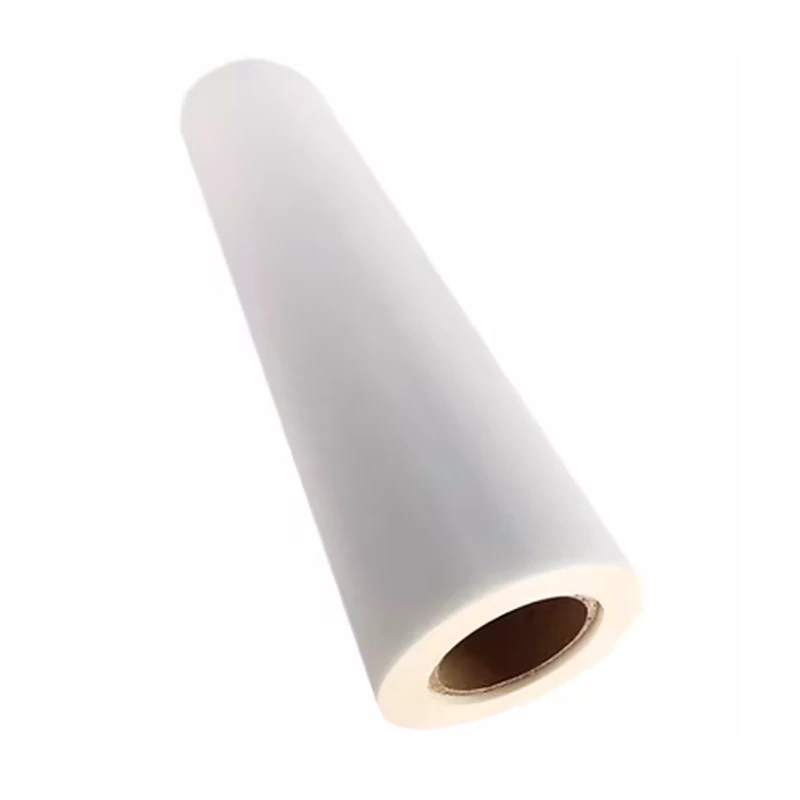
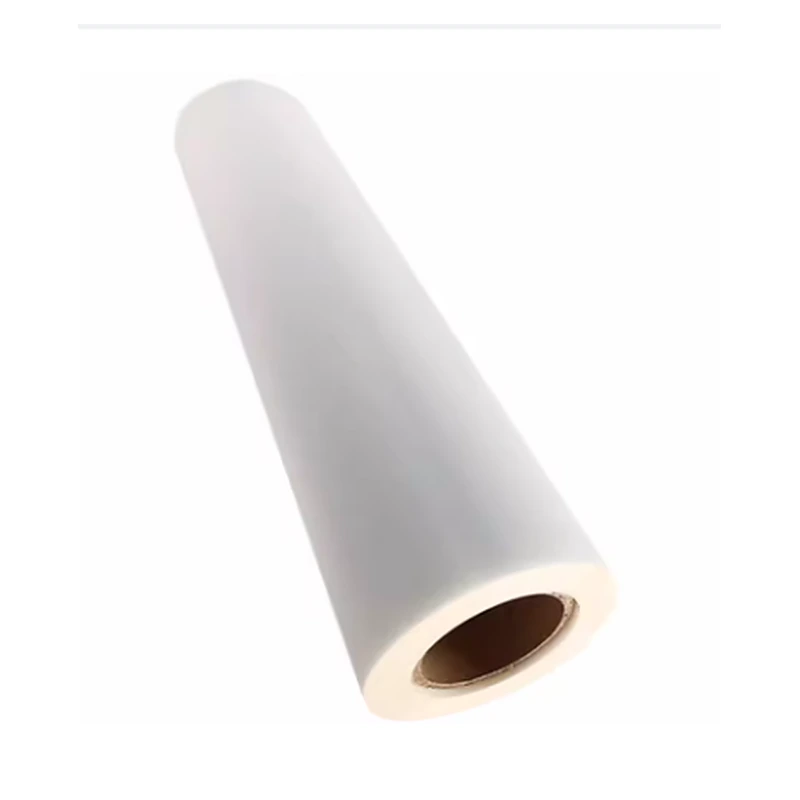
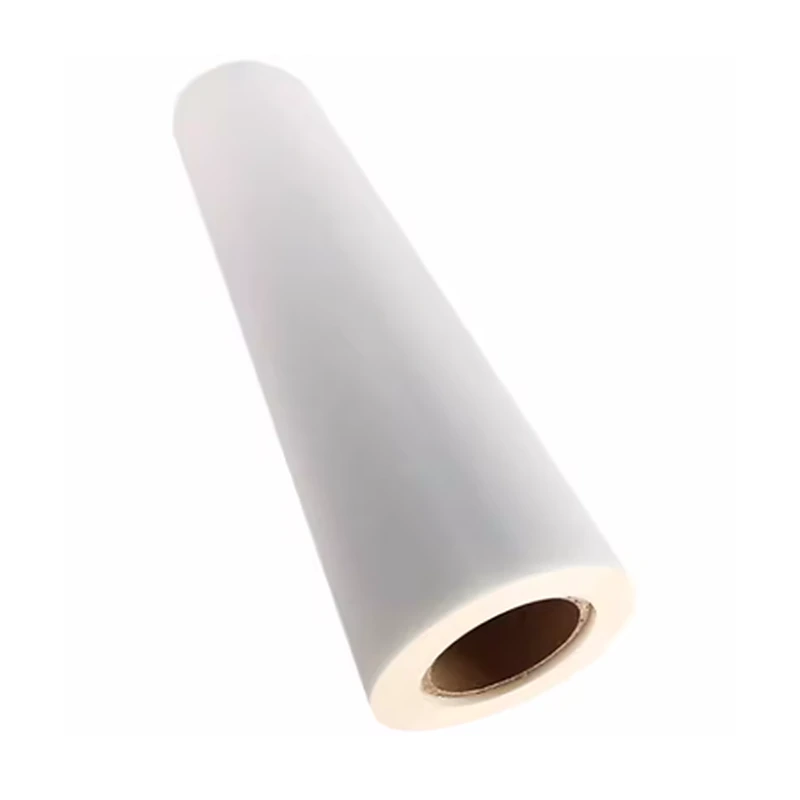
60cm 30cm PET Film for DTF Printing – A3 A1 Size, 100m Roll Printing Material

PET Film for DTF Printing supports A3 and A1 transfer applications. Explore 60cm and 30cm options, 100m rolls, and printing tips.

Achieve professional-quality garment printing with this 60cm 30cm PET Film for DTF Printing. Designed for Direct to Film (DTF) printing workflows, this PET printing film provides a roll-format material option for transferring printed designs onto suitable fabrics and other compatible surfaces.
Whether you operate a professional garment printing business, a custom apparel workshop, or a small printing studio, choosing suitable transfer film is essential for producing consistent printing results. This PET film is available in 30cm and 60cm width options, with a listed roll length of 100 meters, offering flexibility for different printing setups.
Manufactured using PET (Polyethylene Terephthalate), the film is designed for printing applications where printed artwork is prepared on a transfer medium before being applied to a compatible substrate. It can be considered for custom T-shirts, personalized clothing, promotional apparel, and other suitable textile printing projects when used with compatible DTF equipment and transfer materials.
The supplier lists single-sided and double-sided printing options, a non-glossy finish, and a paper package. These specifications provide useful information when selecting film for different printing workflows.
Available in two width options, this 100m PET film roll offers a practical material choice for businesses looking to prepare custom printed designs and manage regular production requirements.
Key Features and Benefits of PET DTF Printing Film
- DTF Printing Application: Designed for Direct to Film printing workflows using compatible DTF printers, inks, transfer powder, and heat pressing equipment.
- PET Material Construction: Manufactured from polyethylene terephthalate, a commonly used material for printing and transfer film applications.
- Two Width Options: Available in 30cm and 60cm widths to accommodate different printing equipment and production requirements.
- 100-Meter Roll Length: Each listed roll provides 100 meters of material for extended printing projects and production workflows.
- A3 and A1 Printing Applications: The available widths can support different print layouts and compatible large-format printing setups.
- Single-Sided or Double-Sided Options: The supplier lists both printing-side configurations. Confirm the selected option before purchasing.
- Non-Glossy Finish: The product specifications identify the film as non-glossy, providing an alternative to glossy printing materials.
- Lightweight Material: Listed at 150g/m² or less, according to the supplier’s weight specification.
- Roll-Based Format: Suitable for printing workflows that use continuous roll media.
- Multiple Printing Applications: Can be considered for custom apparel, promotional garments, personalized textiles, and other compatible transfer projects.
- Single-Layer Construction: The supplier specifies one layer quantity.
- Individual Packaging: Supplied with paper packaging, according to the product specifications.
What Is PET Film for DTF Printing?
PET film is a polyester-based material used in various printing and transfer applications. In Direct to Film printing, it acts as the medium on which artwork is printed before being transferred onto a suitable surface using a compatible heat transfer process.
DTF printing has become a popular option for custom garment businesses because it allows designs to be prepared separately from the final fabric. This workflow provides flexibility for producing personalized apparel, small production batches, and custom printed merchandise.
Understanding Direct to Film Printing
Direct to Film printing is a digital printing method in which a design is printed onto a specialized transfer film using compatible printing equipment and inks.
For a typical DTF workflow, the design is prepared digitally and printed onto the film. Compatible adhesive powder is then applied according to the equipment and material manufacturer’s instructions. After the required curing process, the prepared transfer can be applied to suitable fabric using a heat press.
The PET film plays an important role in this process because it carries the printed artwork during preparation and transfer.
Why PET Material Is Used
Polyethylene terephthalate is widely used in printing applications because it can be manufactured into thin film materials with controlled thickness and surface characteristics.
For DTF applications, the suitability of a particular PET film depends on its coating, ink compatibility, release characteristics, heat resistance, and intended transfer process.
Customers should confirm that the selected film is specifically compatible with their DTF printer and transfer workflow.
Available 30cm and 60cm PET Film Widths
This product is offered in two width options: 30cm and 60cm. Choosing the appropriate width is important because it affects the printable area, media compatibility, and overall production setup.
30cm PET Film Roll
The 30cm option is suitable for compatible narrow-format DTF printing equipment and smaller printing layouts.
It can be considered for businesses producing personalized T-shirts, smaller garment designs, custom logos, and other textile printing projects that fit within the available printing width.
Its narrower format may also be convenient for workshops that do not require the wider media capacity of large-format printers.
60cm PET Film Roll
The 60cm option provides a wider printing area for compatible large-format DTF printers.
It may be suitable for businesses producing multiple designs in a single layout, larger garment graphics, and higher-volume custom apparel orders.
However, the printer must support the selected media width. Always check the maximum roll width and loading requirements before ordering.
Choosing Between 30cm and 60cm
The correct width depends on your printer specifications, design dimensions, production volume, and available workspace.
- Choose 30cm when your printer supports narrower roll media and your designs fit within that width.
- Choose 60cm when you have compatible wide-format DTF printing equipment.
- Check the printer’s maximum media width before selecting a roll.
- Consider the size of your typical garment designs.
- Verify the film’s coating and compatibility with your printing system.
100-Meter PET Film Roll for Printing Production
The supplier lists a roll length of 100 meters for this PET printing film.
A continuous roll format can be useful for printing businesses that regularly prepare transfer designs. Rather than repeatedly loading individual sheets, compatible roll-fed equipment can process continuous media according to its supported configuration.
Benefits of Roll-Based Printing Media
- Supports continuous media feeding on compatible printers.
- Provides a substantial material length for regular printing projects.
- Can accommodate different design layouts.
- Offers flexibility for custom apparel production.
- Can help organize printing materials in a workshop environment.
Actual material usage depends on the printer’s media settings, design arrangement, test prints, and production requirements.
Single-Sided and Double-Sided Printing Options
The supplier lists single-sided and double-sided printing configurations for this PET film.
Single-Sided Printing Film
Single-sided printing film is designed for printing on one designated surface. This configuration may be suitable for workflows where the printing equipment and ink system are designed to apply artwork to a specific side of the film.
Double-Sided Printing Film
Double-sided printing film is listed as another available configuration. The actual printing method and compatible applications depend on the film’s construction and surface treatment.
Customers should confirm whether the selected product supports printing on both surfaces or whether the specification refers to another film configuration.
Which Option Should You Choose?
Select the printing-side configuration recommended for your printer, ink system, and transfer process. Do not assume that single-sided and double-sided options are interchangeable.
Non-Glossy PET Film Surface
The supplied specifications identify this PET film as non-glossy.
Surface finish is an important consideration when choosing printing media because different coatings and surface treatments can influence ink interaction and printing performance.
Understanding Non-Glossy Film
A non-glossy finish differs from a highly reflective glossy surface. However, the exact surface texture and coating characteristics of this particular product are not provided.
For DTF applications, buyers should confirm whether the film includes a suitable ink-receptive coating and whether it supports the required transfer and release characteristics.
Film Coating Compatibility
Not every PET film is suitable for DTF printing. Specialized transfer film may require particular surface treatments to support ink adhesion, powder application, curing, and transfer performance.
Before purchasing, verify the film’s coating type and compatibility with your DTF inks and equipment.
DTF Printing Applications
This PET printing film can be considered for compatible DTF printing workflows used in custom garment production and personalized merchandise manufacturing.
1. Custom T-Shirt Printing
Custom T-shirt printing is one of the most common applications associated with DTF technology.
Printing businesses can prepare artwork on compatible PET transfer film and apply the resulting transfers to suitable T-shirts using an appropriate heat press process.
This approach is useful for personalized clothing, branded apparel, event merchandise, and custom fashion products.
2. Hoodie and Sweatshirt Printing
DTF printing can also be used for suitable hoodies and sweatshirts.
Businesses can prepare different graphics, logos, and decorative designs for application to compatible fabric surfaces.
The appropriate transfer settings depend on the garment material, adhesive system, and equipment manufacturer’s recommendations.
3. Sportswear and Activewear
Custom sportswear manufacturers may use DTF transfer technology for selected garment decoration projects.
Printed team names, numbers, logos, and promotional graphics can be prepared for compatible textile applications.
Always verify the transfer’s suitability for stretch fabrics and performance textiles before production.
4. Promotional Apparel
Businesses producing promotional clothing can consider DTF printing for customized brand graphics and marketing designs.
It can support different artwork requirements for company uniforms, promotional T-shirts, event clothing, and branded merchandise.
5. Personalized Clothing
Small printing businesses and independent designers can use compatible DTF workflows to prepare personalized clothing designs.
Names, illustrations, decorative artwork, and custom graphics can be arranged digitally before printing.
6. Custom Fashion Products
Fashion designers may use DTF printing for suitable garment decoration projects involving printed artwork and custom designs.
Film width selection should match the printer’s capabilities and the dimensions of the intended artwork.
7. Small Printing Businesses
Small garment printing workshops can evaluate 30cm PET film for compatible narrow-format printers and 60cm film for wider printing equipment.
The 100-meter roll format may be useful for businesses handling regular custom printing orders.
DTF Printing Workflow Using PET Transfer Film
Using PET film correctly is important for achieving consistent results in a DTF printing workflow. The following steps describe a typical process. Always follow the specific instructions supplied with your printer, ink, adhesive powder, and transfer film.
Step 1: Prepare Your Digital Artwork
Create your design using compatible graphic design software. Check the dimensions, image quality, colors, and layout before sending the artwork to the printer.
Use the appropriate color settings and printing software recommended for your DTF equipment.
Step 2: Load the PET Film
Install the selected PET film roll according to the printer manufacturer’s loading instructions.
Make sure the roll is aligned correctly and that the printable side faces the appropriate direction.
Step 3: Configure Printer Settings
Set the correct media width, printing resolution, ink configuration, and other settings supported by your printer.
Use the recommended profile for the specific transfer film rather than relying on generic settings.
Step 4: Print the Artwork
Send the prepared design to the DTF printer and allow the equipment to print according to its operating requirements.
Monitor the printing process for media feeding problems, ink inconsistencies, or alignment issues.
Step 5: Apply Compatible Adhesive Powder
For conventional DTF workflows, compatible hot-melt adhesive powder is applied to the printed ink layer according to the manufacturer’s instructions.
The correct powder type and application method depend on the film, ink, and intended fabric.
Step 6: Cure the Transfer
Prepare the printed transfer using the recommended curing equipment and temperature settings.
Follow the adhesive and film manufacturer’s instructions carefully. Incorrect curing conditions can affect transfer performance.
Step 7: Prepare the Garment
Place the compatible garment on a suitable heat press and prepare the fabric according to the transfer system’s instructions.
Step 8: Heat Press the Design
Position the prepared transfer on the garment and apply the recommended temperature, pressure, and pressing time.
These settings vary according to the transfer film and adhesive system.
Step 9: Remove the Film
Follow the specified hot-peel, warm-peel, or cold-peel instructions for the selected transfer film.
The supplied product specifications do not identify the peel type of this particular PET film. Confirm this detail with the seller before production.
Step 10: Complete the Transfer
If required by the transfer system, complete the finishing press according to the manufacturer’s instructions.
Allow the garment to cool and inspect the finished design.
How to Choose the Right PET Film for Your DTF Printer
Choosing suitable transfer film requires more than checking the roll width and length. Different DTF printers and ink systems may require different film characteristics.
Check the Printer Width
First, identify the maximum media width supported by your printer. Select 30cm or 60cm film according to the equipment’s specifications.
Verify Ink Compatibility
Confirm that the film coating is suitable for the DTF inks used in your printer.
Ink compatibility can influence printing consistency, adhesion, and transfer preparation.
Confirm the Coating Type
Ask the supplier whether the film has a specialized DTF ink-receptive coating.
The provided product specifications identify the material as PET but do not describe the coating composition.
Check Hot-Peel or Cold-Peel Compatibility
Different DTF transfer films may support different peeling methods.
Confirm the intended peeling method before purchasing because this information affects the transfer workflow.
Confirm Powder Compatibility
Verify that the film works with the adhesive powder recommended for your printing system.
Consider Your Production Requirements
Choose the roll length and width according to your expected printing volume, available equipment, and typical design dimensions.
Technical Specifications
| Specification | Details |
|---|---|
| Product Name | 30cm / 60cm PET Film for DTF Printing |
| Product Type | Printing Film / PET Transfer Material |
| Material | PET (Polyethylene Terephthalate) |
| Available Widths | 30cm and 60cm |
| Roll Length | 100m |
| Printing Application | DTF Printing, Subject to Film Compatibility |
| Printing Side | Single-Sided / Double-Sided |
| Layer Quantity | 1 |
| Package Quantity | 1 |
| Weight | ≤150g/m² |
| Surface Finish | Non-Glossy |
| Supplier Product Type | PHOTO PAPER |
| Packaging | Paper Package |
| High-Concern Chemicals | None Listed |
| Origin | Mainland China |
Printing Quality and Production Considerations
Successful DTF production depends on the compatibility of the transfer film, printer, ink, adhesive powder, curing equipment, and heat press.
Media Feeding Consistency
Correct roll alignment is important when using continuous printing media. Improper loading can cause wrinkles, uneven feeding, or printing alignment problems.
Ink Application
Use printer settings and ink profiles recommended for the selected film. Incorrect settings may contribute to inconsistent ink application.
Adhesive Powder Application
Use a compatible adhesive powder and apply it according to the transfer system’s requirements.
Curing Conditions
Follow the recommended curing temperature and duration for the selected adhesive and film combination.
Heat Press Settings
Different garments and transfer materials may require different heat press settings. Always test the combination before starting a large production run.
Test Printing Before Bulk Production
Before using a new film in regular production, perform a small test print and transfer.
Evaluate ink compatibility, coating performance, adhesive application, peeling behavior, and the final printed appearance.
Storage and Handling Instructions
Proper storage helps maintain the condition of PET printing film and reduces the risk of handling-related problems.
- Store the roll in its original protective packaging when possible.
- Keep the material in a clean and dry environment.
- Avoid direct sunlight and excessive heat.
- Protect the film from dust and contamination.
- Keep the roll away from moisture and water exposure.
- Avoid scratching or damaging the printable surface.
- Handle the film carefully during loading and unloading.
- Prevent unnecessary bending, creasing, or deformation.
- Follow any additional storage instructions provided by the manufacturer.
Common DTF Film Problems and Troubleshooting
Printing problems can occur when the transfer film, printer settings, ink, adhesive, or curing process are not properly matched.
Problem 1: Ink Does Not Spread Correctly
Possible causes: Incorrect film coating, unsuitable ink compatibility, or incorrect printer settings.
Recommended action: Verify the film’s intended printing surface and use the recommended printer profile.
Problem 2: Uneven Media Feeding
Possible causes: Incorrect roll installation, misalignment, or unsuitable media settings.
Recommended action: Check the roll holder, media guides, and printer feeding configuration.
Problem 3: Adhesive Powder Does Not Apply Properly
Possible causes: Incompatible adhesive powder, unsuitable ink conditions, or incorrect application technique.
Recommended action: Use compatible transfer materials and follow the powder manufacturer’s application instructions.
Problem 4: Transfer Does Not Release Correctly
Possible causes: Incorrect peeling method, unsuitable curing conditions, or film incompatibility.
Recommended action: Confirm the film’s peel classification and follow the recommended transfer procedure.
Problem 5: Inconsistent Transfer Results
Possible causes: Incorrect heat press temperature, pressure, or pressing time.
Recommended action: Verify the settings recommended for the film, adhesive, and garment combination.
Frequently Asked Questions
What is PET film used for in DTF printing?
PET film is used as a transfer medium in compatible Direct to Film printing workflows. Artwork is printed onto the film and prepared for transfer onto suitable materials using compatible adhesive and heat press equipment.
What material is this printing film made from?
The supplier identifies the material as PET, which stands for Polyethylene Terephthalate.
What widths are available?
The product is listed in two width options: 30cm and 60cm.
How long is the PET film roll?
The supplier lists a roll length of 100 meters.
Is this film suitable for A3 and A1 printing?
The product title advertises A3 and A1 size applications. The available widths are 30cm and 60cm. Actual compatibility depends on your printer’s maximum media width and printing configuration.
Can I use the 30cm film in my DTF printer?
You can use the 30cm option if your printer supports the selected roll width and the film is compatible with its ink and printing system.
Can I use the 60cm film for large-format DTF printing?
The 60cm option is intended for wider printing setups. Confirm that your printer supports 60cm media before ordering.
Is the film single-sided or double-sided?
The supplier lists both single-sided and double-sided printing configurations. Confirm which option is included in your selected variation.
Does the PET film have a glossy finish?
No. The supplied specifications identify the surface finish as non-glossy.
What is the weight of this PET film?
The supplier lists the weight as 150g/m² or less.
Does the product include one roll?
The supplier lists a package quantity of one and a layer quantity of one.
Is this film compatible with all DTF printers?
Not necessarily. Compatibility depends on the printer’s supported media width, ink system, film coating, and transfer requirements. Verify compatibility before purchasing.
Can I use this film with DTF transfer powder?
Confirm that the film is designed for your selected adhesive powder and DTF workflow. The supplied specifications do not identify a specific compatible powder type.
Is this hot-peel or cold-peel film?
The supplied product specifications do not identify the peeling method. Contact the seller to confirm whether the film supports hot peel, warm peel, or cold peel.
Can I use this film for T-shirt printing?
It can be considered for T-shirt printing if the selected film is compatible with your DTF printer, ink, adhesive powder, and heat press process.
Can this PET film be used for custom clothing?
Yes, compatible DTF transfer film can be used in custom clothing production, including personalized T-shirts, hoodies, and suitable textile products.
How should I store the film?
Keep the roll in a clean, dry environment, protected from moisture, dust, excessive heat, and direct sunlight.
Where is this PET film manufactured?
The supplier identifies Mainland China as the country of origin.
Why Choose 30cm and 60cm PET Film for DTF Printing?
Selecting suitable printing materials is essential for maintaining an organized and consistent garment printing workflow. This 30cm and 60cm PET Film for DTF Printing offers two width options and a listed 100-meter roll length for compatible printing applications.
Its PET material construction, non-glossy surface specification, and single-sided or double-sided configuration provide useful selection details for printing businesses.
Whether you operate a small custom apparel workshop or a larger textile printing business, choosing the correct film width can help match your printing materials to your equipment and production requirements.
Before purchasing, verify the film coating, ink compatibility, adhesive powder compatibility, and peeling method with the supplier to ensure that the selected material suits your DTF printing setup.
Order Your PET DTF Printing Film Today
Upgrade your printing material collection with this 60cm 30cm PET Film for DTF Printing. Featuring PET material, two available width options, a 100-meter roll length, and a non-glossy surface specification, this printing film is an option for compatible Direct to Film production workflows.
Choose the appropriate width according to your printer’s capabilities and confirm the printing-side configuration before ordering.
For the best results, always match your transfer film with compatible DTF inks, adhesive powder, curing equipment, and heat press settings.
Choose the right PET printing film for your equipment and prepare your next custom garment printing project with confidence.