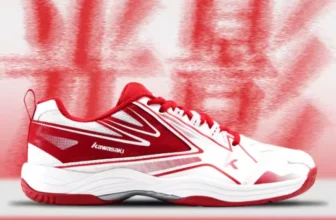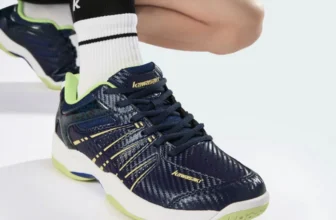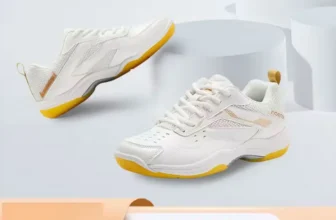
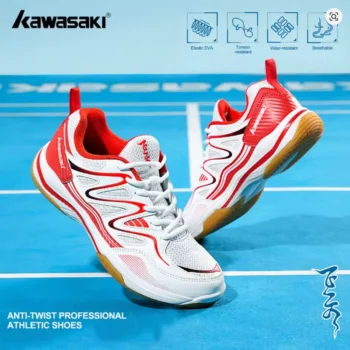

Choosing the right badminton shoes can significantly influence how comfortable, stable, and confident you feel during fast court movement. The Kawasaki Retro Carbon Sheet Badminton Shoes C32016 are designed for players looking for dedicated racket-sport footwear with a distinctive retro appearance, supportive construction, and technology intended to manage the twisting forces created during rapid changes of direction.
Known by the model number K2B31-C32016, these Kawasaki badminton shoes combine a mesh and PU upper with an EVA midsole, a built-in carbon-fiber sheet, TPU reinforcement, and a high-strength rubber outsole. This combination makes the model particularly interesting for badminton players who perform frequent lunges, lateral movements, sudden stops, jumps, and quick recoveries.
For shoppers in the United States, specialized badminton footwear can sometimes be harder to find than running, basketball, or general training shoes. That makes understanding a model’s construction especially important before ordering online. This complete guide examines the Kawasaki C32016 in detail, including its carbon-sheet technology, anti-torsion design, court applications, sizing considerations, outsole characteristics, styling, maintenance, and suitability for badminton, pickleball, table tennis, and other indoor racket sports.

What Are Kawasaki Retro Carbon Sheet Badminton Shoes C32016?
The Kawasaki C32016 is a low-cut racket-sport shoe designed around the movement patterns associated with badminton and similar indoor court activities. Unlike conventional running shoes, which are primarily built for forward motion, badminton footwear needs to accommodate multidirectional movement, quick deceleration, lateral pushes, lunges, and repeated changes in direction.
The model uses a lace-up design and incorporates several layers within its construction. Product specifications identify a mesh and PU upper, an EVA midsole, a carbon-fiber sheet, TPU reinforcement, and a high-strength rubber outsole.
The carbon-fiber component is particularly notable because it is intended to increase torsional stability through the middle of the shoe. In racket sports, this type of reinforcement can be valuable during aggressive directional changes when the foot and shoe are exposed to twisting forces.
Understanding the K2B31-C32016 Model Number
The full model designation is K2B31-C32016. When comparing listings online, shoppers may encounter shortened descriptions such as Kawasaki C32016, Kawasaki Carbon Sheet C32016, Kawasaki anti-torsion badminton shoes, or Kawasaki retro badminton shoes.
Using the model number when comparing products can help distinguish this specific shoe from other Kawasaki badminton footwear with similar colors or silhouettes.
Why Model Numbers Matter When Shopping Online
Product titles can differ between retailers, marketplaces, and countries. The exact model identifier is therefore one of the most useful details to check when comparing sizes, photographs, construction information, and available color variations.
Why Badminton Players Need Specialized Court Shoes
Badminton may appear light and effortless when watched from outside the court, but the sport involves demanding lower-body movement. Competitive rallies can include split steps, explosive forward lunges, backward recovery movements, side-to-side shuffling, jumping, rapid deceleration, and immediate directional changes.
These movements create different footwear demands than jogging or casual walking. A shoe designed primarily for straight-line running may provide comfortable cushioning, yet its geometry may not be optimized for repeated lateral movement.
Lateral Stability Is Essential in Badminton
During a wide defensive movement or aggressive sidestep, the player applies force toward the outside edge of the shoe. Court footwear should feel stable enough to support this type of movement without making the wearer feel excessively elevated above the playing surface.
The Kawasaki C32016’s reinforced structure is designed with racket-sport movement in mind, making it more purpose-specific than ordinary lifestyle sneakers.
Fast Stops Create Significant Forces
Badminton players frequently accelerate and then stop within a very short distance. The shoe must help create a predictable connection between the foot and court during these repeated movements.
A suitable outsole, supportive upper, proper fit, and stable midsole all contribute to the overall playing experience.
Badminton Shoes and Running Shoes Serve Different Purposes
Running footwear generally emphasizes forward propulsion and repetitive heel-to-toe movement. Badminton shoes must accommodate movement in virtually every direction. This is why dedicated indoor court shoes are usually the better option for players who train or compete regularly.

Carbon-Fiber Sheet Technology in the Kawasaki C32016
One of the main features separating this model from basic recreational court shoes is its incorporated carbon-fiber sheet. Carbon-based reinforcement is commonly valued in sports equipment because it can provide rigidity without requiring excessively bulky construction.
In the Kawasaki C32016, the carbon-fiber sheet works as part of the midfoot structure. Its purpose is not simply to make the shoe feel stiff. Instead, it is intended to help control unwanted twisting through the middle section of the shoe.
What Does Anti-Torsion Mean?
Torsion refers to twisting. During badminton, the forefoot and rearfoot may experience forces in different directions when a player plants a foot, pivots, lunges, or quickly pushes toward another area of the court.
An anti-torsion structure is intended to increase resistance to excessive twisting through the midfoot. The goal is to create a more stable platform during aggressive multidirectional movement.
Carbon Fiber and TPU Work Together
The C32016 does not rely exclusively on its carbon-fiber insert. TPU reinforcement is also incorporated into the midsole structure. TPU, or thermoplastic polyurethane, is commonly used in athletic shoes where designers want structural reinforcement while maintaining practical flexibility.
Combined with the EVA cushioning platform, these components create a layered midsole system rather than a simple slab of foam.
Who May Appreciate Anti-Torsion Support Most?
Players who move aggressively, participate in fast doubles rallies, frequently change direction, or train several times each week may place greater value on structural support than occasional recreational players. However, footwear preference remains personal, and proper sizing is just as important as technology.
EVA Midsole Cushioning for Court Movement
The Kawasaki C32016 uses EVA as part of its midsole construction. EVA is widely used in athletic footwear because it can provide cushioning while remaining relatively lightweight.
Badminton shoes need a careful balance. Too little cushioning may make repeated impacts uncomfortable, while excessive soft cushioning can sometimes create an unstable feeling during rapid lateral movement. Court footwear therefore typically aims for a combination of impact management and responsive ground contact.
Why Cushioning Matters in Badminton
Badminton players repeatedly load the feet during lunges, jumps, split steps, and recovery movements. These actions can occur hundreds of times during a long practice session.
A cushioning layer between the foot and outsole can make repeated court movement more comfortable while maintaining the responsiveness required for quick play.
Low Court Feel Versus Soft Cushioning
Many racket-sport players prefer footwear that does not feel excessively tall. Being closer to the ground can contribute to a controlled sensation when changing direction.
The ideal balance depends on the individual player. Some athletes prefer firmer feedback, while others place greater emphasis on cushioning.
Try New Shoes During Practice First
Players preparing for tournaments or league matches should consider testing new shoes during several practice sessions before relying on them in competition. This provides time to evaluate fit, cushioning, traction, and overall comfort.
Mesh and PU Upper Construction
The upper of the Kawasaki C32016 is specified as a combination of mesh and PU material. This blended approach is common in court footwear because different areas of the upper have different responsibilities.
Mesh sections can help reduce an overly enclosed feeling, while synthetic reinforcement can provide additional structure where the foot pushes against the shoe during lateral movement.
Why Breathability Matters on Indoor Courts
Indoor badminton sessions can become warm even when the facility itself is air-conditioned. Fast rallies and continuous footwork generate significant body heat, making ventilation an important consideration for many players.
Mesh panels can help create a more breathable construction compared with an entirely solid upper.
Structural Overlays Support Court Movement
A badminton shoe cannot simply be made as open and flexible as possible. During quick lateral movements, the upper must also help hold the foot securely over the platform.
The PU sections contribute to the structured appearance of the C32016 while complementing the mesh areas.
Secure Lacing Is Important
The C32016 uses a traditional lace-up closure. Players should adjust the laces so the heel and midfoot feel secure without causing excessive pressure or restricting circulation.

High-Strength Rubber Outsole and Court Traction
The outsole is one of the most important areas of any badminton shoe. The Kawasaki C32016 uses a high-strength rubber outsole designed for court applications.
Badminton players need reliable traction when pushing off quickly, but traction should also feel predictable during controlled stopping and directional transitions.
Why Indoor Court Grip Matters
A rally may require movement from the center position to the front court, rear corner, sideline, and back again within seconds. Each movement depends on the outsole interacting consistently with the floor.
Dust, debris, moisture, or worn flooring can affect traction regardless of shoe technology, so players should also pay attention to court conditions.
Non-Marking Court Shoes
Listings for the C32016 describe its rubber sole as suitable for indoor court use, and the model is marketed as a non-marking badminton shoe. This can be important because many American gyms and indoor sports centers require non-marking footwear to protect their floors.
Players should still confirm the footwear requirements of their specific facility before using new shoes.
Keep the Outsole Clean
Indoor-court shoes generally perform best when kept relatively clean. Avoid routinely wearing dedicated badminton footwear outdoors, where dirt, small stones, and abrasive surfaces can collect on or wear down the outsole.
Retro Styling Makes the C32016 Visually Distinctive
Performance is important, but appearance also influences many purchasing decisions. The Kawasaki C32016 embraces a retro-inspired court-shoe aesthetic instead of the extremely minimalist designs found on some modern performance models.
The layered upper, contrasting lines, sculpted sole, and color accents create a look reminiscent of classic athletic footwear while retaining modern structural components.
Retro Sports Shoes Are Back in Style
Retro athletic silhouettes have become increasingly visible in American fashion, with consumers pairing classic court-style footwear with casual clothing as well as sports apparel.
The C32016 fits into that broader visual trend while remaining designed primarily as functional racket-sport footwear.
Available Color Variations
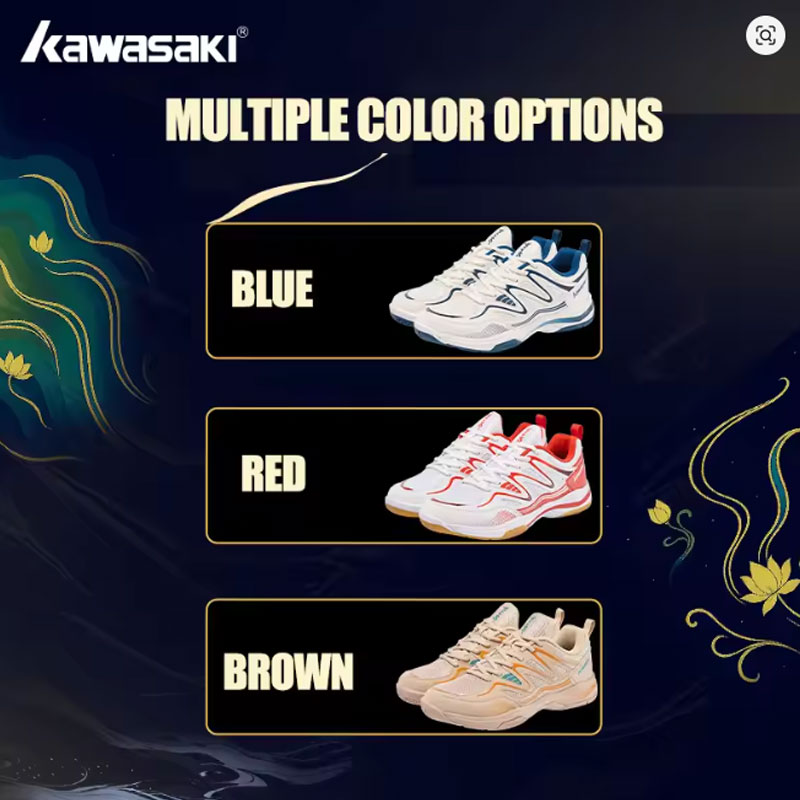
Current listings show the C32016 in several color combinations, including blue-accented, red-accented, and brown or earth-tone variations. Availability can change by retailer and shoe size.
Performance Should Come Before Color
While color is an enjoyable part of choosing athletic footwear, players should prioritize correct sizing, fit, court compatibility, and comfort before selecting a particular colorway.

Kawasaki C32016 Sizing Guide for USA Shoppers
One of the most important considerations for American buyers is sizing. The Kawasaki C32016 is commonly offered in EU sizes 36 through 45, rather than being presented primarily in U.S. shoe sizes.
Because size conversion can vary slightly between manufacturers, shoppers should not depend exclusively on a generic EU-to-US conversion chart.
Measure Your Foot Before Ordering
The most reliable approach is to measure your foot length and compare that measurement with the current sizing information provided by the seller.
Place your heel against a wall while standing on a sheet of paper, mark the position of the longest toe, and measure the distance. Measure both feet because one may be slightly larger than the other.
Consider Athletic Socks
Measure or test footwear while wearing the type of socks you normally use for badminton. Sock thickness can influence how securely the shoe fits.
Do Not Assume Your Running-Shoe Size Will Match
Different brands and shoe categories can fit differently even when the printed size is identical. A player who wears one size in an American running brand should still check Kawasaki’s relevant measurements before ordering.
Fit Should Be Secure Without Crushing the Toes
Badminton footwear should hold the foot securely during lateral movement while still providing appropriate space around the toes. Excessive movement inside the shoe can reduce control, while an overly tight fit can become uncomfortable during extended play.
Kawasaki C32016 for Badminton Players in the USA
Badminton participation in the United States ranges from casual backyard play to organized clubs, university programs, training centers, leagues, and competitive tournaments. Indoor competitive badminton requires much more specialized footwear than casual outdoor play.
The Kawasaki C32016 is particularly relevant to players practicing on indoor sport surfaces where a dedicated racket shoe can provide a more appropriate platform than ordinary sneakers.
Beginner Players
Beginners who are transitioning from casual play to regular indoor training may begin to notice the limitations of general-purpose sneakers. A dedicated badminton shoe can be a logical equipment upgrade once footwork training becomes more intensive.
Intermediate Players
Intermediate players usually perform faster directional changes and spend more time working on movement patterns. The C32016’s carbon sheet and anti-torsion construction may be especially appealing at this stage.
Advanced Recreational Players
Experienced players often develop specific footwear preferences based on court feel, stiffness, cushioning, width, and traction. For them, the C32016 is best evaluated by comparing those characteristics with their existing favorite court shoes.
Competitive Players Should Test Footwear Thoroughly
No technology specification can replace real-world fit. Competitive players should allow time to practice in new shoes and determine whether the fit and response complement their movement style.
Can Kawasaki C32016 Shoes Be Used for Pickleball?
Pickleball has expanded rapidly across the United States, increasing demand for footwear designed to support multidirectional court movement. Because badminton and pickleball both involve lateral steps, quick acceleration, stopping, and directional changes, some racket-sport shoes can serve more than one court activity.
Listings for the Kawasaki C32016 also position the model for pickleball use. However, players should consider the specific surface where they play.
Indoor Pickleball
For indoor pickleball on gym-style surfaces, a badminton-oriented rubber court shoe may be particularly relevant because the movement environment is relatively similar.
Outdoor Pickleball
Outdoor pickleball courts can be much more abrasive than indoor badminton floors. Frequent outdoor use may wear a soft indoor-oriented rubber outsole faster.
If you primarily play outdoor pickleball, consider how the outsole is designed for that surface before making the C32016 your main shoe.
Use the Right Shoe for Your Main Surface
A versatile shoe can be convenient, but dedicated players should prioritize the surface they use most frequently. Indoor badminton and abrasive outdoor pickleball courts place different demands on footwear.

Can the C32016 Be Used for Table Tennis?
Table tennis players also perform repeated lateral movements, short explosive steps, and rapid weight transfers. Although the movement distances are smaller than in badminton, stable low-profile court footwear can be useful.
The Kawasaki C32016 is marketed for racket sports beyond badminton, including table tennis. Players looking for one indoor shoe for several activities may therefore consider this model.
Similarities Between Badminton and Table Tennis Footwork
Both sports demand quick reactions and frequent movement on the balls of the feet. Athletes rarely move in a long, continuous straight line as they might while running.
Personal Preference Still Matters
Some table tennis players prefer very lightweight and minimal shoes, while others appreciate additional cushioning and structure. The best choice depends on the athlete’s playing style and comfort preferences.
How Carbon-Sheet Shoes May Support Fast Footwork
Fast badminton footwork is not only about moving quickly. Players must maintain balance while transitioning between movements. A shoe that feels stable through the middle can contribute to a more controlled sensation during these transitions.
Forward Lunges
When reaching toward the net, the leading foot must accept a significant amount of force. The shoe should remain secure as the player lands and prepares to recover.
Lateral Defense
Fast doubles rallies often require immediate lateral movement to intercept drives. The upper, outsole, and midsole work together during these directional pushes.
Rear-Court Recovery
After moving backward for an overhead shot, players must quickly regain their base position. Stable footwear can contribute to more confident transitions.
Footwear Cannot Replace Footwork Technique
Even advanced shoes cannot compensate for poor movement habits. Proper badminton footwork, balance, strength, and coaching remain fundamental. Footwear should support technique rather than replace it.
Kawasaki C32016 Versus Regular Training Sneakers
American shoppers may wonder whether purchasing dedicated badminton shoes is worthwhile when they already own cross-training or gym sneakers.
Movement-Specific Construction
General training shoes are designed to support a broad range of exercises. Badminton shoes focus more specifically on indoor court movement, including lateral transitions and low-to-the-ground responsiveness.
Outsole Design
Indoor racket footwear typically uses rubber compounds and tread patterns designed around smooth court surfaces. A general sneaker may not provide the same feel.
Torsional Structure
The C32016 includes a carbon-fiber sheet and TPU components specifically intended to improve torsional support through the midfoot.
A Dedicated Shoe Makes More Sense for Frequent Players
Someone playing badminton once every few months may be comfortable using suitable general court footwear. Players training several times a week are more likely to appreciate specialized construction.
How to Break In New Kawasaki Badminton Shoes
A new pair of court shoes may feel different from footwear that has already adapted to your feet. Breaking them in gradually can help you determine whether the fit is correct before demanding sessions.
Start With Light Indoor Wear
Wear the shoes briefly indoors to evaluate heel security, toe space, and pressure points. Keep them clean in case the seller’s return policy requires unworn condition.
Progress to Short Practice Sessions
After confirming the fit, use the shoes during a shorter practice rather than immediately wearing them for a full tournament day.
Evaluate Lateral Movement
Perform normal badminton footwork and pay attention to whether the heel stays secure and the foot remains centered over the sole.
Do Not Try to Break In an Incorrect Size
A shoe that is obviously too short, excessively narrow, or unstable is unlikely to become ideal simply through repeated wear. Correct sizing should come first.
How to Care for Kawasaki C32016 Badminton Shoes
Proper maintenance can help preserve court traction, appearance, and overall shoe condition.
Reserve Them for Court Use When Possible
Wearing badminton shoes on sidewalks, parking lots, or rough outdoor surfaces can introduce debris and accelerate outsole wear. Carrying them separately to the gym can help preserve the sole.
Allow Shoes to Air Dry After Play
After an intense session, remove the shoes from your sports bag and allow them to dry naturally in a ventilated location.
Avoid leaving damp footwear sealed in a bag for extended periods.
Clean the Upper Gently
For routine cleaning, remove loose dirt carefully and follow any manufacturer or seller care recommendations. Aggressive washing methods can damage adhesives, mesh, synthetic overlays, or structural components.
Avoid Excessive Direct Heat
Placing athletic footwear close to strong heaters or using very high drying temperatures can potentially affect materials and adhesives. Natural ventilation is generally a safer approach unless specific care instructions say otherwise.
How to Check When Badminton Shoes Need Replacing
A shoe does not have to look completely destroyed before its performance characteristics begin changing.
Inspect the Outsole
Look for smooth areas, uneven wear, peeling, or significant loss of tread. Reduced outsole condition can affect traction.
Check Midsole Compression
Repeated use gradually changes cushioning materials. If the shoe feels substantially flatter or harsher than when new, the midsole may have experienced considerable compression.
Look for Upper Damage
Examine high-stress areas around the forefoot, sides, heel, and lace structure for tearing or separation.
Replace Shoes Based on Condition, Not Calendar Age Alone
A player training six days per week can wear out footwear far faster than someone playing twice per month. Usage pattern, body weight, movement style, floor surface, and maintenance all affect longevity.

Who Should Consider Kawasaki C32016 Badminton Shoes?
The Kawasaki Retro Carbon Sheet Badminton Shoes C32016 can appeal to several types of racket-sport players.
Regular Badminton Players
Players training consistently may appreciate the combination of EVA cushioning, carbon-fiber reinforcement, TPU support, and a dedicated rubber court outsole.
Players Who Prioritize Midfoot Stability
The carbon-sheet construction makes this model especially interesting for shoppers actively searching for anti-torsion badminton footwear.
Multi-Sport Indoor Court Players
People who participate in badminton, indoor pickleball, or table tennis may appreciate owning one pair of racket-oriented indoor court shoes, depending on their individual needs.
Fans of Retro Athletic Styling
Players who prefer a more classic sneaker-inspired visual style may find the C32016 more attractive than highly futuristic court-shoe designs.
Who Should Compare Other Options?
Players who need a very specific width, highly customized orthotic compatibility, an ultralight minimalist shoe, or footwear primarily designed for abrasive outdoor courts should compare several models before making a decision.
What USA Buyers Should Check Before Ordering
Internationally distributed racket-sport footwear often requires a little more research than buying a familiar U.S. sneaker brand.
Confirm the Exact Model
Look for the model designation K2B31-C32016 when comparing listings.
Confirm EU Sizing
The model is commonly listed in EU sizes 36–45. Use seller-provided measurements instead of blindly converting your regular U.S. size.
Review the Selected Color
Online marketplaces may use a single product page for several color variations. Confirm the exact option selected before completing checkout.
Check Shipping Information
U.S. shoppers should review estimated delivery details, shipping charges, tracking availability, and any applicable marketplace terms.
Understand the Return Policy
Footwear fit can be difficult to judge online. Review the current return and exchange conditions before wearing the shoes extensively.
Keep Packaging Until Fit Is Confirmed
It can be helpful to retain the original box, tags, and packaging until you have verified that the size and model are correct.

Frequently Asked Questions About Kawasaki C32016 Shoes
What is the full model number of the Kawasaki C32016?
The model is commonly identified as K2B31-C32016. Checking this model code can make it easier to compare listings and avoid confusing the shoe with other Kawasaki court models.
Do Kawasaki C32016 shoes contain carbon fiber?
Yes. Product specifications describe a built-in carbon-fiber sheet as part of the midsole structure. It is designed to contribute to torsional stability during racket-sport movement.
What is the Kawasaki C32016 upper made from?
The product specifications describe the upper as a combination of mesh and PU material.
What is the midsole made from?
The C32016 uses an EVA midsole together with a carbon-fiber sheet and TPU reinforcement.
What type of outsole does the C32016 use?
The shoe uses a high-strength rubber outsole intended for racket-sport court movement.
Are Kawasaki C32016 shoes suitable for indoor badminton?
Yes. Badminton is the primary activity associated with the model, and its construction is designed around racket-sport movement.
Can I use the C32016 for pickleball?
The model is also marketed for pickleball. It may be particularly relevant for indoor pickleball, although players who primarily use abrasive outdoor courts should consider outsole durability and surface compatibility.
Can I wear the C32016 for table tennis?
Yes, the model is marketed for multiple racket sports and may suit table tennis players who prefer a structured indoor court shoe.
What sizes are available?
Current product specifications commonly list EU sizes 36 through 45. Availability of individual sizes and colors can vary.
Are the shoes waterproof?
The C32016 is not generally described as waterproof. It is designed primarily as athletic court footwear rather than wet-weather footwear.
Are these shoes for men or women?
Listings vary in how they categorize the product, with many presenting the C32016 as racket-sport footwear suitable across adult sizing. Buyers should focus on foot measurements and the seller’s size chart rather than relying only on gender labels.
Should badminton shoes fit tightly?
They should feel secure enough to reduce excessive internal movement during lateral steps, but they should not crush the toes or cause painful pressure. Correct fit depends on individual foot shape.
Can I use badminton shoes as everyday walking sneakers?
They can physically be worn away from the court, but regular outdoor use can wear down and dirty an outsole intended for indoor play. Players wanting to preserve court performance may prefer to reserve them for sports use.
Key Features of the Kawasaki C32016 at a Glance
- Brand: Kawasaki
- Model: K2B31-C32016
- Primary use: Badminton and racket sports
- Upper: Mesh + PU
- Midsole: EVA cushioning
- Structural support: Carbon-fiber sheet + TPU
- Primary technology: Anti-torsion support
- Outsole: High-strength rubber
- Closure: Lace-up
- Profile: Low-cut court shoe
- Common size range: EU 36–45
- Style: Retro-inspired athletic design
- Related activities: Badminton, indoor pickleball, table tennis, and similar racket sports
Why the Kawasaki C32016 Stands Out Among Court Shoes
The strongest reason to consider the Kawasaki C32016 is the combination of specialized court construction and retro styling. Many inexpensive athletic sneakers provide basic foam and rubber construction, but the C32016 adds a carbon-fiber sheet and TPU reinforcement specifically intended to address midfoot torsion.
That structural approach makes sense for badminton, where a player can move forward, backward, diagonally, and laterally within a single rally.
The mesh and PU upper also reflects the competing requirements of court footwear: players want ventilation, but they simultaneously need enough structure to hold the foot during lateral movement.
The EVA midsole provides the cushioning layer, while the high-strength rubber outsole creates the shoe’s contact with the playing surface. Together, these elements form a complete racket-sport platform rather than a general lifestyle sneaker styled to resemble athletic footwear.

Final Thoughts on Kawasaki Retro Carbon Sheet Badminton Shoes C32016
The Kawasaki Retro Carbon Sheet Badminton Shoes C32016 offer an interesting combination of racket-sport technology and classic athletic styling. For badminton players in the United States who are searching for specialized footwear instead of relying on running shoes or general training sneakers, the K2B31-C32016 deserves consideration.
Its most notable feature is the carbon-fiber sheet incorporated into the midsole. Combined with TPU reinforcement, this component is intended to increase torsional stability when players perform fast directional movements. That is highly relevant to badminton, where lateral pushes, lunges, jumps, split steps, and rapid recovery movements place complex forces through the feet and shoes.
The EVA cushioning platform adds impact management, while the mesh and PU upper balances ventilation with structure. Underneath, the high-strength rubber outsole provides the court-oriented foundation needed for quick racket-sport movement.
Another advantage is versatility. Although badminton is the model’s primary application, the C32016 may also appeal to people participating in indoor pickleball, table tennis, and similar court activities. Players who participate in multiple racket sports may therefore find it useful as a multi-purpose indoor court shoe.
American shoppers should pay particularly close attention to sizing. Because the C32016 is commonly offered in EU sizes 36–45, checking actual foot measurements and the seller’s current size chart is safer than simply guessing an equivalent U.S. size.
It is also important to consider the environment where the shoes will be used. Dedicated indoor players are most likely to benefit from the rubber court outsole and specialized badminton construction. People who primarily compete on rough outdoor pickleball or tennis courts should compare footwear specifically designed for those more abrasive surfaces.
Appearance is another reason the C32016 may stand out. Its retro-inspired silhouette, layered upper, contrasting accents, and classic sports aesthetic provide a different visual direction from ultra-modern minimalist court shoes. Players who care about both court performance and distinctive style may particularly appreciate this approach.
No sports shoe can automatically improve badminton technique. Effective movement still depends on footwork training, balance, strength, timing, and practice. However, appropriate footwear gives players a platform designed for the physical requirements of their sport.
For players looking specifically for Kawasaki badminton shoes in the USA, a carbon fiber badminton shoe, an anti-torsion court shoe, or a versatile indoor racket sports shoe, the Kawasaki C32016 brings those features together in one model.
Before purchasing, verify the K2B31-C32016 model number, compare your foot measurement with the current size chart, confirm your preferred color, review shipping and return conditions, and consider the surface where you play most frequently.
With its carbon-fiber reinforcement, TPU support, EVA cushioning, high-strength rubber outsole, breathable mesh-and-PU upper, and retro court styling, the Kawasaki C32016 badminton shoes provide a feature-rich option for players looking to build a more purpose-specific racket-sport footwear setup.