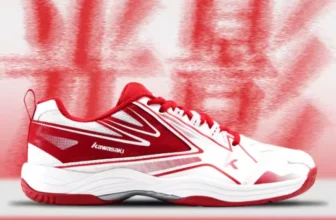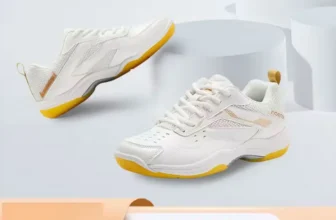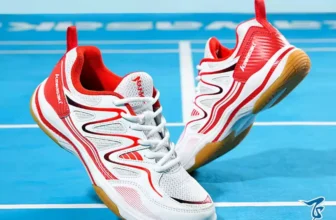
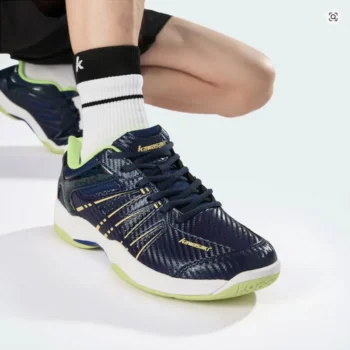

The Kawasaki K-065D Anti-Torsion Cushioning Badminton Shoes are performance-focused indoor court shoes designed for badminton players who need traction, lateral stability, cushioning, breathable construction, and support during rapid multidirectional movement. Rather than using the softer, taller platform commonly found on road-running shoes, the K-065D is built around the needs of court sports where players repeatedly accelerate, brake, lunge, jump, land, and change direction.
View Kawasaki K-065D Badminton Shoes
For U.S. shoppers searching for Kawasaki badminton shoes, anti-torsion badminton shoes, cushioned indoor court shoes, non-slip badminton shoes, carbon fiber badminton shoes, or unisex court footwear for badminton, pickleball-style indoor training, table tennis, and other compatible gym-floor activities, the K-065D brings together several features associated with specialized indoor court footwear.
The K-065D uses a combination of PU leather and multilayer breathable mesh in the upper, a high-elastic EVA midsole, a TPU anti-torsion structure, stable carbon-fiber reinforcement, and a wear-resistant rubber outsole. The interior also uses multilayer breathable mesh, while the lace-up closure allows the wearer to adjust fit across the top of the foot.
These technologies are intended to address different demands of badminton movement. The breathable mesh helps manage heat, the PU sections add structure, EVA provides underfoot cushioning, the TPU anti-torsion component helps control excessive twisting through the midfoot, carbon-fiber reinforcement contributes to stability, and the rubber outsole is designed to provide dependable contact with indoor court surfaces.
This complete guide explains the Kawasaki K-065D construction, cushioning, anti-torsion system, carbon-fiber support, outsole grip, fit, sizing, badminton applications, indoor-court use, comparison with running shoes, care instructions, durability, and the most important details U.S. buyers should review before choosing a size.

What Are the Kawasaki K-065D Badminton Shoes?
The Kawasaki K-065D is part of Kawasaki’s performance-oriented badminton footwear range. It is a low-cut, lace-up indoor court shoe designed around the movements common to badminton rather than straight-line running.
Designed for Indoor Court Movement
Badminton requires frequent side-to-side movement, lunging, quick recovery steps, short sprints, jumping, and abrupt braking. Court footwear therefore needs a different balance of cushioning, stability, and traction than a conventional running shoe.
Low-Cut Construction
The upper does not extend above the ankle. This helps preserve freedom of ankle movement while the shoe’s heel, midfoot, and outsole structures provide support lower around the foot.
Lace-Up Closure
Traditional laces allow the player to adjust tension across the upper instead of relying on a fixed slip-on fit.
Built for Performance Rather Than Waterproof Use
The K-065D is not marketed as waterproof. It is primarily intended for dry indoor court environments.
PU Leather and Multilayer Breathable Mesh Upper
The upper combines synthetic PU leather with multilayer breathable mesh.
PU Leather Adds Structure
PU panels can help reinforce areas of the upper that experience stress during lateral movement and repeated changes of direction.
Mesh Supports Ventilation
The breathable mesh allows more air exchange than a completely solid synthetic upper.
Multilayer Construction
Using several layers allows the shoe to balance ventilation with the structure needed for an indoor sports shoe.
Why This Combination Makes Sense for Badminton
A completely soft mesh upper may feel breathable but can lack support during aggressive sideways movement. A fully solid upper may provide structure but retain more heat. Combining PU and mesh aims to balance these competing needs.
Breathability During Long Badminton Sessions
Badminton can be physically demanding even though the court is relatively compact.
Frequent Movement Generates Heat
Continuous lunges, jumps, and rapid recovery steps can make the feet warm quickly.
Mesh Allows Heat to Escape More Easily
Ventilated materials can improve comfort compared with less breathable footwear.
Breathable Inner Materials
The K-065D also uses multilayer breathable mesh internally, not only on the visible upper.
Socks Still Matter
Moisture-managing athletic socks can complement breathable footwear and help reduce the damp feeling that can develop during long games.

High-Elastic EVA Midsole Cushioning
The K-065D uses high-elastic EVA in the midsole.
What Is EVA?
EVA is a lightweight foam material widely used in athletic footwear because it can compress under impact and provide cushioning beneath the foot.
Useful During Jump Landings
Badminton players regularly leave the floor for smashes and quick interceptions. Cushioning helps soften the feel of repeated landings.
Useful During Lunges
Front-court lunges place substantial load through the lead foot. A cushioned midsole can improve underfoot comfort during repeated movement.
Cushioning Does Not Eliminate Impact
No shoe completely removes forces associated with jumping and running. Footwork technique, strength, surface quality, body mechanics, and training load remain important.
Why Badminton Shoes Need Different Cushioning From Running Shoes
Running shoes are generally designed around repeated forward motion. Badminton shoes need to handle movement in many directions.
Running Shoes Often Use Taller Foam
A thick midsole can feel comfortable for forward running but may create a higher platform during aggressive lateral movement.
Court Shoes Need a Stable Base
Badminton footwear generally keeps the foot closer to the court while still providing enough cushioning for jumping and lunging.
K-065D Uses Cushioning With Stabilizing Components
The EVA works alongside the TPU anti-torsion structure and carbon-fiber reinforcement rather than functioning alone.
Balance Is More Important Than Maximum Softness
The best badminton shoe is not necessarily the one with the softest possible foam. Players typically need a combination of cushioning, responsiveness, grip, and lateral stability.
TPU Anti-Torsion Technology
One of the defining features of the Kawasaki K-065D is its TPU anti-torsion structure through the midfoot and arch area.
What Is Torsion?
Torsion refers to twisting through the shoe. Some flexibility is necessary, but excessive uncontrolled twisting can make rapid court movement feel less stable.
TPU Adds Midfoot Structure
Thermoplastic polyurethane can provide reinforcement without making the entire shoe rigid.
Useful During Direction Changes
Badminton frequently requires the player to stop one movement and immediately push in another direction.
Anti-Torsion Does Not Mean the Shoe Cannot Flex
The goal is controlled flexibility and support rather than completely preventing natural foot movement.
Dual Anti-Torsion Support
Current K-065D documentation describes a dual anti-torsion arrangement around the arch and midfoot.
Supports Forefoot-to-Heel Stability
The reinforcing structure helps connect the front and rear sections of the shoe during directional changes.
Helps Control Excessive Midfoot Deformation
This can make the platform feel more predictable when the player pushes laterally.
Works With the Carbon-Fiber Component
The K-065D combines TPU support with carbon reinforcement rather than relying on only one stabilizing technology.
Useful for Fast Court Footwork
Quick directional changes are one reason anti-torsion technology is emphasized in professional-style badminton shoes.

Stable Carbon-Fiber Support
The K-065D also incorporates a stable carbon-fiber reinforcement component.
Why Carbon Fiber Is Used
Carbon-fiber components can provide stiffness and structural support while remaining relatively lightweight.
Midfoot Stability
The reinforcement helps support the shoe through transitional movement between the heel and forefoot.
Works With TPU Anti-Torsion Design
The carbon structure complements the TPU component rather than replacing it.
Carbon Fiber Is Not the Entire Sole
The shoe uses carbon reinforcement as a stabilizing component within a broader EVA, TPU, rubber, and upper construction.
Wear-Resistant Rubber Outsole
The outsole uses wear-resistant rubber intended for indoor court use.
Grip During Lateral Movement
Rubber can provide the friction needed for side steps, lunges, recovery movements, and sudden changes of direction.
Stability During Jump Landings
A predictable outsole helps the player establish contact with the floor after leaving the ground.
Wear Resistance
Badminton footwork can place substantial friction on particular areas of the outsole, especially around the forefoot.
Outsole Condition Should Be Monitored
Even wear-resistant rubber eventually wears. Severely worn tread can reduce traction and should not be ignored.
Honeycomb-Style Outsole Design
Some current K-065D retail specifications describe a honeycomb-type outsole pattern designed for indoor grip.
Multiple Contact Edges
Patterned rubber provides several surfaces that can engage the floor during movement.
Directional Movement
Badminton requires traction not only forward and backward but also side to side.
Indoor Court Focus
The outsole is optimized around gym and badminton-court use rather than rough outdoor pavement.
Keep the Outsole Clean
Dust on indoor courts can reduce traction. Wiping the sole periodically can help restore cleaner contact with the floor.
Anti-Slip Performance for Indoor Courts
The K-065D is marketed as an anti-slippery court shoe.
Useful During Fast Stops
Players need predictable grip when decelerating after moving toward a shuttle.
Useful During Side Steps
Lateral movement places different demands on the outsole than forward running.
Useful During Recovery Footwork
After a lunge or jump, the player often needs to push back toward the center immediately.
No Outsole Can Guarantee Slip Prevention
Court cleanliness, moisture, dust, outsole wear, and movement technique all influence traction.

Heel Support and Stable Landings
The K-065D design includes supportive construction around the rear of the shoe.
Heel Containment
A stable rear structure helps hold the heel more securely inside the shoe during quick movement.
Landing Support
Heel and midsole construction work together when the foot returns to the floor after jumping.
Directional Transitions
Stable heel containment can help the shoe feel more controlled when changing between forward, backward, and lateral movement.
Correct Size Is Essential
Even a supportive heel design cannot work effectively if the shoe is so large that the foot slides excessively inside it.
Forefoot Support for Lunges
The forefoot is heavily involved in badminton movement.
Front-Court Lunges
Players often step aggressively onto one foot when reaching a short shuttle near the net.
Push-Off Movements
The same forefoot then helps drive the player back toward the center of the court.
Repeated Flexion
The front of the shoe must bend while still maintaining enough structure for control.
Toe-Room Balance Matters
The shoe should fit securely but still allow enough space so the toes are not repeatedly crushed against the front during sudden stops.
Kawasaki K-065D for Badminton
Badminton is the primary intended sport for the K-065D.
Fast Direction Changes
The anti-torsion system and stable outsole are relevant to badminton’s multidirectional movement.
Jumping and Landing
High-elastic EVA cushioning contributes to underfoot comfort during repeated vertical movement.
Long Rally Comfort
Breathable upper and inner materials help manage heat during sustained play.
Designed for Indoor Surfaces
The K-065D is better matched to badminton and gym-style floors than to rough outdoor asphalt or concrete.
Kawasaki K-065D for Doubles Badminton
Doubles play often emphasizes explosive reactions and short movement patterns.
Rapid Side-to-Side Movement
Players can transition quickly between defensive and attacking positions.
Quick Net Movement
Sharp forward steps require stable forefoot contact.
Frequent Jumping
Attacking players may perform repeated overhead jumps and fast recoveries.
Traction Matters in Crowded Court Movement
Reliable foot positioning is especially useful when reactions are fast and rallies change direction suddenly.
Kawasaki K-065D for Singles Badminton
Singles badminton generally requires the player to cover more court area individually.
Longer Movement Patterns
The player may move from one rear corner to the opposite front corner within the same rally.
Repeated Lunging
Forecourt recovery places repeated demand on the legs and footwear.
More Total Court Coverage
Breathability and underfoot comfort become increasingly important during long matches.
Fit Should Be Secure Without Excessive Pressure
A shoe that feels uncomfortably tight at the start may become more problematic as feet warm and slightly swell during extended play.

Can the Kawasaki K-065D Be Used for Table Tennis?
The K-065D is fundamentally a badminton shoe, but some characteristics can also suit other indoor court activities.
Low-Cut Court Construction
Table tennis also involves quick side-to-side footwork.
Indoor Rubber Outsole
The court-oriented traction can be useful on appropriate gym surfaces.
Lightweight Movement
The shoe does not rely on a heavy outdoor structure.
Badminton Remains the Primary Design Focus
Players seeking footwear specifically optimized for another sport may prefer a model designed and marketed for that activity.
Can the K-065D Be Used for Pickleball?
For indoor pickleball on compatible gym flooring, some badminton-shoe features may be useful.
Lateral Stability
Pickleball also involves quick direction changes and short lateral steps.
Indoor Traction
The rubber outsole may work well on suitable indoor floors.
Low-Cut Mobility
The design preserves natural ankle movement.
Avoid Using Indoor Badminton Outsoles Extensively on Rough Outdoor Courts
Outdoor pickleball surfaces can be much more abrasive and may accelerate outsole wear compared with indoor gym flooring.
Can You Use the K-065D for Volleyball?
Some players may find its cushioning and indoor traction suitable for recreational volleyball, but the shoe was designed around badminton.
Jumping Support
EVA cushioning can contribute to landing comfort.
Indoor Grip
The rubber outsole is designed around court traction.
Lightweight Construction
The shoe supports fast movement without the bulk of some heavier athletic footwear.
Sport-Specific Needs Differ
Competitive volleyball players may prefer volleyball-specific shoes with cushioning and stability tuned for their movement patterns.
Kawasaki K-065D Versus Running Shoes
K-065D Is Designed for Lateral Movement
Anti-torsion components and the court outsole address multidirectional movement.
Running Shoes Prioritize Forward Motion
Road-running footwear is generally built around repeated heel-to-toe movement.
Court Shoes Usually Have a More Stable Platform
This can reduce the feeling of excessive movement during side steps.
Running Shoes Are Not Ideal Badminton Shoes
Even comfortable running shoes may not provide the same lateral stability or indoor-court traction as dedicated badminton footwear.
Kawasaki K-065D Versus Casual Sneakers
Casual sneakers are primarily designed for everyday wear rather than competitive court movement.
Badminton Shoes Add Specialized Support
The K-065D includes anti-torsion components and carbon reinforcement.
Badminton Shoes Use Court-Focused Rubber
The outsole is designed around indoor sports surfaces.
Cushioning Is Tuned for Athletic Movement
The EVA midsole supports repeated impact from lunging and jumping.
Casual Footwear May Feel Comfortable but Lack Court Performance
Comfort alone does not determine suitability for high-speed badminton movement.
Unisex Court Shoe Design
Current K-065D listings describe the model as suitable for men and women.
Foot Length Is More Important Than Gender Labeling
The most reliable way to choose a size is to compare measured foot length with the seller’s specific chart.
Width Can Affect Fit
Two people with the same foot length can still prefer different sizes because of foot width and volume.
Athletic Socks Affect Internal Space
Measure and test fit with the type of socks you expect to wear on court.
Do Not Depend Only on Your Normal U.S. Sneaker Size
International badminton-shoe sizing can differ from familiar American casual footwear.
Kawasaki K-065D Sizing for U.S. Buyers
K-065D sizes are commonly published in European sizes or millimeter foot-length systems rather than only in U.S. men’s and women’s numbers.
Current Listings Vary
Some K-065D sellers list approximately EU 35–45, while Korean-market listings commonly show 230–275 mm or 230–280 mm depending on color and inventory.
Measure Heel-to-Toe Length
Stand naturally on a sheet of paper and mark the heel and longest toe.
Measure Both Feet
Many people have one foot that is slightly longer.
Use the Longer Measurement
This helps reduce the risk of choosing a shoe that is too short.
Use the Seller’s Current Chart
Do not rely solely on a generic U.S.-to-EU conversion table because manufacturer fit can vary.

Does the Kawasaki K-065D Fit True to Size?
Current online sources are not completely consistent on this point.
Some Listings Say True to Size
Certain international sellers recommend choosing the normal size.
Other Documentation Says the Fit Can Feel Smaller
Some K-065D manuals and retailers advise checking measurements carefully because professional badminton footwear can feel more snug than casual shoes.
Court Shoes Are Intended to Fit Securely
Excess internal movement can reduce control during fast stops and changes of direction.
Measured Foot Length Is the Safer Approach
When sizing information conflicts, actual measurements and the specific seller chart are more useful than a blanket recommendation to size up or down.
How Should a Badminton Shoe Fit?
Heel Should Feel Secure
The heel should not lift excessively during movement.
Midfoot Should Feel Supported
Laces should hold the shoe securely without painful pressure.
Toes Need Functional Space
The toes should not repeatedly strike the front during sudden stops.
Snug Does Not Mean Painfully Tight
A performance fit should feel controlled while still allowing comfortable movement and circulation.
How to Lace the K-065D for a Secure Fit
Start Evenly at the Forefoot
Avoid creating excessive pressure across the toe area.
Increase Security Through the Midfoot
The laces should help hold the foot against the shoe platform during lateral movement.
Secure the Upper Eyelets
A stable top section can reduce excessive heel movement.
Re-Lace if You Feel Pressure Points
Do not simply tighten every section as much as possible. Balanced tension is more comfortable and often more effective.
Approximate Weight and Lightweight Feel
One current Korean specification lists approximately 286 grams for a 255 mm K-065D shoe, although weight varies with size.
Why Shoe Weight Matters
Badminton players take many rapid steps during a match.
Lower Weight Can Feel Quicker
A lighter shoe can reduce the sensation of bulk during fast footwork.
Structure Still Matters
Removing too much material could compromise stability, so performance footwear needs a balance.
Weight Changes by Size
A larger K-065D will naturally weigh more than a smaller size.
K-065D Color Options
Color availability varies by market and production period.
Black
Black is currently sold in several established Korean-market K-065D listings.
White and Gold
White/gold is another documented current variation.
Blue and Other Seasonal Colors
International listings also show deep blue, cobalt-white-blue, orange, platinum, and other production variations.
Choose Color From the Exact Product Variation
Not every size is necessarily available in every color.
Is the K-065D Waterproof?
No. Current manufacturer-style documentation describes the K-065D as not waterproof.
Designed for Indoor Courts
This aligns with its primary use as badminton footwear.
Avoid Soaking the Shoes
Heavy water exposure can affect synthetic materials, adhesives, shape, and drying time.
Do Not Use as Rain Footwear
The breathable mesh construction is optimized for ventilation rather than weather sealing.
Dry Naturally if They Become Damp
Avoid direct high heat because excessive heat can damage footwear materials and adhesives.
How to Clean Kawasaki K-065D Badminton Shoes
Wipe PU Leather With a Soft Damp Cloth
Current Kawasaki care instructions recommend wiping synthetic-leather areas rather than soaking the shoe.
Use a Damp Brush on Textile Areas
Mesh sections can be cleaned gently to remove dirt.
Do Not Machine Wash
Current retailer care instructions specifically advise against washing the footwear in a washing machine.
Dry in a Ventilated Shaded Area
Stuffing the shoes lightly with clean white paper or cloth can help maintain shape during drying.
Avoid Direct Fire and Strong Heat
High temperatures can distort the shoe and damage adhesives or synthetic materials.

How to Maintain the Rubber Outsole
Remove Court Dust
A clean outsole generally grips better than one coated with dust.
Avoid Outdoor Pavement When Possible
Rough concrete and asphalt can accelerate wear on indoor-oriented rubber.
Inspect High-Wear Zones
Pay particular attention to the forefoot and outer edges where badminton movement can create friction.
Replace Heavily Worn Shoes
Current Kawasaki care guidance warns that severely worn outsoles can become more slippery.
How to Store the K-065D
Allow Shoes to Dry After Play
Do not immediately seal damp footwear in an airtight sports bag for long periods.
Use a Cool Ventilated Location
Normal airflow helps moisture escape.
Avoid Direct Sun and Extreme Heat
High temperatures can affect adhesives and synthetic materials.
Keep Away From Harsh Chemicals
Acids, alkaline substances, and strong chemical solvents can damage footwear materials.
Loosen the Laces Before Storage
This can help the upper return to a natural shape after a long session.
When Should Badminton Shoes Be Replaced?
There is no fixed replacement schedule that works for every player.
Check Outsole Grip
Reduced traction is an important sign of wear.
Check Midsole Feel
Cushioning can gradually feel flatter after extensive use.
Check Upper Stability
Damaged mesh, stretched panels, or separated reinforcement can affect fit.
Check Heel Containment
If the foot begins moving significantly more inside the shoe, the structure may be wearing out.
Frequent Players Wear Shoes Faster
A competitive player training several days per week will generally accumulate wear faster than an occasional recreational player.
Who Should Consider the Kawasaki K-065D?
Intermediate Badminton Players
The combination of cushioning, grip, and anti-torsion features is useful for players developing faster court movement.
Advanced Players
More experienced players may appreciate the stable platform and carbon reinforcement.
Recreational Indoor-Court Players
Users who want a dedicated badminton shoe rather than running sneakers can benefit from the court-specific construction.
Men and Women
The current K-065D product family is commonly sold as unisex.
Outdoor-Only Players May Prefer Another Shoe
The wear-resistant outsole is designed primarily for indoor court use rather than continuous rough-pavement wear.
What U.S. Buyers Should Check Before Ordering
Confirm Model K-065D
Kawasaki sells several visually similar badminton-shoe models, so verify the model number before ordering.
Confirm Size Using Foot Length
Use millimeters or centimeters and compare the measurement with the exact seller chart.
Confirm the Available Color
Color selection varies by seller and production run.
Check Upper Materials
The K-065D uses PU leather and multilayer breathable mesh.
Check Midsole Construction
The documented configuration includes high-elastic EVA and TPU anti-torsion support.
Check Carbon-Fiber Reinforcement
Stable carbon fiber is included in current K-065D specifications.
Check Outsole Material
The shoe uses wear-resistant rubber for indoor court traction.
Understand That It Is Not Waterproof
This is breathable indoor sports footwear, not an all-weather outdoor shoe.
Check Packaging
Some international sellers may ship shoes without the original shoe box to reduce package size.
Read the Current Seller Variation Before Checkout
Size range, color selection, packaging, and inventory can differ even when the K-065D core construction remains the same.
Frequently Asked Questions About Kawasaki K-065D Badminton Shoes
What sport are Kawasaki K-065D shoes designed for?
They are primarily designed as professional-style badminton shoes for indoor court use.
Are they unisex?
Yes. Current K-065D listings commonly describe them as suitable for men and women.
What is the upper made from?
The upper combines PU leather with multilayer breathable mesh.
Is the inside breathable?
Yes. Current specifications also list multilayer breathable mesh as the inner material.
What cushioning does the K-065D use?
The midsole uses high-elastic EVA cushioning.
Does the K-065D have anti-torsion support?
Yes. TPU anti-torsion reinforcement is one of the main documented features.
Does it contain carbon fiber?
Yes. Current specifications list stable carbon-fiber reinforcement or a carbon board as part of the support system.
What is the outsole made from?
The outsole uses wear-resistant rubber.
Are the shoes anti-slip?
They are marketed for anti-slippery indoor-court performance, although traction still depends on court condition, outsole cleanliness, and wear.
Are they waterproof?
No. Current K-065D documentation specifies that the shoes are not waterproof.
Are they low-cut?
Yes. The upper does not extend above the ankle.
Do they use laces?
Yes. The closure is a traditional lace-up system.
Can I use them for indoor badminton?
Yes. Indoor badminton is the primary intended application.
Can I use them for table tennis?
The court-style construction may work for recreational indoor table tennis, although badminton remains the primary design purpose.
Can I use them for pickleball?
They may work for indoor pickleball on compatible gym surfaces, but extensive outdoor use can accelerate outsole wear.
Can I use them for running?
They are not designed as dedicated distance-running shoes. Running shoes are generally better suited to repeated straight-line road or treadmill mileage.
Can I wear them casually?
You can, but using dedicated indoor court shoes outdoors can shorten outsole life.
Do they fit true to size?
Seller guidance differs. Some listings say true to size while other manuals warn that badminton shoes can feel snug. Measuring your foot and using the exact chart is the safest approach.
What size range is available?
Current listings commonly cover approximately EU 35–45, while certain regional listings use 230–280 mm ranges. Availability varies by seller and color.
How should I measure my foot?
Stand on paper, mark the heel and longest toe, measure both feet, and use the longer measurement when consulting the seller’s chart.
Should badminton shoes be tight?
They should feel secure and controlled, but not painfully tight or restrictive.
How heavy are the K-065D shoes?
One current retail specification lists approximately 286 grams for a 255 mm shoe. Weight varies by size.
Can I wash them in a washing machine?
No. Current Kawasaki retailer care instructions specifically advise against machine washing.
How should I clean them?
Wipe PU sections with a soft damp cloth and gently brush textile areas. Dry naturally in a shaded, ventilated location.
Should I dry them in direct sunlight?
Extended direct sun and extreme heat are best avoided because they can affect materials and adhesives.
Are they suitable for professional players?
Current documentation categorizes the K-065D as professional-level badminton footwear, but individual fit and playing preferences still matter.
Does anti-torsion technology prevent ankle injuries?
No shoe can guarantee injury prevention. The anti-torsion structure is designed to improve shoe stability during movement, not eliminate the possibility of injury.
Does the cushioning eliminate impact?
No. EVA cushioning can soften underfoot impact, but landing forces still depend on movement, body mechanics, surface, and technique.
Is the outsole suitable for PVC badminton flooring?
Current K-065D specifications specifically identify PVC flooring as an applicable surface.
What are the most important specifications to verify before buying?
Check the K-065D model number, measured foot length, seller size chart, available color, PU and mesh upper, EVA cushioning, TPU anti-torsion structure, carbon-fiber support, rubber outsole, and packaging details.

Why Specialized Badminton Shoes Matter
A badminton court may be smaller than many sports fields, but the movement demands are intense.
Rapid Acceleration
Players repeatedly push toward the shuttle from a relatively stationary base position.
Sudden Braking
After reaching the shuttle, the player must control momentum quickly.
Lateral Movement
Defense frequently requires side-to-side footwork rather than straight-line running.
Jumping and Landing
Overhead attacks and interceptions place repeated demand on the shoe’s cushioning and stability.
Footwear Is Part of the Court System
Performance depends on the interaction between the athlete, shoe, outsole, and playing surface.
Why Anti-Torsion Support Matters for Badminton Footwork
Badminton movement often places the forefoot and heel in different positions during transitions.
Lunging Creates Rotational Load
The lead foot may land at an angle while the body continues moving.
Recovery Requires Immediate Push-Off
The player then uses the foot to move back toward the center.
Midfoot Reinforcement Creates a More Stable Platform
The TPU and carbon-fiber structure in the K-065D is designed to reduce excessive shoe deformation through these transitions.
Stability Should Still Feel Natural
A well-designed court shoe should provide structure without making normal forefoot flexion feel completely rigid.
Why Cushioning and Stability Must Work Together
Softness alone is not enough for high-speed indoor sports.
EVA Helps With Underfoot Comfort
The foam compresses under load during lunging, running, and landing.
TPU Helps Control Twisting
The reinforcing element supports the midfoot through multidirectional movement.
Carbon Fiber Adds Structure
The reinforcement contributes to overall platform stability.
Rubber Provides Court Contact
The outsole forms the final connection between the athlete and the floor.
The K-065D Is a System of Components
Its performance comes from how the upper, cushioning, support structures, and outsole work together rather than from one individual feature.
How to Get the Best Performance From the Kawasaki K-065D
Use Them Primarily Indoors
This preserves the court-oriented rubber outsole.
Keep the Soles Clean
Dust can interfere with traction.
Lace Them Securely
A stable fit helps the foot move with the shoe rather than sliding inside it.
Allow the Shoes to Dry After Use
Ventilation helps manage accumulated moisture.
Inspect Wear Regularly
Monitor the outsole, upper, heel structure, and cushioning feel.
Replace Them When Performance Declines
Continuing to play in severely worn court shoes can reduce the benefits of the original cushioning and traction design.
Final Thoughts on the Kawasaki K-065D Anti-Torsion Cushioning Badminton Shoes
The Kawasaki K-065D Anti-Torsion Cushioning Badminton Shoes offer a court-focused combination of breathable materials, impact cushioning, structural reinforcement, and rubber traction for players who want footwear designed around badminton movement rather than general athletic use.
The PU leather and multilayer breathable mesh upper balances structure with airflow. This is particularly useful during longer badminton sessions, when the feet can become warm while still needing enough upper support for rapid lateral movement.
Underfoot, the high-elastic EVA midsole adds cushioning for lunges, jumps, and repeated court movement. Instead of treating cushioning as the only priority, Kawasaki combines the EVA with TPU anti-torsion reinforcement and stable carbon-fiber support.
This anti-torsion structure is one of the K-065D’s most important performance features. Badminton requires constant transitions between forward, backward, and sideways movement, so controlling excessive midfoot twisting can contribute to a more stable platform.
The carbon-fiber component provides additional reinforcement without turning the shoe into a rigid boot. Together with the TPU structure, it supports the relationship between the forefoot and heel during rapid court transitions.
The wear-resistant rubber outsole completes the system. Indoor court traction is critical during sudden braking, lunges, side steps, and recovery movement. The outsole is designed around those conditions rather than prolonged running on outdoor pavement.
The K-065D is also a practical choice for players who want a low-cut shoe. The upper remains below the ankle, preserving mobility while heel containment, lacing, midfoot reinforcement, and outsole design contribute to stability lower around the foot.
U.S. shoppers should pay particular attention to sizing. Current K-065D listings can use European sizes, millimeter foot lengths, or regional conversions, and published fit advice is not perfectly consistent between sellers. Measuring heel-to-toe length and using the exact seller chart is therefore more reliable than simply ordering the same number worn in a casual U.S. sneaker.
The shoes are also not waterproof. They are breathable indoor sports footwear and should be cared for accordingly. Avoid machine washing, harsh chemicals, extreme heat, and prolonged outdoor pavement use. Clean PU areas gently, brush textile sections when necessary, and allow the footwear to dry in a shaded ventilated area.
View Kawasaki K-065D Badminton Shoes Product Details
Before ordering, confirm the exact K-065D model, measure both feet, compare your longer foot with the current size chart, check color availability, and verify the PU leather and multilayer mesh upper, high-elastic EVA midsole, TPU anti-torsion reinforcement, stable carbon-fiber support, wear-resistant rubber outsole, lace-up construction, and indoor-court application.
For U.S. shoppers searching for Kawasaki badminton shoes, anti-torsion badminton shoes, cushioned indoor court shoes, non-slip badminton footwear, carbon fiber court shoes, or professional-style unisex badminton shoes for quick footwork and indoor training, the Kawasaki K-065D provides a well-rounded combination of cushioning, breathable construction, traction, structural stability, and court-specific performance.