


GU10 Spot LED Track Lighting is a flexible directional lighting solution for homes, retail stores, galleries, offices, studios, kitchens, showrooms, restaurants, and other interiors where focused illumination is more useful than a single fixed ceiling light. By combining a track-mounted spotlight head with a replaceable GU10 lamp, this type of fixture gives users more control over where light is directed and allows the bulb itself to be selected according to brightness, color temperature, beam angle, and dimming preferences.
View GU10 Spot LED Track Lighting
For U.S. shoppers searching for GU10 track lighting, adjustable LED track lights, track spotlights for kitchens, retail track lighting, gallery spotlights, or modern directional ceiling lighting, a GU10-based system can be appealing because it combines a clean architectural appearance with replaceable lamp flexibility.
Instead of relying on a permanently integrated LED module, a GU10 spotlight fixture generally accepts a compatible GU10 lamp. That means the light source can often be replaced later without replacing the complete track head. Users can also choose different lamp outputs or color temperatures as long as they remain within the electrical and physical limits of the fixture.
Track lighting is especially useful when a room needs more than general illumination. A spotlight can be aimed at artwork, products, shelves, countertops, displays, furniture, architectural details, or work areas. Multiple heads can often be placed along the same compatible track so each fixture serves a different purpose.
This complete guide explains GU10 lamp bases, track spotlight construction, adjustable directional lighting, color temperature, beam angle, brightness, retail and residential applications, kitchen lighting, gallery lighting, installation considerations, dimming, maintenance, black versus white finishes, U.S. voltage compatibility, common mistakes, and the most important details to check before ordering.

What Is GU10 Spot LED Track Lighting?
GU10 spot LED track lighting combines three basic elements: a ceiling or wall-mounted track system, an adjustable spotlight fixture, and a GU10-format lamp.
The track distributes electrical power along its length. The spotlight attaches to the compatible track through an adapter, and the GU10 lamp fits inside the spotlight housing.
The GU10 Lamp Base
GU10 refers to a common twist-lock lamp base. The bulb has two short pins with enlarged ends that insert into the socket and lock with a partial turn.
GU10 LED lamps are widely used in spotlights because their compact form works well for narrow directional fixtures.
The Track Spotlight Head
The fixture body normally surrounds the GU10 lamp and connects to an adjustable joint. This lets the user aim the spotlight rather than leaving it fixed straight downward.
The Track Adapter
The adapter connects the spotlight to a compatible track system and transfers electrical power to the lamp holder.
Track Compatibility Matters
Not every track spotlight fits every track. Track dimensions, circuit arrangements, adapter geometry, and electrical standards can vary. Always verify that the spotlight and track belong to compatible systems before purchasing components separately.
Why GU10 Track Lighting Is Popular
GU10 track fixtures remain popular because they combine simple lamp replacement with directional control.
Replaceable LED Bulbs
If the lamp fails, users can usually replace the GU10 bulb rather than replacing the complete spotlight fixture.
Flexible Lighting Choices
A compatible fixture may accept different GU10 bulbs with different color temperatures, brightness levels, beam patterns, or dimming capability.
Directional Lighting
Adjustable heads can focus light where it is needed instead of illuminating the room evenly in every direction.
Modern Appearance
Cylindrical GU10 track spotlights can blend easily with modern kitchens, offices, shops, studios, and minimalist interiors.
Useful for Both Residential and Commercial Spaces
The same basic lighting concept can work above a kitchen counter or inside a retail store because the direction and lamp selection can be adapted to different tasks.

Adjustable Track Heads Provide Directional Control
One of the primary advantages of track lighting is the ability to aim each spotlight separately.
Direct Light Toward a Wall
A spotlight can wash a wall with light or highlight artwork and decorative finishes.
Direct Light Toward a Counter
In kitchens or workrooms, a track head can point toward a preparation or task area.
Direct Light Toward Merchandise
Retail stores can aim individual fixtures at shelves, displays, mannequins, or featured products.
Redirect the Light Later
If furniture, artwork, or merchandise moves, the spotlight can often be repositioned without changing the entire electrical installation.
Adjustment Range Depends on the Fixture
Many GU10 track heads offer substantial rotation and tilt, but the exact range differs by model. Confirm the movement range of the selected fixture if precise aiming is important.
GU10 Track Lighting for Kitchens
Kitchens benefit from layered lighting because one ceiling fixture rarely illuminates every working surface effectively.
Countertop Lighting
Track spotlights can be aimed at preparation areas where brighter directional light is useful.
Kitchen Island Lighting
A row of track heads can provide flexible illumination above an island while maintaining a clean modern appearance.
Cabinet and Display Lighting
Selected spotlights can highlight decorative cabinets, open shelving, glassware, or architectural features.
Avoid Creating Strong Shadows
Place and aim fixtures so the user’s body does not block the light reaching important work surfaces.
GU10 Track Lighting for Living Rooms
Living rooms often need both general ambient light and more focused decorative illumination.
Highlight Artwork
A directed spotlight can draw attention to paintings, photographs, or wall art.
Highlight Shelving
Bookshelves, display cabinets, and decorative objects can be illuminated separately.
Create Accent Lighting
Spotlights can add depth to a room by creating brighter visual areas rather than lighting every surface equally.
Use Softer Color Temperatures for Relaxed Spaces
Many homeowners prefer warmer GU10 lamps in living rooms because warm white lighting can create a more comfortable evening atmosphere.

GU10 Track Lighting for Retail Stores
Retail environments are one of the classic applications for adjustable track spotlights.
Highlight New Products
Individual fixtures can be aimed at seasonal displays or promotional merchandise.
Illuminate Clothing Racks
Directional lighting can make apparel colors and textures easier for customers to see.
Light Mannequins
A stronger spotlight can create a focal area around featured outfits.
Adapt to Changing Layouts
Retail merchandise changes frequently, so adjustable lighting can be more practical than fixed spotlights.
Good Retail Lighting Supports Visual Merchandising
Lighting should help customers notice products naturally without creating uncomfortable glare or excessive contrast.
GU10 Track Spotlights for Galleries and Artwork
Galleries and home art displays often require precise light direction.
Highlight Individual Pieces
One spotlight can be dedicated to one painting, sculpture, or display area.
Adjust After Rearranging Artwork
When artwork is moved, compatible track heads can often be redirected toward the new position.
Choose Appropriate Color Rendering
If artwork color accuracy matters, select GU10 LED bulbs with a suitable color rendering specification.
Protect Sensitive Artwork
Some artwork and materials can be affected by prolonged light exposure. Museums and collectors should use lighting strategies appropriate to the specific material being displayed.
GU10 Track Lighting for Offices and Studios
Track lighting can also be useful in offices, creative studios, salons, showrooms, and small commercial workspaces.
Task Lighting
A fixture can focus additional illumination on desks, workbenches, or display areas.
Presentation Areas
Spotlights can emphasize whiteboards, products, or demonstration spaces.
Flexible Layouts
When furniture changes, adjustable track heads can often follow the new configuration.
Avoid Screen Glare
In offices with monitors, aim spotlights carefully so direct reflections do not create uncomfortable glare on displays.

Choosing the Right GU10 LED Bulb
The track fixture determines the lamp base and electrical limits, while the GU10 bulb determines much of the final lighting effect.
Check Wattage Limits
Never exceed the maximum lamp wattage stated by the fixture manufacturer.
Check Physical Lamp Size
Some decorative GU10 lamps are longer than others. Make sure the selected bulb fits correctly inside the fixture housing.
Check Voltage
The lamp voltage must match the electrical system and fixture requirements.
Check Dimming Compatibility
If the circuit uses a dimmer, both the LED bulb and dimming equipment must be compatible.
Do Not Assume Every GU10 Lamp Is Interchangeable
The base may fit physically while voltage, wattage, dimming, length, or heat-management requirements remain different.
Warm White, Neutral White, and Cool White Lighting
Color temperature is one of the most important choices when selecting GU10 LED lamps.
Warm White
Warm white light is commonly used for living rooms, restaurants, bedrooms, boutiques, and hospitality areas where a comfortable atmosphere is desired.
Neutral White
Neutral white can provide a balanced appearance for kitchens, offices, showrooms, and multipurpose spaces.
Cool White
Cooler color temperatures can create a crisp appearance that may suit workspaces, modern stores, utility areas, and certain commercial displays.
Use One Consistent Color Temperature When Appropriate
Mixing noticeably different lamp colors along the same track can create an uneven appearance unless the contrast is intentional.
Understanding GU10 Beam Angle
Beam angle describes how widely the light spreads from the lamp.
Narrow Beam
A narrower beam concentrates light in a smaller area and can be useful for accent lighting or distant displays.
Medium Beam
A medium beam balances concentration and coverage for general spotlight applications.
Wide Beam
A wider beam covers a larger surface but produces less concentrated light at the center.
Beam Angle Comes From the Lamp as Well as the Fixture
Because GU10 systems often use replaceable bulbs, the lamp itself plays a major role in determining the actual beam pattern.

Brightness and Lumen Output
Modern LED lighting is better compared by lumens than watts.
Watts Measure Power Consumption
A wattage figure tells you how much electrical power a lamp uses.
Lumens Describe Light Output
Higher lumen output generally means a brighter lamp.
Room Use Determines the Needed Output
A small decorative shelf may need less light than a kitchen work surface or retail merchandise display.
More Lumens Are Not Always Better
An overly bright narrow spotlight can create glare and harsh contrast. Choose output according to distance, beam angle, room size, and purpose.
Dimmable GU10 Track Lighting
Some GU10 lighting systems can be dimmed, but dimming depends on several components working together.
The GU10 Bulb Must Be Dimmable
A non-dimmable LED lamp should not be assumed to work correctly with a dimmer.
The Dimmer Must Support LED Loads
Older dimmers designed for incandescent lighting may not perform correctly with modern low-wattage LED lamps.
The Track System Must Be Appropriate
The electrical configuration must also support the chosen dimming method.
Watch for Flicker
Incompatible dimmer and lamp combinations can produce flickering, limited dimming range, humming, or unstable performance.
Black GU10 Track Lighting
Black track fixtures create strong visual definition and are popular in modern commercial and residential interiors.
Black Ceilings
Black fixtures can visually blend into dark ceilings used in studios, restaurants, and retail environments.
White Ceilings
On a white ceiling, black track lighting creates an intentional architectural contrast.
Industrial Interiors
Black cylindrical spotlights fit naturally with exposed concrete, metal, brick, and industrial-style decor.
Black Fixtures Can Become Part of the Design
Instead of trying to disappear, the track and spotlights can form visible lines across the ceiling.
White GU10 Track Lighting
White fixtures are useful when the goal is to keep the lighting system visually quieter.
Blend With White Ceilings
A white track and spotlight system can reduce visual contrast.
Minimalist Interiors
White fixtures work well in clean contemporary spaces where other design elements should remain the focus.
Retail Showrooms
A white track can visually recede while the illuminated products receive attention.
Choose Finish According to the Entire Room
Consider ceiling color, hardware, furniture, shelving, and other fixtures rather than choosing black or white in isolation.

Aluminum Construction in Track Spotlights
Many GU10 track spotlights use aluminum or die-cast aluminum bodies.
Lightweight Structure
Aluminum provides useful strength without making each track head excessively heavy.
Heat Management
Metal housings can help conduct heat away from the lamp area, although actual thermal performance depends on the complete fixture design.
Durable Finish Options
Powder-coated or painted aluminum can provide clean black, white, or metallic appearances.
Construction May Differ by Variation
Confirm the material stated for the exact product option rather than assuming every GU10 fixture uses identical aluminum thickness or finish.
Track Lighting Versus Recessed Lighting
Both systems can use directional lamps, but they create different installation and design effects.
Track Lighting Is More Adjustable
Heads can often be moved or redirected without cutting additional ceiling openings.
Recessed Lighting Is More Visually Integrated
Recessed fixtures sit inside the ceiling and can create a cleaner flush appearance.
Track Lighting Is Useful for Changing Displays
Retailers and galleries can benefit from easier aiming and rearrangement.
The Best Choice Depends on the Space
Some rooms use recessed lights for general illumination and track lights for accent lighting.
Track Lighting Versus Fixed Ceiling Spotlights
Track Systems Offer Position Flexibility
Compatible heads may be repositioned along the track depending on system design.
Fixed Spots Stay in One Electrical Location
They can still tilt and rotate, but the electrical mounting point remains fixed.
Track Systems Can Support Multiple Heads
One track can provide a coordinated platform for several individual spotlights.
Track Systems Require Compatible Components
The added flexibility also means users must pay more attention to track, adapter, voltage, and circuit compatibility.

Single-Circuit and Multi-Circuit Track Systems
Track systems can be designed differently depending on how many independently controlled lighting circuits they support.
Single-Circuit Track
All compatible heads on a simple single-circuit track commonly operate together from the same switched circuit.
Multi-Circuit Track
More advanced systems can support different groups of fixtures on separate circuits.
Adapter Compatibility Is Essential
A spotlight adapter designed for one track standard may not fit or connect correctly to another.
Do Not Purchase Based Only on Track Width
Two tracks can look similar while using different internal conductor layouts and adapter designs.
Important U.S. Voltage Considerations
This is one of the most important considerations for American shoppers purchasing imported track lighting.
Standard U.S. Residential Power Is Commonly 120V
Many U.S. household lighting circuits operate at nominal 120 volts.
Many International Track Fixtures Are Designed for 220–240V
GU10 track systems sold in other markets are frequently specified for higher mains voltage.
The Same GU10 Shape Does Not Guarantee Electrical Compatibility
A GU10 bulb can physically fit a socket while still having an incompatible operating voltage.
Verify Voltage Before Installation
Never connect a fixture to a U.S. electrical circuit unless the fixture, track, lamp, and associated components are rated for that voltage and installation method. When uncertain, consult a licensed electrician.
Check U.S. Electrical Listing and Local Code Requirements
Electrical fixtures permanently installed in a building should be evaluated for local safety and code requirements.
Check Product Certification
Look for the relevant safety certifications required by your jurisdiction, building, insurer, or electrician.
Commercial Projects May Have Additional Requirements
Retail stores, offices, restaurants, and public buildings may have stricter installation and inspection requirements than simple temporary residential lighting.
Local Electrical Codes Take Priority
Online product specifications do not override local building or electrical regulations.
Use a Qualified Electrician for Mains Installation
Track lighting connected directly to building wiring should be installed or reviewed by a qualified professional where required.
How to Plan a Track Lighting Layout
A good track-lighting design begins with the objects and surfaces that need illumination.
Identify Focal Areas
Mark artwork, counters, displays, shelves, work surfaces, or product zones that need dedicated light.
Choose the Track Position
The track should allow the fixtures to aim naturally at those targets without extreme angles.
Estimate the Number of Heads
The number depends on room size, bulb output, beam angle, and how many separate areas require light.
Consider Future Changes
Leave some flexibility if furniture or displays may move later.
Plan Electrical Capacity Too
The total connected load must remain within the ratings of the track, circuit, adapters, fixtures, and electrical installation.

How Far Should Track Lights Be From the Wall?
There is no single distance that works for every room because ceiling height, beam angle, wall height, and desired effect all matter.
Artwork Lighting
The track should be positioned so the beam reaches the artwork at a useful angle without creating excessive glare.
Wall Washing
Broader coverage generally requires different spacing and beam angles than narrow accent lighting.
Retail Shelving
The fixtures need to illuminate merchandise without placing customers directly in the strongest glare path.
Mock Up the Lighting When Possible
Testing temporary positions before completing a large installation can help identify unwanted shadows and glare.
How Many Track Heads Do You Need?
The ideal number depends on the room and the job each spotlight must perform.
Small Residential Areas
A short track with a few adjustable heads may be sufficient for a kitchen, hallway, or display wall.
Larger Rooms
More heads may be needed when multiple zones require independent illumination.
Retail Applications
Stores often use a greater number of fixtures because merchandise displays need consistent visual emphasis.
Avoid Adding Fixtures Without Calculating Load
More track heads increase electrical load. Stay within the ratings specified for the track system and circuit.
Installing GU10 Bulbs in the Spotlight
Turn Off Power
Ensure the fixture is safely de-energized before handling the lamp.
Insert the GU10 Pins
Align the two pins with the matching socket openings.
Twist to Lock
Press gently and rotate the lamp according to the socket design until it locks into place.
Check the Fit
The bulb should sit securely without excessive looseness.
Do Not Force the Bulb
If the pins do not align naturally, remove the lamp and check orientation rather than applying excessive pressure.
Replacing a GU10 LED Bulb
One benefit of a replaceable-lamp system is straightforward maintenance.
Switch Off Electrical Power
Do not work on an energized fixture.
Allow the Lamp to Cool
LED lamps can become warm during use.
Rotate and Remove
Release the twist-lock connection according to the socket design.
Install the Replacement
Use a compatible GU10 lamp that stays within the fixture ratings.
Match Existing Lamps When Appearance Matters
Replacing one lamp with a different color temperature or beam angle can make it visibly different from nearby track heads.

Energy Efficiency With LED GU10 Bulbs
LED technology allows GU10 spotlights to provide useful directional light with substantially lower wattage than older halogen lamps designed for similar applications.
Lower Power Consumption
Modern LED lamps can produce substantial light output while drawing relatively modest electrical power.
Reduced Replacement Frequency
Quality LED lamps generally provide much longer rated service life than traditional incandescent or halogen lamps.
Less Unwanted Heat
LEDs are generally more efficient, although they still create heat that must be managed by the lamp and fixture.
Efficiency Depends on the Actual Bulb
The fixture itself does not determine LED efficiency. Review the specifications of the GU10 lamp selected for the installation.
Using GU10 Track Lights for Product Photography
Adjustable lighting can be useful in small studios and content-creation areas.
Directional Highlights
A spotlight can create emphasis on backgrounds, displays, or non-reflective products.
Flexible Positioning
The head can be redirected when the photography setup changes.
Choose High-CRI Lamps When Color Accuracy Matters
Accurate product color reproduction can be especially important for fashion, artwork, cosmetics, food, and ecommerce images.
Track Lighting Is Not a Complete Studio Lighting System
Professional photography may still require diffusers, softboxes, controlled color temperature, reflectors, and specialized fixtures.
GU10 Track Lighting for Restaurants and Cafes
Highlight Tables
Directional light can create more intimate visual zones.
Illuminate Menus and Counters
Focused light can improve visibility in ordering and service areas.
Highlight Decorative Walls
Artwork, textured surfaces, signs, and branding elements can receive dedicated accent light.
Warm Light Is Common in Hospitality
Many hospitality spaces use warmer light because it can create a more relaxed atmosphere, although the final choice depends on the interior concept.
GU10 Track Lighting for Showrooms
Furniture, automotive, appliance, fashion, and interior-design showrooms often need flexible lighting.
Highlight Feature Products
Aimed beams can draw attention toward premium or promotional items.
Adapt to New Displays
Fixtures can be redirected after inventory or showroom layouts change.
Create Depth
Combining bright focal points with softer general illumination can make large display areas feel more visually structured.
Keep Lighting Consistent Across Product Categories
Major differences in color temperature can affect how customers perceive product colors.
Common Track Lighting Mistakes
Buying an Incompatible Track Head
The fixture may not fit the track even if both are described generally as track lighting.
Ignoring Voltage
This is especially important when ordering imported lighting for U.S. use.
Using the Wrong GU10 Bulb
Incorrect wattage, voltage, physical size, or dimming capability can create problems.
Aiming Directly Into Eye Level
Strong spotlights can create uncomfortable glare when positioned poorly.
Mixing Color Temperatures Accidentally
A warm lamp beside a cool lamp can make the installation look inconsistent.
Exceeding Track Load
Every track and circuit has electrical limits.
Do Not Treat Electrical Installation as a Decorative DIY Task Only
Track lighting carries mains electricity. Follow electrical codes and use a qualified professional where required.
How to Maintain GU10 Track Lighting
Turn Off Power Before Cleaning
Safety should always come first around electrical fixtures.
Remove Dust
A soft dry cloth can help maintain the appearance of the track and fixture body.
Check Lamp Performance
Replace lamps that flicker, fail, or change noticeably in output after troubleshooting compatibility issues.
Inspect Track Heads
Make sure fixtures remain securely attached and do not show signs of overheating or physical damage.
Do Not Spray Cleaner Directly Into Electrical Components
Apply appropriate cleaning products to a cloth rather than introducing liquid into the track, adapter, or lamp socket.
What U.S. Buyers Should Check Before Ordering
Confirm the Voltage
This is the most important specification for U.S. buyers. Determine whether the fixture and track are rated for 120V, 220–240V, or another operating range.
Confirm the Track Standard
Make sure the spotlight adapter is compatible with the track you intend to use.
Confirm Whether the Track Is Included
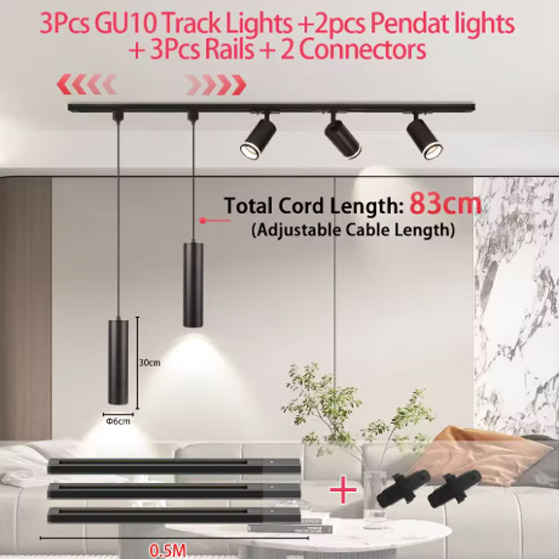
Some listings sell only the spotlight head, while others sell complete kits containing track sections and multiple heads.
Confirm Whether the GU10 Bulb Is Included
Many GU10 fixture listings provide the housing and socket without the lamp.
Check Maximum Lamp Wattage
Stay within the fixture manufacturer’s limit.
Check Lamp Dimensions
Make sure the GU10 bulb physically fits within the fixture housing.
Check Color Options
Black and white are common, but exact finish availability may vary.
Check Dimming Compatibility
If you plan to use a dimmer, verify the lamp, fixture, circuit, and dimming equipment together.
Check Certification
For permanent U.S. installation, review applicable safety listings and local code requirements.
Check Package Quantity
Determine whether the listing price refers to one spotlight, several heads, a complete track kit, or another combination.
Do Not Order Until Compatibility Is Clear
A visually attractive fixture is not useful if it does not fit your track or electrical system. Verify technical compatibility before checkout.

Frequently Asked Questions About GU10 Spot LED Track Lighting
What is a GU10 track light?
It is a track-mounted spotlight fixture designed to accept a compatible GU10 lamp.
What does GU10 mean?
GU10 refers to the twist-lock two-pin lamp base used by the bulb and socket.
Is the GU10 bulb replaceable?
In conventional GU10 fixture designs, yes. The lamp can generally be removed and replaced separately from the fixture.
Does every GU10 track light include a bulb?
No. Many track spotlight fixtures are sold without a lamp. Check the exact package contents.
Can I use an LED GU10 bulb?
Yes, if the fixture is designed for compatible GU10 LED lamps and the bulb remains within the electrical and physical specifications.
Can I use a dimmable GU10 bulb?
Potentially, but the bulb, dimmer, and complete electrical system must be compatible.
Can GU10 track lights rotate?
Most track spotlights provide some degree of tilt and rotation, but the exact adjustment range depends on the fixture.
Are GU10 track lights good for kitchens?
Yes. Directional heads can illuminate counters, islands, shelves, and other kitchen areas.
Are they good for retail stores?
Yes. Track lighting is widely used to highlight merchandise and accommodate changing display layouts.
Can I use track lighting for artwork?
Yes. Adjustable spotlights can highlight individual artworks, although sensitive materials may require specialized lighting considerations.
Can I use GU10 track lighting in an office?
Yes, especially for accent and task lighting. Position fixtures carefully to avoid monitor glare.
Is track lighting suitable for restaurants?
Yes. It can highlight tables, counters, artwork, and interior design features.
What color temperature should I choose?
Warm white is common for relaxed interiors, neutral white works well for many multipurpose spaces, and cooler light may suit work-oriented or modern commercial environments.
What beam angle should I choose?
Use a narrow beam for concentrated accent lighting and a broader beam when a larger area needs coverage.
Are black or white track lights better?
Neither is universally better. Black provides stronger visual contrast, while white can blend into light-colored ceilings.
Are GU10 fixtures energy efficient?
The efficiency depends primarily on the GU10 lamp used. Modern LED bulbs can provide high efficiency compared with older halogen lamps.
Can I move the spotlight along the track?
Many track systems allow compatible heads to be repositioned, but power must be safely disconnected and the track design must support movement.
Can I add more lights later?
Potentially, as long as the added heads are compatible and the electrical load remains within the track and circuit ratings.
Will every GU10 track head fit every track?
No. Track standards and adapters vary.
Can I use a 220V track light in the United States?
Not directly on a standard 120V lighting circuit unless the product is specifically rated for that voltage range and installation. Verify the exact electrical specification and consult a qualified electrician.
Is professional installation recommended?
For hardwired track systems and situations where local codes require it, professional electrical installation is recommended.
What is the most important thing to check before ordering?
For U.S. buyers, verify voltage and track compatibility first. After that, confirm bulb inclusion, wattage limit, quantity, finish, dimensions, and applicable electrical certifications.
Why GU10 Track Lighting Offers Long-Term Flexibility
The strongest advantage of a GU10 system is the separation between the light fixture and the replaceable lamp.
Change Color Temperature Later
If a room’s design changes, compatible GU10 bulbs can be replaced with a different color temperature.
Change Brightness
A lower- or higher-output compatible lamp can be selected within the fixture limits.
Change Beam Angle
Different compatible bulbs can create narrower or wider beams.
Replace Failed Lamps
The spotlight housing does not necessarily need replacement when one bulb reaches the end of its service life.
Redirect Fixtures
Adjustable heads can follow changes in artwork, furniture, retail displays, or room use.
A Well-Planned Track Can Remain Useful for Years
The combination of movable heads and replaceable bulbs allows the lighting layout to evolve rather than being locked permanently into one exact configuration.
Final Thoughts on GU10 Spot LED Track Lighting
GU10 Spot LED Track Lighting is a practical choice for users who want directional illumination with replaceable-lamp flexibility. The system can work in kitchens, living rooms, retail stores, galleries, offices, studios, cafes, restaurants, showrooms, and other spaces where being able to aim individual spotlights is valuable.
The GU10 socket is one of the major advantages. Instead of relying entirely on a permanently integrated LED module, the fixture can accept a compatible replacement lamp. This makes it possible to change brightness, color temperature, beam angle, and other lamp characteristics later while retaining the same track spotlight housing.
Adjustability is equally important. A track head can be directed toward artwork today and redirected toward a new display later. In a kitchen, spotlights can illuminate countertops, islands, shelves, or dining areas. In retail, they can follow changing merchandise and promotional displays.
Black and white finishes also allow the lighting system to work with different interior styles. Black can create strong architectural contrast or blend into dark industrial ceilings, while white can visually recede into a white ceiling.
Bulb choice determines much of the final result. Warm white lamps can support relaxed residential and hospitality interiors, neutral white can work well in kitchens and showrooms, and cooler light may suit certain work or commercial environments. Beam angle and lumen output should also be selected according to the surface being illuminated.
Dimming can provide additional control, but users should verify that the GU10 lamp and dimmer are compatible. LED dimming problems such as flicker or limited range are often caused by mismatched components rather than the basic track fixture itself.
For U.S. buyers, electrical compatibility deserves special attention. GU10 fixtures are sold worldwide, and many international track systems operate at 220–240 volts. Standard U.S. residential circuits commonly operate at 120 volts, so a fixture imported from another market should never be assumed compatible simply because the lamp base is GU10.
Track compatibility is just as important. A spotlight designed for one track standard may not physically or electrically connect to another. Buyers should confirm the exact track type, adapter, circuit configuration, voltage, and electrical ratings before ordering separate components.
View GU10 Spot LED Track Lighting Product Details
Before ordering, confirm whether the listing includes only the spotlight head or a complete track kit, whether a GU10 bulb is included, the fixture’s voltage, maximum supported lamp wattage, track compatibility, dimensions, color, adjustment range, dimming requirements, package quantity, and applicable electrical certifications.
For shoppers searching for GU10 LED track lighting, adjustable track spotlights, modern kitchen track lighting, retail display lighting, or directional lighting for galleries, offices, restaurants, and showrooms, a compatible GU10 track system can provide a flexible combination of replaceable lamps, focused illumination, modern styling, and long-term adaptability.