

The MINISO MS212 Bluetooth 6.0 OWS Ear Clip Earbuds combine an open-ear clip-on design, wireless audio, sports-friendly comfort, heart-rate monitoring, a smart display charging case, microphone support, touch controls, and everyday Bluetooth connectivity in one compact wearable device. Designed for users who want to hear music and calls without relying on deeply inserted traditional earbuds, the MS212 is especially relevant for workouts, walking, commuting, office use, travel, and general daily listening.
View MINISO MS212 OWS Ear Clip Earbuds
For U.S. shoppers searching for open ear Bluetooth earbuds, OWS clip on earbuds, sports wireless earbuds, heart rate monitoring earbuds, ear clip headphones, or lightweight earbuds for running and gym workouts, the MINISO MS212 offers a distinctive alternative to conventional in-ear designs.
The most noticeable difference is the OWS-style ear-clip construction. Instead of sealing the ear canal with a deep silicone tip, the MS212 positions its speaker near the ear while a lightweight clip helps hold the earbud in place. This type of design is intended to provide comfort, stability, and greater awareness of surrounding sounds during daily activities.
Current MS212 manuals also describe a smart display charging case, optical heart-rate monitoring, Type-C charging, IPX5 water resistance, built-in microphones, AAC and SBC audio codecs, and a Bluetooth operating range of approximately 10 meters. Exact battery figures can differ between seller versions, so buyers should review the specification shown for the exact package they select.
This comprehensive guide explains how the MINISO MS212 works, what OWS means, how the clip-on design differs from traditional earbuds, heart-rate monitoring, sports use, sound performance, Bluetooth pairing, smart-case functions, call performance, battery considerations, maintenance, and what U.S. buyers should check before ordering.

What Are MINISO MS212 OWS Ear Clip Earbuds?
The MINISO MS212 is a pair of wireless clip-on earbuds designed around an OWS, or open-wearable stereo, concept. The earbuds sit around the outer ear rather than depending entirely on a sealed in-ear fit.
This approach is increasingly popular among people who find traditional silicone-tip earbuds uncomfortable, unstable, or too isolating for activities such as walking and exercising outdoors.
Clip-On Rather Than Traditional In-Ear Design
The MS212 uses a compact clip structure that helps position the speaker near the ear. Instead of pushing a large earbud body into the ear canal, the device distributes its weight around the ear.
This can reduce the feeling of pressure associated with tightly sealed in-ear earbuds.
Designed for Sports and Everyday Use
The secure clip-on style makes the MS212 relevant to running, walking, gym workouts, commuting, travel, office work, household activities, and general music listening.
Heart-Rate Monitoring Adds a Fitness Feature
The MS212 also incorporates optical sensors designed to monitor heart rate while the earbuds are positioned correctly. This gives the product an additional fitness-oriented function beyond ordinary wireless audio.
The MS212 Is Still Primarily a Consumer Audio Device
Heart-rate information should be treated as a general wellness and exercise reference. The earbuds are not medical equipment and should not replace clinical heart monitoring or professional healthcare evaluation.
What Does OWS Mean?
OWS commonly refers to Open Wearable Stereo. The concept is designed to provide personal wireless audio without completely blocking the user’s ear canal.
Open Listening Rather Than Full Isolation
A traditional sealed earbud creates a physical barrier between the ear canal and the outside environment. OWS earbuds typically leave more of the ear open.
This can allow users to hear more environmental sound while continuing to listen to music, podcasts, calls, or navigation instructions.
Why Open-Ear Audio Is Popular
Many people use earbuds while walking through cities, working in offices, exercising outdoors, or communicating with family members. Complete isolation is not always desirable in these situations.
Potential Comfort Advantage
People who dislike having silicone tips pressed into their ear canals may find an open-ear design easier to wear for extended periods.
Open Designs Have Acoustic Tradeoffs
Because the speaker does not form the same sealed chamber as an in-ear monitor, very deep bass can feel different. Open-ear earbuds prioritize comfort and awareness rather than maximum acoustic isolation.

Bluetooth 6.0 Wireless Connectivity
The OnlineDaraz product variation is identified as Bluetooth 6.0, giving the MS212 a modern wireless platform for compatible phones, tablets, laptops, and other devices.
Wireless Listening Without a Cable
Bluetooth allows users to keep a smartphone in a pocket, gym bag, backpack, or on a nearby desk while audio plays through the earbuds.
Approximately 10-Meter Wireless Range
Current MS212 documentation lists an effective operating distance of approximately 10 meters in suitable open conditions.
Walls, furniture, Wi-Fi equipment, crowded wireless environments, and other electronic devices can reduce practical range.
Automatic Reconnection
After the initial pairing process, the earbuds can reconnect automatically to a previously paired device when removed from or activated through the charging case.
Bluetooth Performance Depends on Both Devices
The earbuds and phone work together as one wireless system. Connection stability can therefore vary according to smartphone hardware, operating-system settings, interference, and distance.
How to Pair the MINISO MS212
Step 1: Charge the Earbuds and Case
Before using the MS212 for the first time, place the earbuds in the charging case and make sure both the earbuds and case have adequate power.
Step 2: Open the Charging Case
Remove or activate the earbuds according to the supplied instructions. They should enter pairing mode when they are not already connected to another device.
Step 3: Open Bluetooth Settings
On an iPhone, Android phone, tablet, laptop, or other compatible device, enable Bluetooth and open the nearby-device list.
Step 4: Select MINISO MS212
Choose the MS212 from the list and wait for the connection to complete.
Step 5: Test Both Earbuds
Play music or a video and confirm that audio is working on both sides.
Remove Old Pairings if Troubleshooting
If connection problems occur, remove the saved MS212 pairing from the phone, return the earbuds to the case, and repeat the pairing procedure according to the manual.
Heart-Rate Monitoring Built Into the Earbuds
One of the most unusual features of the MINISO MS212 is its integrated heart-rate monitoring system.
Optical Sensors Measure Pulse
Current manuals describe multi-zone optical sensing technology designed to measure heart rate around the ear.
Useful During Exercise
Runners and gym users can use the feature to observe general heart-rate trends while they exercise.
Heart-Rate Zones
The smart display case can present heart-rate information and may indicate different exercise-intensity zones according to the current reading.
Use the Reading as General Fitness Information
The MS212 should not be used to diagnose heart conditions or make important medical decisions. If accurate medical monitoring is necessary, use a validated medical device and healthcare guidance.
Why Ear-Based Heart-Rate Monitoring Can Be Convenient
Many people already wear earbuds while exercising, so integrating a sensor into the same wearable can reduce the number of separate devices required.
No Separate Chest Strap for Casual Tracking
Fitness enthusiasts who only want general exercise information may appreciate being able to view pulse information from the earbud system.
Useful for Running Intensity
A runner can compare easy, moderate, and harder sessions by observing heart-rate trends.
Useful During Cardio Workouts
Exercise bikes, treadmills, rowing machines, and elliptical sessions can all produce different cardiovascular responses that may be reflected in heart-rate data.
Sensor Fit Matters
Loose positioning, sweat, movement, skin contact, and sensor cleanliness can affect readings. Make sure the earbuds are positioned according to the instructions before relying on fitness trends.

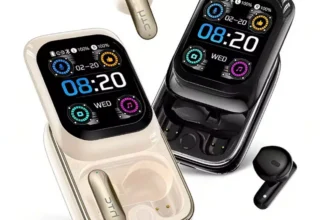
Smart LCD Display Charging Case
The MS212 charging case does more than simply recharge the earbuds. Current documentation describes a display interface that can provide battery, heart-rate, and operating information.
Battery Status
The case screen can help users see remaining power without relying solely on a smartphone notification.
Heart-Rate Information
Fitness-related readings can be displayed through the case interface on supported configurations.
Connection Information
The screen may also show Bluetooth or connection status indicators depending on the specific software version.
A Display Case Requires Additional Care
Because the case includes electronic display components, protect it from scratches, impacts, excessive moisture, and extreme temperatures.
14.2 mm Dynamic Driver
One current MS212 manual specifies a 14.2 mm dynamic audio driver.
Designed for Full-Range Everyday Audio
The driver handles music, podcasts, videos, phone calls, and other general audio content.
Frequency Response
Published specifications list a frequency response around 20 Hz to 20,000 Hz, covering the conventional human-audible frequency range.
Open-Ear Acoustics
Because the MS212 does not create the same deep seal as an in-ear monitor, bass response may feel different from a tightly sealed earbud.
Driver Size Is Only One Part of Sound Quality
Audio tuning, placement near the ear, Bluetooth codec, volume, recording quality, and fit all influence the final listening experience.
AAC and SBC Codec Support
Current MS212 technical documentation lists both AAC and SBC codec support.
What a Bluetooth Codec Does
A codec determines how audio is compressed and transmitted between the phone and earbuds.
SBC
SBC is a standard Bluetooth audio codec that provides broad compatibility across devices.
AAC
AAC is commonly supported by modern smartphones and can provide another wireless audio option depending on the connected device.
Your Phone Chooses the Actual Codec
Supported codecs do not guarantee that a specific codec will always be used. The smartphone, operating system, and Bluetooth implementation determine the active connection format.
MINISO MS212 for Running
The ear-clip construction makes the MS212 particularly relevant to runners who struggle with traditional earbuds falling out.
Secure Clip-On Support
The ear clip helps distribute the earbud’s support around the outer ear.
Environmental Awareness
The open-ear concept can allow runners to hear more surrounding sound than deeply isolating earbuds.
Heart-Rate Feedback
The built-in sensor gives runners another way to observe workout intensity.
Keep Volume Low Enough for Outdoor Safety
Open-ear listening improves awareness only if playback volume remains reasonable. Always remain alert around cars, bicycles, intersections, and other hazards.

MINISO MS212 for Gym Workouts
Gym environments demand stability because the head and body move continuously during exercise.
Cardio Training
Treadmills, exercise bikes, rowing machines, stair machines, and elliptical workouts can all benefit from earbuds that remain secure without repeated adjustment.
Strength Training
The clip-on design can also work well during weight training because there is no long headphone cable hanging from the phone.
Heart-Rate Tracking
Users can observe general cardiovascular intensity during workout sessions.
Clean the Earbuds After Exercise
Sweat and skin oils can build up on the sensors and clip surfaces. Wipe the earbuds carefully after workouts to maintain comfort and sensor cleanliness.
IPX5 Water and Sweat Resistance
Current MS212 documentation lists IPX5 water resistance.
Suitable for Normal Sweat Exposure
IPX5 protection makes the earbuds more suitable for running and gym use than an electronic device without moisture protection.
Suitable for Light Splashes
The rating can provide protection against ordinary splashes encountered during everyday use.
Not for Swimming
IPX5 does not mean the earbuds can be submerged in water.
Keep the Charging Case Dry
The earbud water-resistance rating should not automatically be assumed to apply to the smart charging case. Protect the case from rain, sinks, pools, showers, and heavy moisture.
Open-Ear Earbuds for Walking and Commuting
The MS212 design can also make sense for users who want audio while remaining connected to their environment.
Walking Through Busy Areas
Users may hear more surrounding activity compared with sealed noise-isolating earbuds.
Public Transportation
The earbuds can be used for podcasts, navigation instructions, calls, or music while commuting.
Office Use
An open-style design can make it easier to hear coworkers or announcements without removing the earbuds completely.
Open-Ear Audio Does Not Eliminate Distraction
Users still need to pay attention to their surroundings. Never rely on earbuds alone for safety awareness in traffic or other hazardous environments.
Built-In Microphone for Phone Calls
The MINISO MS212 includes built-in microphone support.
Hands-Free Calling
Users can answer compatible calls without holding the phone directly to the ear.
Useful for Remote Work
The earbuds can also serve as a Bluetooth audio device for suitable online meetings and communication applications.
Open Design Can Feel Natural During Calls
Being able to hear some of your own voice and surroundings may reduce the isolated feeling that sealed earbuds sometimes create.
Not a Studio Microphone
The built-in microphone is intended for calls and everyday communication. Professional podcasts, voiceovers, and recording work generally benefit from a dedicated microphone.

No Traditional Active Noise Cancellation
Current MS212 documentation lists Active Noise Cancellation as unavailable.
Why This Makes Sense for OWS Earbuds
The purpose of an open-ear design is partly to avoid fully blocking the ear. Strong listening-side ANC would conflict with some of the environmental-awareness benefits of this design philosophy.
Some Passive Sound Direction Still Exists
The speakers are positioned to direct sound toward the ears, allowing personal listening without requiring a completely sealed ear canal.
Choose Another Product if Isolation Is Your Priority
Air travelers, commuters, or office users who specifically need powerful ANC against engines and background noise may prefer sealed ANC earbuds or over-ear headphones.
Volume Control and Touch Operation
The MS212 includes controls for common listening functions.
Play and Pause
Basic media playback can be controlled without opening the phone’s music application.
Track Navigation
Supported gestures can move between songs depending on the control configuration.
Volume Adjustment
Current technical documentation lists volume-control support.
Call Management
Users can answer or end compatible calls through the earbuds.
Learn the Controls Before Exercising
Knowing the control gestures makes it easier to use the earbuds while running or training without stopping to look at the smartphone.
Battery Life of the MINISO MS212
Battery specifications are one area where current MS212 listings differ, so buyers should verify the exact package they are ordering.
Several Hours Per Earbud Charge
Published manuals generally place individual listening time in the several-hour range. Some documentation lists approximately 3.5 hours, while other seller versions advertise around five hours.
Charging Case Extends Total Use
Depending on the version, published total battery estimates with the charging case can reach approximately 30 to 32 hours.
Real-World Battery Life Varies
Volume, microphone use, heart-rate sensing, display use, Bluetooth conditions, battery age, and temperature can all influence runtime.
Check Your Exact Version Rather Than Assuming One Number
Because seller specifications vary, the battery information shown on the exact product variation should be used as the primary reference for purchase decisions.
Type-C Charging
The MS212 charging case uses a USB Type-C connection.
Common Charging Standard
USB-C cables are widely used for phones, tablets, laptops, headphones, gaming accessories, and other modern electronics.
Approximately 1.5-Hour Charging Time
One current MS212 manual lists around 1.5 hours for a full charge under suitable conditions.
Use an Appropriate USB Power Source
Follow the charging instructions supplied with your unit and avoid damaged cables or unsuitable power sources.

MINISO MS212 for iPhone Users
The MS212 functions as a standard Bluetooth audio device and can be paired with compatible iPhones.
Music and Podcasts
Users can stream audio from Apple Music, Spotify, YouTube, podcast applications, and other supported services.
Calls
Built-in microphones allow compatible voice calls through the connected iPhone.
AAC Support
AAC codec support may be relevant to Apple devices depending on the actual negotiated Bluetooth connection.
System Features Can Vary
Specific battery indicators, codec selection, touch behavior, and smart-case functions may differ from device to device.
MINISO MS212 for Android Users
Android phones provide broad Bluetooth compatibility with wireless earbuds such as the MS212.
Fast Everyday Pairing
Once paired, the earbuds can reconnect when activated and within range of the phone.
Music and Video
Streaming applications, local audio, YouTube, and other media can play through the earbuds.
Calls and Communication Apps
Compatible voice and video applications can use the built-in microphone and earbud audio.
Bluetooth Options Differ Between Android Brands
Samsung, Google Pixel, Motorola, OnePlus, Xiaomi, and other manufacturers can expose different Bluetooth settings and codec information.
Using the MS212 With Windows Laptops
The earbuds can also pair with compatible Bluetooth-enabled Windows PCs and laptops.
Video Meetings
The built-in microphone can be selected in compatible meeting platforms.
Music During Work
Open-ear audio can make it easier to listen while still remaining aware of coworkers or household activity.
Video Playback
The earbuds can serve as wireless audio for streaming services and general media.
Microphone Mode Can Affect Audio Quality
As with many Bluetooth headsets, activating microphone communication on some computers can change the available audio profile. This behavior depends on the operating system and Bluetooth implementation.
Comfort for Long Listening Sessions
Comfort is one of the strongest reasons people consider OWS or clip-on earbuds.
Reduced Ear-Canal Pressure
Because the earbuds do not depend on a deeply inserted seal, they can feel less intrusive for some users.
Lightweight Wearing Style
Clip-on earbuds distribute their weight around the ear rather than concentrating it entirely inside the canal.
Useful for Users With Small Ears
Some current MS212 listings specifically position the design as small-ear friendly.
Ear Anatomy Is Different for Everyone
A clip that feels comfortable for one person may feel tighter or looser for another. New users should test the fit during shorter sessions before wearing the earbuds for many hours.
How to Wear Ear Clip Earbuds Correctly
Identify Left and Right Earbuds
Make sure each earbud is positioned on its intended side.
Open or Position the Clip Carefully
Place the clip around the appropriate part of the ear according to the supplied diagram.
Align the Speaker With the Ear
The sound outlet should sit in a position that delivers clear audio without excessive pressure.
Check Heart-Rate Sensor Contact
For health-monitoring functions, ensure the sensor area is positioned as intended.
Do Not Force the Clip
If the earbud feels painful, remove it and reposition it rather than tightening or forcing the device against the ear.

How to Improve Heart-Rate Monitoring Accuracy
Position the Earbud Correctly
The sensor needs suitable contact with the intended area of the ear.
Keep the Sensor Clean
Sweat, oils, lotion, and dust can interfere with optical measurements.
Allow the Reading to Stabilize
Instead of reacting immediately to the first displayed number, allow time for the sensor to establish a consistent reading.
Expect Movement to Affect Measurements
Intense motion can make wearable optical measurements more difficult.
Compare Fitness Trends Rather Than Medical Values
The MS212 can be useful for general exercise awareness, but users with health concerns should rely on proper medical evaluation and validated monitoring equipment.
How to Maintain the MINISO MS212
Wipe the Earbuds After Exercise
Use a soft cloth to remove sweat and skin oils after running or gym sessions.
Keep the Sensors Clean
Clean sensor surfaces carefully so residue does not build up.
Clean the Charging Contacts
Dirty metal contacts can prevent reliable charging when the earbuds are returned to the case.
Protect the Smart Display
Avoid placing keys, coins, or sharp objects against the case screen.
Keep the Case Dry
Even though the earbuds are listed with IPX5 protection, the charging case should be treated as a non-waterproof electronic accessory unless explicitly stated otherwise.
Store the Earbuds in the Case
Keeping them in the case helps prevent loss, physical damage, dust accumulation, and battery depletion.
MINISO MS212 Versus Traditional In-Ear Earbuds
More Open Ear Canal
The OWS design does not rely on the same deep seal used by many traditional TWS earbuds.
Potentially Better Environmental Awareness
Users can hear more external sound depending on playback volume and fit.
Different Bass Experience
Traditional sealed earbuds can often create stronger perceived deep bass because the ear canal is acoustically sealed.
Different Comfort Style
People who dislike silicone tips may prefer the clip-on approach.
Neither Design Is Better for Everyone
The correct choice depends on whether the user prioritizes isolation, bass, awareness, sports stability, ear-canal comfort, or active noise cancellation.
MINISO MS212 Versus Over-Ear Sports Headphones
Smaller and Easier to Carry
The earbuds and case fit easily into a pocket or small bag compared with full-size headphones.
Less Heat Around the Ears
Large padded headphones can become warm during cardio workouts.
No Headband Pressure
Clip-on earbuds avoid pressure across the top of the head.
Over-Ear Headphones May Offer Bigger Sound and Isolation
Users who prioritize stronger bass, powerful ANC, or maximum sound immersion may still prefer full-size headphones.
Who Should Consider the MINISO MS212?
Runners
Secure clips, heart-rate sensing, environmental awareness, and IPX5 resistance create a useful combination for running.
Gym Users
The lightweight wireless design can remain out of the way during strength and cardio workouts.
People Who Dislike In-Ear Pressure
The OWS design provides an alternative to deeply sealed earbuds.
Commuters
Open-ear listening can make it easier to hear announcements and surrounding activity.
Office Workers
The earbuds can provide private audio while leaving users more connected to coworkers and their environment.
Fitness Users Interested in Heart-Rate Trends
The integrated optical sensors add a basic wellness-monitoring function.
Who May Prefer Another Product?
Users who need powerful active noise cancellation, extremely deep bass isolation, clinical heart-rate accuracy, swimming protection, or professional studio audio may prefer specialized alternatives.

What U.S. Buyers Should Check Before Ordering
Confirm the Exact Bluetooth Version
The OnlineDaraz listing identifies this product as the Bluetooth 6.0 version, while some other MS212 documentation found online references Bluetooth 5.4. Confirm the specification printed on the exact version or package you purchase.
Confirm Battery Specifications
Published MS212 sources differ on individual earbud and charging-case runtime. Review the exact product variation rather than assuming one universal battery figure.
Check Heart-Rate Monitoring
Make sure the selected MS212 variation includes the optical heart-rate sensors and smart display functions if those features are important to you.
Verify IPX5 Water Resistance
Current documentation lists IPX5 protection for the earbuds. Remember that this is splash and sweat resistance rather than submersion protection.
Confirm Smart Case Features
Review the product images and seller specifications to make sure the charging case includes the display functions you expect.
Check Package Contents
A typical package includes the left and right MS212 earbuds, charging case, Type-C charging cable, and user manual.
Check Audio Codec Support
Current technical documentation lists AAC and SBC support.
Review U.S. Shipping and Returns
When purchasing internationally, check shipping estimates, tracking, taxes, seller terms, warranty information, and return requirements.
Keep Packaging Until Testing Is Complete
Test Bluetooth pairing, both earbuds, heart-rate monitoring, case display, microphone, touch controls, charging, sound output, and overall fit before discarding the original packaging.
Frequently Asked Questions About the MINISO MS212
What does OWS mean on the MINISO MS212?
OWS refers to an open-wearable stereo style that positions audio near the ear without relying on the same deeply sealed fit as conventional in-ear earbuds.
Are the MINISO MS212 earbuds Bluetooth?
Yes. They are Bluetooth wireless earbuds.
Is this the Bluetooth 6.0 MS212?
The OnlineDaraz product listing identifies the featured version as Bluetooth 6.0. Other MS212 documentation online may reference Bluetooth 5.4, so buyers should verify the exact version selected.
Does the MS212 monitor heart rate?
Yes. Current MS212 manuals describe built-in optical sensors for real-time heart-rate monitoring.
Can the MS212 replace a medical heart monitor?
No. Its heart-rate feature is intended for general wellness and fitness information rather than medical diagnosis.
Does the charging case have a display?
Yes. Current MS212 documentation describes a smart display capable of showing battery and health-related information.
Are the MS212 earbuds good for running?
The secure ear-clip design, heart-rate sensing, open-ear format, and IPX5 protection make them particularly relevant to running.
Can I use the MS212 at the gym?
Yes. The clip-on form is intended to remain stable during normal exercise and movement.
Are the earbuds waterproof?
Current specifications list IPX5 water resistance. This means they are intended to resist sweat and ordinary splashes, not swimming or submersion.
Does the MS212 have ANC?
Current technical documentation lists active noise cancellation as unavailable.
Why would earbuds not have ANC?
The MS212 uses an open-ear design intended to preserve greater awareness of surrounding sound, which is a different goal from sealed ANC earbuds.
What size driver does the MS212 use?
One current technical manual specifies a 14.2 mm dynamic driver.
What is the frequency response?
Published specifications list approximately 20 Hz to 20,000 Hz.
Does the MS212 support AAC?
Yes. Current documentation lists AAC and SBC codec support.
Does it have a microphone?
Yes. Built-in microphone support allows ordinary phone calls and compatible online communication.
Can I control volume from the earbuds?
Current specifications list volume-control support.
What is the wireless range?
The listed effective Bluetooth range is approximately 10 meters under unobstructed conditions.
How long does the battery last?
Published sources vary by version. Individual playback is generally listed in the several-hour range, with the charging case extending total use significantly.
How long does the case take to charge?
One current manual lists approximately 1.5 hours under appropriate charging conditions.
Does the MS212 use USB-C?
Yes. The charging case uses a Type-C charging connection.
Can I connect the MS212 to an iPhone?
Yes. Compatible iPhones can use the earbuds as standard Bluetooth audio devices.
Can I connect them to Android?
Yes. Android smartphones and tablets with Bluetooth support can pair with the MS212.
Can I connect them to a laptop?
Yes. Compatible Bluetooth-enabled laptops can use the earbuds for audio and microphone functions.
Are clip-on earbuds better than traditional earbuds?
They are better for some users and activities. Clip-on OWS designs emphasize comfort, stability, and environmental awareness, while sealed in-ear earbuds may provide stronger bass isolation and active noise-cancellation options.
Why the MINISO MS212 Fits an Active Everyday Lifestyle
The strongest argument for the MS212 is versatility. The earbuds combine listening, communication, fitness monitoring, and sports-friendly wearing comfort without requiring a full-size headset or tightly sealed in-ear design.
Use Them During a Morning Run
The ear clips provide stability while the optical sensor can provide general heart-rate feedback.
Use Them During the Workday
Open-ear audio can make it easier to remain aware of coworkers, family members, or environmental sounds.
Use Them for Calls
Built-in microphone support allows basic hands-free communication.
Use Them at the Gym
IPX5 protection and a cable-free design make them practical for ordinary workout conditions.
Use Them While Commuting
The open design can help users remain aware of announcements and surrounding activity while listening.
A Multifunction Earbud Still Involves Tradeoffs
The MS212 is designed around convenience and active use. It should not be expected to replace medical fitness sensors, premium ANC headphones, studio monitors, or specialized audiophile earbuds in every category.
Final Thoughts on the MINISO MS212 OWS Ear Clip Earbuds
The MINISO MS212 Bluetooth 6.0 OWS Ear Clip Earbuds offer an interesting combination of open-ear comfort, sports stability, wireless audio, heart-rate monitoring, smart-case functionality, touch controls, microphone support, and IPX5 resistance.
The OWS clip-on format is the biggest difference from conventional wireless earbuds. By positioning the speaker near the ear without relying entirely on a deep ear-canal seal, the MS212 targets users who prioritize comfort and environmental awareness.
This can be especially useful for runners, walkers, gym users, commuters, and office workers who want audio without completely disconnecting from their surroundings.
The heart-rate monitoring feature gives the earbuds a fitness-oriented advantage. Optical sensors allow users to observe general pulse information during workouts, while the smart display charging case provides a convenient place to view battery and health-related information.
Current technical documentation also lists a 14.2 mm dynamic driver, a conventional 20 Hz to 20,000 Hz frequency range, AAC and SBC codec support, microphone functionality, volume control, Type-C charging, and approximately 10 meters of wireless operating range.
IPX5 protection makes the earbuds more practical for exercise and ordinary sweat exposure. However, they are not designed for swimming or underwater use, and the charging case should be kept dry.
Battery specifications vary across current MS212 documentation, so shoppers should check the exact product package rather than relying on a battery figure from another seller. This is especially important because different regional or production versions of the MS212 may use different wireless chipsets or battery configurations.
View MINISO MS212 Product Details
Before ordering, U.S. buyers should confirm that the selected version is the Bluetooth 6.0 model shown in the OnlineDaraz listing, verify heart-rate monitoring and smart-display functionality, review the stated battery capacity, confirm IPX5 protection, and check the package contents and return policy.
For shoppers searching for OWS ear clip earbuds, open ear Bluetooth earbuds, sports earbuds with heart rate monitoring, MINISO wireless earbuds, or lightweight clip-on headphones for running, gym workouts, commuting, and everyday listening, the MINISO MS212 offers a distinctive balance of comfort, awareness, fitness functionality, and portable wireless audio.