
OEM 7KW DC Wall EV Charger Home Buying Guide
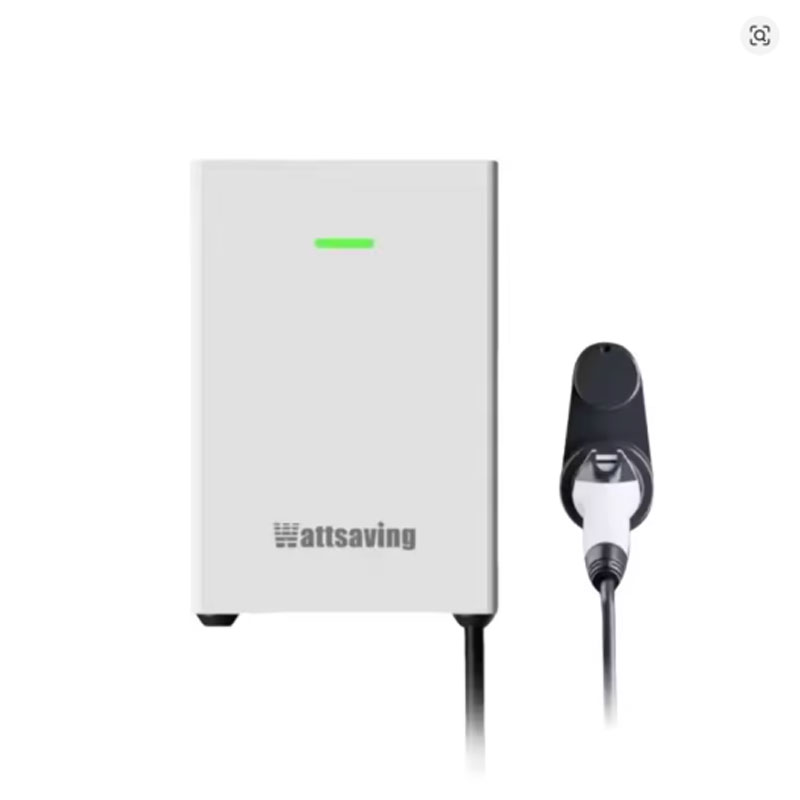
Home electric vehicle charging is usually associated with 120-volt Level 1 or 240-volt AC Level 2 equipment, but compact low-power DC wall chargers are creating another option for specialized vehicles and installations. The OEM 7KW DC Wall EV Charger Home Wattsaving Station is positioned as a wall-mounted direct-current charging solution that converts AC input power inside the charger and supplies regulated DC power to a compatible vehicle battery system. For buyers considering imported EVs, fleet vehicles, workshop charging, dealership use, or a specialized residential installation, understanding the difference between AC and DC charging is essential before purchasing.
Check Current OEM 7KW DC EV Charger Details
For U.S. shoppers searching for a 7kW DC EV charger, wall mounted DC EV charger, home DC electric car charger, compact EV charging station, single phase DC EV charger, GB/T DC wall charger, or OEM electric vehicle charging station, this product category deserves careful comparison with conventional Level 2 charging equipment. A 7 kW output rating may look familiar because many home AC wallboxes also operate around 7 to 7.7 kW, but the electrical architecture is different.
Matching Wattsaving 7 kW DC wall-charger listings commonly describe single-phase 220–230V AC input and GB/T DC vehicle connectors, with some related 7 kW Wattsaving models using approximately 5-meter charging cables. Exact output-voltage range, maximum output current, enclosure protection, display, app functions, physical dimensions, and connector configuration can vary between closely related Wattsaving models and OEM variants. U.S. buyers should therefore verify the label and specification sheet for the exact unit offered on the product page before installation.
This matters especially in the United States because GB/T is a Chinese charging standard. Current North American EV charging uses SAE J3400, commonly known as NACS, CCS1 for many DC-capable vehicles, and CHAdeMO on a smaller legacy group. A charger fitted only with a GB/T DC connector is not automatically compatible with a U.S.-market Tesla, Ford, General Motors, Hyundai, Kia, Rivian, Nissan, or other EV simply because the power rating is suitable.
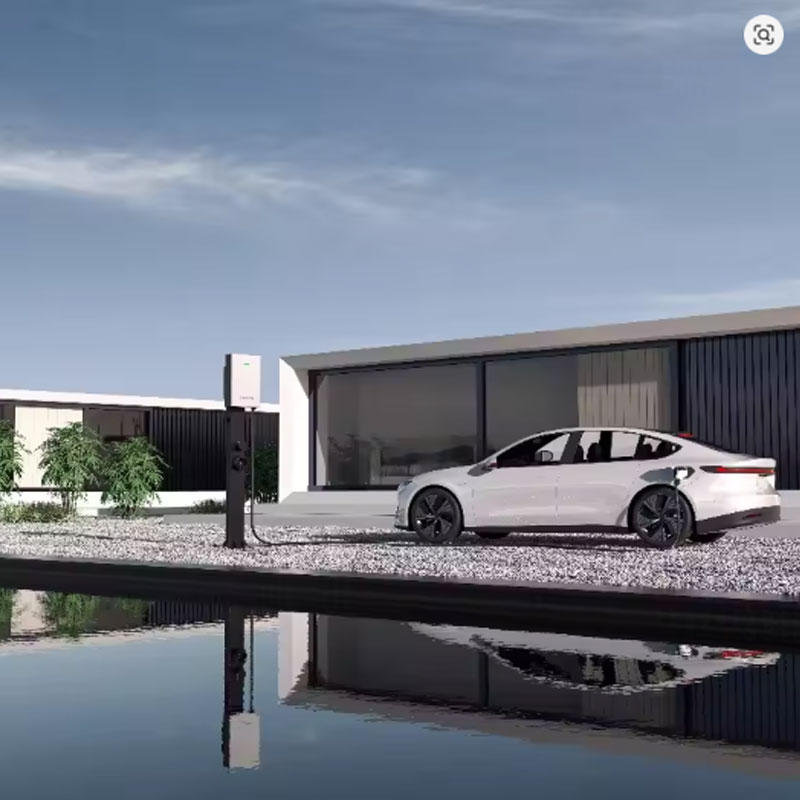
What Is a 7KW DC Wall EV Charger?
A 7 kW DC wall charger is an off-board charger. It receives AC electricity from the building, converts that electricity to DC inside the charging equipment, communicates with the vehicle, and supplies controlled DC power to the battery through a compatible DC charging inlet.
DC Charging Bypasses the Vehicle’s Main AC Onboard Charger
When an EV uses ordinary AC Level 1 or Level 2 equipment, the charging station delivers AC power and the vehicle’s onboard charger converts it into DC for the battery. With DC charging, the conversion happens outside the vehicle. This is the defining technical difference, even when the kilowatt rating is similar.
Seven Kilowatts Is Low Power for Modern DC Charging
Public highway DC fast chargers often operate at tens or hundreds of kilowatts. A 7 kW DC charger is therefore better described as compact or low-power DC charging rather than being compared directly with a 150 kW or 350 kW highway fast charger.
Low-Power DC Can Still Have Specialized Advantages
Some imported vehicles, commercial applications, workshops, dealerships, battery systems, or vehicles with limited AC onboard-charger capacity can benefit from an off-board DC solution. The value depends on the vehicle’s DC charging protocol and the installation environment.
OEM 7KW DC Wall Charger Product Overview
| Feature | What Buyers Should Confirm |
|---|---|
| Product Type | Wall-mounted DC EV charging station |
| Rated Power | 7 kW class |
| Input Supply | Matching versions commonly use 220–230V single phase; verify exact U.S. input rating |
| Vehicle Output | DC output |
| Connector | Matching Wattsaving versions commonly use GB/T DC; confirm exact connector before purchase |
| Cable Length | Related listings commonly show around 5 m; verify selected model |
| Mounting | Wall-mounted |
| Display / Controls | Varies by model; verify screen, app, RFID, or plug-and-charge functions |
| Outdoor Rating | Verify the exact IP/NEMA rating for the selected unit |
| Safety Certification | For U.S. use, verify certification by a nationally recognized testing laboratory for applicable North American standards |
| Installation | Professional installation by a qualified electrical contractor is strongly recommended |
Why the Exact Model Number Matters
Wattsaving sells several 7 kW DC products, and marketplace sellers can use broad titles for more than one hardware configuration. Related models have different output-voltage windows, enclosure ratings, dimensions, connector types, displays, and control features. The product label should therefore be treated as the final reference for installation planning.
Do Not Substitute Specs From a Similar-Looking Charger
A photograph cannot confirm internal power modules, output-voltage range, safety certification, connector protocol, or U.S. electrical compatibility. Ask for a current datasheet if those specifications are not shown clearly on the live listing.
7KW DC Charger vs 7KW Level 2 AC Charger
The similar power numbers can be misleading. A 7 kW AC charger and a 7 kW DC charger do not perform the same electrical job.
Level 2 AC Sends AC Power to the Car
The vehicle’s onboard charger converts AC into the DC voltage required by the traction battery. The car’s onboard charger therefore determines how much AC power it can accept.
A DC Wall Charger Converts Power Outside the Vehicle
The charging station contains power electronics that perform the AC-to-DC conversion and then communicates directly with the vehicle’s DC charging system.
Charging Speed Still Depends on the Vehicle
A charger marked 7 kW does not guarantee that every vehicle will receive a continuous 7 kW. Battery temperature, battery state of charge, vehicle software, voltage compatibility, charging protocol, and battery-management limits can reduce actual power.
Why Most U.S. Homeowners Still Use Level 2 AC
Residential charging in the United States is dominated by AC Level 1 and Level 2 equipment. Level 2 uses the home’s 208–240V service and is well suited to overnight charging for many drivers.
AC Equipment Is Widely Supported
U.S.-market EVs are designed with home AC charging in mind. J1772 remains common on existing vehicles, while SAE J3400 is increasingly important on newer North American vehicles.
Residential Installation Is Familiar to Electricians
Licensed electricians regularly install Level 2 EVSE, dedicated circuits, load-management equipment, and hardwired wallboxes.
DC at Home Is a Specialized Purchase
A low-power DC wallbox may be appropriate in specific situations, but it should not be chosen simply because “DC” sounds faster. Compatibility, certification, service support, and installation requirements are more important.
Understanding U.S. EV Charging Connectors
Connector compatibility is the first question U.S. buyers should answer before discussing installation.
SAE J3400 or NACS
SAE J3400 standardizes the North American Charging System connector. The coupler can support AC and DC charging through the same physical interface, depending on vehicle and equipment capability.
CCS1
The Combined Charging System used in North America adds two DC power contacts beneath the J1772-style AC connector. Many existing U.S.-market EVs use CCS1 for DC charging.
CHAdeMO
CHAdeMO remains on some older or legacy vehicles, especially certain Japanese EVs, but its U.S. market share is much smaller than in earlier years.
GB/T DC
GB/T is used primarily by Chinese-market vehicles. If this Wattsaving unit is the common GB/T version, it is intended for a vehicle with a compatible GB/T DC inlet rather than a standard U.S. CCS1 or J3400 inlet.
Can a GB/T DC Charger Work With a U.S. EV?
Not directly unless the vehicle is designed for that protocol or a properly engineered, vehicle-supported conversion solution exists.
The Plug Shape Is Only Part of the Problem
DC charging requires digital communication between the vehicle and charger. Voltage limits, current requests, battery status, isolation checks, contactor sequencing, and fault handling must all use compatible protocols.
A Simple Mechanical Adapter Is Not Enough
Changing the physical connector does not automatically translate the communication protocol. Using unapproved DC adapters can create serious safety and vehicle-damage risks.
Verify Vehicle-Manufacturer Support
Before considering any adapter, obtain confirmation that the vehicle manufacturer supports that adapter and charging standard. SAE has developed specific work around adapter safety because DC and AC charging adapters are not trivial accessories.
Who Might Need a GB/T DC Wall Charger in the USA?
Owners of Imported Chinese-Market EVs
A privately imported vehicle that retains a GB/T DC inlet may need charging equipment that matches its original protocol.
Specialized Dealers and Service Facilities
A workshop handling imported EVs may require more than one connector standard to test or charge customer vehicles.
Fleet or Research Applications
Organizations operating non-U.S.-spec vehicles may have a controlled reason to install GB/T equipment.
Ordinary U.S.-Market EV Owners Should Check Carefully
If your car has J3400/NACS or CCS1, do not assume the common GB/T version of this product is suitable.
How Fast Is a 7KW EV Charger?
Power is measured in kilowatts, while battery capacity is commonly described in kilowatt-hours. A simple theoretical estimate divides the energy needed by the charging power.
Example With a 60 kWh Battery
If a vehicle needed 42 kWh to move from roughly 20% to 90% state of charge, dividing 42 kWh by 7 kW gives six hours in an ideal constant-power calculation.
Real Charging Takes Longer
Conversion losses, battery conditioning, auxiliary loads, current limits, communication overhead, and power taper can extend the session.
DC Charging Can Taper Near Higher State of Charge
The battery-management system may request less current as the pack becomes full. This behavior protects the battery and is normal.
How Much Range Can 7KW Add Per Hour?
Range added depends on the vehicle’s energy efficiency, not simply charger power.
Efficient EV Example
If an EV uses about 0.25 kWh per mile, 7 kWh of delivered energy would theoretically represent about 28 miles of energy before charging losses.
Less Efficient EV Example
If a larger vehicle uses about 0.35 kWh per mile, the same energy corresponds to roughly 20 miles.
Use kWh Rather Than Marketing Range Claims
Vehicle efficiency changes with speed, weather, heating, air conditioning, tires, elevation, and driving style. Kilowatt-hours provide a more reliable way to compare charging.
Single-Phase Input and U.S. Residential Power
Matching Wattsaving low-power DC units are commonly associated with approximately 220–230V single-phase input. U.S. homes typically provide 120/240V split-phase service, so compatibility must be verified by a qualified electrician and the manufacturer.
Voltage Range Matters
A product label that accepts a broad AC input range may be technically compatible with 240V service, but that does not establish code compliance or certification.
Frequency Matters
U.S. utility frequency is 60 Hz. Verify that the exact charger accepts 60 Hz operation.
Do Not Connect Imported Equipment Based on Voltage Alone
Grounding, overcurrent protection, conductor sizing, disconnecting means, branch-circuit design, certification, and local permitting requirements all matter.
Why Professional Installation Is Essential
EV charging is a substantial continuous electrical load. DC equipment also contains high-voltage power electronics between the building and vehicle battery.
Electrical Capacity Must Be Evaluated
The electrician should review the home’s service size, panel capacity, existing loads, and charger requirements.
The Branch Circuit Must Be Correctly Designed
Conductor size, overcurrent protection, grounding, and equipment disconnect requirements must follow the applicable installation instructions and local code.
Permits May Be Required
Many U.S. jurisdictions require an electrical permit and inspection for permanently installed EV charging equipment.
Do Not Treat This Like Plugging In a Household Appliance
A wall-mounted DC charger should be installed only after confirming the manufacturer’s installation requirements and local code compliance.
NEC Article 625 and EV Charging
In the United States, electric vehicle charging installations are addressed primarily through National Electrical Code requirements, including Article 625.
EV Charging Is Treated as a Continuous Load
This affects how electrical contractors size circuits and protective devices.
Local Code Editions Can Differ
States and municipalities may adopt different NEC editions or additional amendments.
The Installer Should Use the Applicable Local Code
Online rules of thumb should never replace a site-specific electrical calculation by a qualified professional.
U.S. Safety Certification for DC EV Chargers
For North American DC charging equipment, buyers should pay close attention to third-party safety certification.
UL 2202 Is Relevant to DC Charging Equipment
UL identifies UL 2202 as the North American safety standard for DC charging equipment for electric vehicles.
EV Couplers and Personnel Protection Have Additional Standards
Other standards address connectors, cables, and personnel-protection systems. A complete certification evaluation considers more than the power converter alone.
CE Marking Is Not a Substitute for U.S. Listing
A charger marketed with CE, RoHS, or other international marks may still lack the certification required by a local U.S. authority having jurisdiction. Confirm the actual certification mark and listing record.
What Does OEM Mean on an EV Charger?
OEM can indicate that the manufacturer supports branding, enclosure, software, connector, cable, or feature customization for distributors and commercial customers.
OEM Does Not Automatically Mean Vehicle-Manufacturer Approved
The term can describe manufacturing services rather than approval from Tesla, Ford, General Motors, BYD, NIO, or another automaker.
Private Labeling Is Common
The same basic charger platform may appear under different reseller brands.
Use the Electrical Nameplate for Technical Verification
Brand graphics can change. The model number, serial number, voltage, frequency, current, connector standard, certification marks, and manufacturer information are more important.
Wall-Mounted Design Advantages
Reduces Floor Footprint
A wall installation keeps the main charger enclosure away from parking-space floor area.
Can Improve Cable Organization
A properly positioned holster and cable hanger help keep the charging connector off the ground.
Works Well in Garages
A compact wallbox can be positioned near the vehicle’s charge port when the garage layout is planned carefully.
Wall Strength Must Be Considered
DC chargers can weigh considerably more than simple AC wallboxes because they contain power-conversion hardware. Use the manufacturer’s specified mounting method and supporting structure.
Choosing the Best Mounting Location
Measure Cable Reach
The connector should reach the vehicle inlet without stretching across walkways or creating tight bends.
Protect From Vehicle Impact
A charger should not be positioned where a car bumper or opening door can easily strike it.
Provide Ventilation and Service Clearance
Follow required spacing around cooling openings, access panels, and cable connections.
Outdoor Installations Need the Correct Rating
Verify the exact enclosure rating and installation instructions before exposing the charger to rain, sun, snow, or windblown debris.
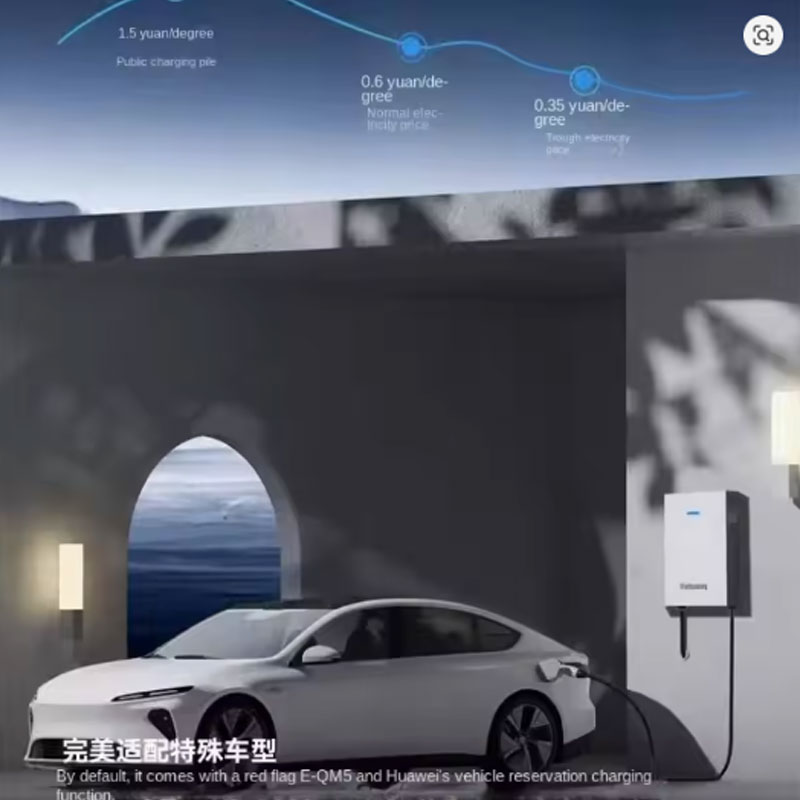
Indoor vs Outdoor EV Charger Installation
Indoor Garage Installation
Garages provide shelter from weather but still require appropriate electrical installation, ventilation, cable management, and physical protection.
Outdoor Driveway Installation
Outdoor chargers must have an enclosure and cable system specifically rated for that environment.
Weather Rating Must Match the Exact Unit
Related Wattsaving DC models range across different IP ratings. Never borrow an IP65 claim from another model unless the actual charger nameplate or datasheet confirms it.
How Output Voltage Affects Vehicle Compatibility
DC chargers must operate within the battery voltage range requested by the vehicle.
Older and Lower-Voltage EV Platforms
Many EVs operate around nominal 300–400V battery architecture.
Higher-Voltage EV Platforms
Newer vehicles can use approximately 800V-class architectures and may require higher output-voltage capability for full DC charging compatibility.
Check the Charger’s DC Voltage Window
Some 7 kW Wattsaving models support wider voltage ranges than others. Confirm that the selected unit can regulate within the vehicle’s required pack voltage.
Why Maximum Current Matters
Power equals voltage multiplied by current. A 7 kW charger may therefore deliver different current depending on battery voltage.
At 350V
Seven kilowatts corresponds to about 20 amps before considering losses.
At 500V
The same 7 kW corresponds to about 14 amps.
The Charger and Vehicle Negotiate the Actual Value
DC charging should not be treated as a fixed-current power supply. The battery-management system communicates permissible voltage and current during the session.
Smart Controls, Apps, and RFID
Some Wattsaving chargers support app management, RFID authorization, scheduled charging, or other access functions, but feature sets vary by model.
App Monitoring
A compatible application may show charging status or allow session control.
RFID Access
RFID can be useful in shared parking, workplaces, or multifamily environments where charging access needs to be restricted.
Verify Cloud Support in the United States
An app designed primarily for another market may depend on region-specific servers, phone numbers, app stores, or network services. Confirm that all smart features work in your location before relying on them.
OCPP for Business and Fleet Use
Open Charge Point Protocol allows compatible chargers to communicate with network-management software.
Useful for Charging Management
OCPP can support monitoring, user authorization, session records, and other network functions when both the charger and backend are compatible.
Version Compatibility Matters
A charger supporting OCPP 1.6J does not automatically support every feature from newer protocols.
Homeowners May Not Need OCPP
For a single private garage, simple plug-and-charge or local app control may be more practical than a commercial backend.
Does a 7KW DC Charger Save Electricity?
The “Wattsaving” brand name should not be interpreted as a guarantee that the charger reduces the amount of battery energy required by the vehicle.
All Charging Has Conversion Losses
Energy is lost as heat in power electronics, cables, battery conditioning, and the battery itself.
DC Moves the AC-to-DC Conversion Outside the Vehicle
This changes where conversion occurs, but does not eliminate electrical losses.
Measure Efficiency Rather Than Assuming Savings
Compare metered wall energy with energy added to the battery under similar conditions if efficiency is important.
Charging Cost at Home
Home charging cost depends on electricity price and the number of kilowatt-hours drawn from the utility.
Example at $0.15 per kWh
A 40 kWh charging session would cost about $6.00 before accounting for any utility demand charges or special rate structures.
Time-of-Use Rates Can Change the Cost
Some U.S. utilities offer lower overnight rates or EV-specific tariffs.
Smart Scheduling Can Be Valuable
If the charger or vehicle supports scheduling, moving charging to lower-cost periods may reduce electricity expense without changing the amount of energy the car needs.
Can Solar Panels Power a 7KW DC Charger?
A home with solar can offset some or all of the energy used for vehicle charging, but the system architecture requires proper electrical design.
Seven Kilowatts Is a Significant Continuous Load
Real-time solar output changes with weather, season, panel orientation, and time of day.
Grid Power Can Supplement Solar
In a grid-connected home, the charger may draw from a combination of solar and utility power depending on the energy-management system.
Direct Solar-to-DC-Vehicle Charging Is a Different Design
Do not connect photovoltaic DC directly to this charger or vehicle unless the system is specifically engineered for that configuration.
Can a Home Battery Work With the Charger?
A stationary battery system can potentially support home EV charging as part of a properly designed electrical system.
Battery Inverter Rating Matters
The energy-storage system must be able to supply the charger’s input power along with other home loads.
Battery Capacity Matters
A 10 kWh home battery cannot provide 40 kWh of vehicle energy without additional grid or solar input.
Coordinate the Systems Professionally
EV charging, solar, backup batteries, generators, and load management should be designed as one electrical system rather than independent products.
Maintenance for a Wall-Mounted DC Charger
Inspect the Cable Regularly
Look for cuts, crushing, exposed conductors, damaged strain relief, or unusual stiffness.
Inspect the Connector
Keep pins and contact areas clean, dry, and free from physical damage.
Keep Cooling Areas Clear
Do not block vents or heat-management paths specified by the manufacturer.
Follow Firmware and Service Guidance
DC charging equipment contains more power electronics than simple passive connectors, so software updates and professional service may be part of long-term ownership.
Warning Signs That Need Professional Attention
Repeated Fault Codes
Do not simply reset a charger repeatedly without identifying the underlying problem.
Unusual Heat or Smell
Stop using equipment that develops abnormal heating, smoke, burning odor, or discoloration.
Damaged Connector or Cable
High-voltage DC equipment should not be used with damaged charging components.
Breaker Trips
Repeated protective-device operation can indicate an electrical fault, installation problem, or equipment issue that requires diagnosis.
Advantages of a Compact 7KW DC Wall Charger
- Compact wall-mounted form compared with many commercial DC cabinets
- Direct-current output to a compatible vehicle
- Can support specialized home, dealer, workshop, or fleet applications
- 7 kW class can work from lower-power electrical infrastructure than very high-power DC stations
- Matching Wattsaving models are available for single-phase input environments
- Useful for vehicles that specifically support the selected DC protocol
- Wall mounting reduces floor footprint
- OEM variants may support customization
- Some related models offer smart controls or app functions
- Can be relevant for imported GB/T vehicles when correctly matched
Important Considerations for U.S. Buyers
- Confirm whether the exact connector is GB/T, CCS1, J3400/NACS, CHAdeMO, or another standard
- GB/T DC is not directly compatible with ordinary U.S.-market CCS1 or J3400 vehicles
- Confirm 240V/60Hz input compatibility
- Verify the exact DC output-voltage range
- Verify maximum DC output current
- Confirm nationally recognized U.S. safety certification where required
- Do not treat CE marking alone as equivalent to North American listing
- Use a qualified electrical contractor
- Check permits and local NEC requirements
- Verify outdoor enclosure rating before exterior installation
- Confirm app and network functionality in the United States
- Check replacement connector, cable, module, and technical-support availability
- Do not use unapproved DC adapters merely to change connector shape
Who Gets the Most Value?
The strongest use case is a buyer who has already confirmed that a specific EV or fleet accepts the charger’s DC connector and protocol, has suitable electrical infrastructure, and can obtain code-compliant professional installation and ongoing technical support.

Frequently Asked Questions About 7KW DC Wall EV Chargers
What is a 7kW DC EV charger?
It is off-board charging equipment that converts building AC power into regulated DC and supplies that DC directly to a compatible EV battery system.
Is 7kW DC the same as Level 2?
No. Level 2 normally refers to AC charging. A 7 kW DC charger performs AC-to-DC conversion in the external charger instead of relying primarily on the vehicle’s onboard AC charger.
Is a 7kW DC charger considered fast charging?
It is DC charging, but its power is much lower than typical modern highway DC fast chargers. “Low-power DC” or “compact DC” is a more useful description.
How long does 7kW charging take?
Divide the energy needed in kilowatt-hours by approximately 7 kW for a rough ideal estimate, then allow additional time for losses and charging taper.
Can it charge a 60 kWh battery overnight?
Potentially, depending on starting state of charge and the vehicle. Adding 42 kWh theoretically requires around six hours at a constant 7 kW before losses and taper.
Can it charge a Tesla?
Only if the exact charger connector and communication protocol are supported by the specific Tesla and any approved required adapter. A GB/T DC version is not directly compatible with a normal U.S. Tesla J3400/NACS inlet.
Can it charge a Ford EV?
Only if the exact connector and protocol match the vehicle. U.S.-market Ford EVs should not be assumed compatible with GB/T DC equipment.
Can it charge a Chevrolet EV?
Compatibility depends on the vehicle inlet, model year, connector, protocol, and any vehicle-manufacturer-approved adapter.
Can it charge a Hyundai or Kia EV?
Not automatically. Confirm the exact North American connector and protocol supported by the vehicle and charger.
Can it charge a BYD imported from China?
A Chinese-market BYD with a compatible GB/T DC inlet may be a more relevant application, but voltage range, protocol revision, and vehicle support still need verification.
Can it charge a NIO imported from China?
Potentially when both charger and vehicle use compatible GB/T DC charging and matching voltage/current requirements.
What is GB/T charging?
GB/T refers to Chinese standards used for EV charging interfaces and communication. It differs from North American CCS1 and SAE J3400 systems.
Can I use a GB/T-to-CCS adapter?
Do not rely on an unapproved adapter. DC charging requires protocol communication as well as physical contact, and adapter safety must be specifically established for the vehicle and charger.
What connector is standard in the United States?
U.S. DC charging currently includes SAE J3400/NACS, CCS1, and a smaller legacy CHAdeMO population.
What is SAE J3400?
SAE J3400 is the standardized North American Charging System interface capable of supporting both AC and DC charging applications.
Is NACS the same as J3400?
J3400 is SAE’s standardized framework based on the connector commonly called NACS.
What is CCS1?
CCS1 is the North American Combined Charging System connector that adds DC contacts below the J1772-style AC section.
Does this charger use CCS1?
The product title alone does not establish that. Matching Wattsaving 7 kW DC versions frequently use GB/T, so confirm the exact connector shown on the selected listing.
What input voltage does it need?
Matching low-power Wattsaving DC products commonly use around 220–230V single-phase AC input, but the exact unit must be checked for U.S. 240V operation.
Does it work at 60 Hz?
Do not assume. Verify the nameplate or datasheet explicitly lists 60 Hz or a frequency range that includes 60 Hz.
Can I install it on a regular 120V outlet?
No. A 7 kW charging system is far beyond the power available from an ordinary 120V household receptacle.
Can I plug it into a dryer outlet?
Do not improvise an installation. The charger must be connected exactly as approved in its instructions and local electrical code, with circuit capacity evaluated by a qualified electrician.
Does it require hardwiring?
Many wall-mounted DC chargers are permanently connected equipment, but confirm the exact installation method for the selected unit.
What breaker size does it need?
The required circuit protection depends on the charger’s actual input current, continuous-load requirements, conductor rating, installation method, and applicable code. Use the manufacturer’s instructions and a licensed electrician.
Can I install it myself?
Professional installation is strongly recommended. EV charging equipment involves substantial continuous power and, in this case, high-voltage DC conversion.
Does installation require a permit?
Many U.S. jurisdictions require electrical permits and inspections for permanently installed EV charging equipment. Check local requirements.
What U.S. safety standard applies to DC chargers?
UL 2202 is a key North American safety standard for DC charging equipment for electric vehicles.
Is CE certification enough for the USA?
Not necessarily. Local authorities and electrical codes may require equipment listed by a nationally recognized testing laboratory to applicable North American standards.
Is the charger UL listed?
Do not assume that from the product title. Verify the actual certification mark, file or listing information for the exact unit.
Can it be installed outdoors?
Only if the exact model has an appropriate outdoor enclosure rating and the installation follows manufacturer requirements.
Is it waterproof?
Do not describe any electrical charger as universally waterproof. Confirm the exact IP or NEMA enclosure rating and follow the environmental limitations.
Can I install it in a garage?
Yes if the model, electrical system, code requirements, mounting location, and vehicle connector are all suitable.
How high should it be mounted?
Follow the manufacturer’s installation instructions and local electrical requirements rather than choosing height only for appearance.
How long should the charging cable be?
The cable must reach the vehicle inlet comfortably without being stretched. Related Wattsaving units commonly use approximately 5-meter cables, but confirm the exact model.
Can I use an extension cable?
Do not extend high-power EV charging equipment using an ordinary household extension cord. Use only manufacturer-approved solutions.
Can a DC charger damage the battery?
A properly compatible charger communicates with the vehicle’s battery-management system. Incorrect, uncertified, incompatible, or malfunctioning equipment can create risks, which is why protocol and safety compliance matter.
Does DC charging degrade an EV battery?
Battery aging depends on chemistry, temperature, charge rate, state-of-charge habits, and vehicle thermal management. Seven kilowatts is relatively low compared with high-power public DC fast charging, but vehicle guidance should control charging practice.
Will it always charge at exactly 7kW?
No. Vehicle limits, battery temperature, state of charge, voltage, thermal management, and charger conditions can reduce actual power.
Does charging slow down near 100%?
Many EVs reduce charging power at higher states of charge as part of battery management.
Can I schedule charging?
Some related Wattsaving products support app or scheduled functions, but verify the exact model’s control features.
Does it have RFID?
RFID is available on some charging-station models but should not be assumed for this exact unit without specification confirmation.
Does it support an app?
Matching Wattsaving products may support app control. Confirm software compatibility and U.S. regional availability before purchase.
Does it support OCPP?
Some commercial chargers support OCPP, but the exact protocol and version must be verified for this selected model.
Can I use it at a business?
Potentially, provided the connector fits the intended vehicles and the installation, certification, access control, networking, and local requirements are appropriate.
Can I use it for a fleet?
Low-power DC can be useful in controlled fleet applications, especially with specialized vehicles, but fleet charging should be designed around dwell time, number of vehicles, energy demand, and connector standards.
Can I use it at an apartment?
Multifamily installations require property approval, electrical capacity evaluation, metering or billing decisions, code compliance, and secure parking access.
Can solar panels run it?
Solar energy can offset charger consumption through a properly designed grid-connected or energy-managed system, but panels should not be connected directly to the vehicle charger unless specifically engineered for that purpose.
Can a home battery run it?
Potentially, if the energy-storage inverter can supply the required input power and enough stored energy is available.
Does it reduce electricity bills?
The charger itself does not eliminate the energy required by the vehicle. Lower bills may come from off-peak utility rates, solar generation, or charging-management strategies.
How much does a charging session cost?
Multiply the number of kilowatt-hours drawn from the utility by your electricity rate. Charging losses mean wall energy will be somewhat higher than battery energy added.
How often should the charger be inspected?
Check the cable, connector, enclosure, mounting, and visible electrical condition regularly and follow the manufacturer’s service schedule.
What should I do if the cable gets damaged?
Stop using the charger and have the cable or assembly serviced or replaced according to manufacturer instructions.
What should I do if the charger becomes unusually hot?
Stop charging safely and arrange professional inspection, especially if there is discoloration, odor, repeated faults, or abnormal noise.
Can I pressure wash the charger?
No unless the manufacturer explicitly permits that cleaning method. High-pressure water can penetrate seals and damage electrical equipment.
How should I clean it?
Disconnect or isolate equipment according to manufacturer instructions and clean the exterior using only approved methods. Never open high-voltage sections for routine cleaning.
Can I repair the charger myself?
No. Internal DC charging electronics can contain hazardous voltages. Service should be performed only by authorized or qualified technicians.
What replacement parts should I ask about?
Ask about charging cable assemblies, connectors, contactors, power modules, display components, control boards, cooling components, and technical support availability.
What warranty should I look for?
Review the current seller and manufacturer warranty, including whether support is available in the United States and who pays international shipping for repairs.
What should I verify before buying?
Confirm connector standard, vehicle compatibility, input voltage and frequency, DC output range, maximum current, cable length, enclosure rating, North American safety certification, installation method, software support, warranty, replacement parts, and seller return terms.
USA SEO Buying Guide for 7KW DC EV Chargers
U.S. buyers researching this specialized category may use phrases such as 7kW DC EV charger for home, wall mounted DC electric car charger, compact DC EV charging station, single phase DC car charger, GB/T charger for imported EV, home EV charger for Chinese electric car, and low power DC fast charger.
The OEM 7KW DC Wall EV Charger Home Wattsaving Station fits this category because it combines a wall-mounted form factor with off-board DC charging at a relatively low power level. Its most important buying issue for the U.S. market is not appearance or headline wattage; it is whether the exact connector, protocol, voltage range, electrical input, certification, and vehicle support are appropriate for a North American installation.
Start With the Vehicle Inlet
Identify whether the car uses J3400/NACS, CCS1, CHAdeMO, GB/T, or another connector.
Then Confirm the Communication Protocol
DC charging requires compatible digital communication in addition to matching pins.
Then Review the Electrical Supply
Confirm that the exact model accepts U.S. 240V/60Hz service and determine the required branch circuit.
Then Verify U.S. Certification
Check whether the charger is listed to applicable North American safety requirements and acceptable to the local authority having jurisdiction.
Only Then Compare Price and Smart Features
App control, RFID, displays, and attractive pricing are secondary if the charger cannot safely and legally charge the intended vehicle.
Shop the OEM 7KW DC Wall EV Charger
If you have a compatible EV—particularly a vehicle requiring the same DC connector and communication protocol as the selected Wattsaving unit—a compact 7 kW wall charger can provide a specialized alternative to conventional AC home charging.
Before purchasing, obtain the exact model number and datasheet. Confirm the vehicle connector, input rating, 60 Hz support, DC output-voltage window, maximum current, cable length, enclosure rating, safety certification, app or RFID functions, installation instructions, warranty, and U.S. technical-support path.
Check Current OEM 7KW DC EV Charger Details
Final Thoughts on the Wattsaving 7KW DC Wall Charger
The OEM 7KW DC Wall EV Charger Home Wattsaving Station belongs to a specialized part of the EV charging market. Its 7 kW rating places it near the power level of many residential Level 2 wallboxes, yet its off-board DC architecture makes it fundamentally different from ordinary AC charging equipment.
That distinction should guide the entire buying process. A homeowner should not purchase it simply because 7 kW sounds familiar or because a DC label suggests that it will automatically charge every EV faster.
The first question is the connector. Matching Wattsaving units in this product family are commonly associated with GB/T DC charging, a standard used primarily by Chinese-market vehicles. That can make the charger highly relevant for a compatible imported vehicle while making it unsuitable for a typical North American EV that expects CCS1 or SAE J3400 communication.
The second question is protocol. DC charging is controlled communication between the charger and the vehicle battery-management system. The charger must understand the vehicle’s voltage requests, current limits, isolation requirements, contactor sequence, fault messages, and charging state. A physical plug adapter cannot automatically make incompatible protocols communicate.
The third question is electrical installation. Matching 7 kW Wattsaving DC products commonly operate from single-phase power around 220–230V, but U.S. buyers must confirm explicit compatibility with 240V and 60 Hz service. A qualified electrical contractor should evaluate service capacity, branch-circuit requirements, conductor sizing, overcurrent protection, grounding, mounting, and local permitting.
The fourth question is certification. North American DC charging equipment is covered by safety standards such as UL 2202. An imported charger may advertise CE, RoHS, or other international compliance marks, but those marks do not automatically satisfy a U.S. electrical inspector or local authority. Buyers should verify the actual certification of the exact model, not of a related product from the same manufacturer.
The fifth question is vehicle voltage. A DC charger must produce voltage inside the battery’s required range. Some 7 kW Wattsaving products use different DC voltage windows, so a model intended for one generation of vehicles may not support another platform. This is especially relevant as higher-voltage battery architectures become more common.
Once those compatibility and safety questions are resolved, the compact wall-mounted design can be attractive. A low-power DC unit uses far less space than many commercial fast-charging cabinets and can fit controlled garages, workshops, service centers, specialty dealerships, or small fleets.
Seven kilowatts can also be useful when very high charging speed is unnecessary. A vehicle parked for several hours does not always need a 100 kW or 350 kW charger. In the right application, a lower-power DC station can provide enough energy during the available dwell time while avoiding the electrical infrastructure required by large public fast chargers.
Home charging cost should be evaluated in kilowatt-hours rather than charger labels. If your utility charges $0.15 per kWh, forty kilowatt-hours of grid electricity costs roughly six dollars before accounting for any local fees or rate structures. A different charger cannot eliminate the energy the battery needs, though efficiency and time-of-use scheduling can influence the final bill.
Solar panels can offset some of that energy, but a 7 kW charger represents a significant load. Residential solar output varies continuously, so a grid-connected energy-management system may draw simultaneously from solar and the utility. Home batteries can also participate when their inverter and storage capacity are designed for the load.
Smart charging features may add convenience. Depending on exact model, buyers may encounter app control, RFID authorization, schedules, displays, remote monitoring, or network-management protocols. These features should be tested for regional usability. An application that requires a foreign phone number, unavailable app-store region, unsupported cloud server, or incompatible cellular configuration may have limited value in the United States.
For fleet or workplace deployment, OCPP compatibility can be useful because it can link chargers to a centralized management platform. However, the exact OCPP version and supported functions matter. For a single private home charger, a simple reliable local interface may be more important than a complex network backend.
Maintenance is another reason to investigate the seller carefully. DC charging equipment contains active power-conversion modules, control electronics, safety monitoring, and high-voltage switching components. Ask who can provide replacement parts and technical service if the charger develops a fault several years after installation.
International shipping can make warranty service expensive even when the warranty itself sounds generous. Ask whether replacement modules can be shipped separately, whether remote diagnostics are available, and whether a local technician can service the unit without voiding coverage.
Inspect the cable and connector throughout ownership. Stop using the charger if you see melted plastic, cracked insulation, bent contacts, exposed conductors, unusual discoloration, repeated fault codes, or abnormal heating. Do not open the enclosure unless you are an authorized qualified technician working under the manufacturer’s procedure.
Cable placement matters every day. Mount the connector holster where the cable can be stored without tight bends. Keep the cable out of vehicle tires and walking paths. Avoid stretching it to reach a charge port on the opposite side of a large vehicle.
If the charger is outdoors, use only an exact model approved for outdoor installation and follow its mounting requirements. IP ratings can vary across related Wattsaving models, so an IP65 specification published for one unit should never be copied automatically to another.
For many American households, a certified Level 2 AC wallbox remains the simpler solution. It is broadly compatible with domestic vehicles, familiar to electrical contractors, widely supported, and adequate for overnight charging. A specialized 7 kW DC wall charger makes more sense when the vehicle or operational workflow provides a specific reason to use off-board DC.
That reason may be an imported Chinese EV with GB/T DC, a service business supporting imported vehicles, a research environment, or a controlled fleet. In those cases, this product category can fill a real gap that ordinary Level 2 equipment cannot.
The decision should therefore begin with technical compatibility rather than price. Identify the exact vehicle. Identify its DC inlet and communication protocol. Obtain the charger’s model-specific datasheet. Confirm the input supply and frequency. Check the DC voltage range and current. Verify U.S. safety certification and local code acceptance. Have an electrician review the site. Confirm service and warranty support.
If all of those pieces align, the OEM 7KW DC Wall EV Charger Home Wattsaving Station can offer a compact low-power DC charging solution for a specialized U.S. installation. If they do not align, a certified North American Level 2 AC charger or connector-specific DC product will usually be the safer and more practical choice.