
AEROPRO 515 Electric Airless Paint Sprayer Complete Buying Guide
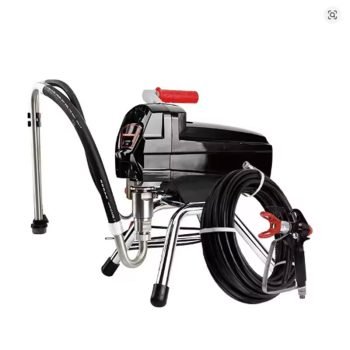
Large painting projects become much faster when the coating can be delivered consistently without stopping to refill a small cup or repeatedly reload a roller. The AEROPRO 515 Electric Airless Paint Sprayer is a contractor-style high-pressure piston sprayer designed for broad residential, commercial, and industrial coating work. It draws paint directly from a container, pressurizes the coating, and sends it through a high-pressure hose to an airless spray gun. For U.S. homeowners, remodelers, property managers, and painting contractors comparing a powerful wall-painting machine with smaller DIY sprayers, the AEROPRO 515 stands out for its 3300 PSI maximum pressure, standard 517 reversible spray tip, support for tips up to 0.025 inch, and 50-foot high-pressure hose.
Check Current AEROPRO 515 Paint Sprayer Details
For American shoppers searching for a professional airless paint sprayer, electric paint sprayer for house painting, 3300 PSI airless paint sprayer, airless sprayer for interior and exterior walls, contractor paint sprayer with 50 foot hose, or high pressure paint machine for home renovation, the AEROPRO 515 belongs to a substantially more capable class than handheld cup sprayers. It is built around a piston-pump system, electronic pressure control, metal pickup and return tubes, and a full-size high-pressure gun and hose.
AEROPRO has published more than one 515 configuration over time. A current manufacturer product page lists a 220V/50Hz, 3HP/2200W version with a 3.5 L/min flow rate and approximately 18.8 kg net weight. A more recent AEROPRO catalog also shows a 515 offered in 110V/60Hz or 220V/50Hz versions, rated at 2.7HP/2000W, 2.3 L/min, and approximately 15.2 kg. Both sets of manufacturer information agree on the key contractor specifications: up to 3300 PSI, a standard 517 tip, maximum 0.025-inch tip support, and a 15-meter or 50-foot hose. U.S. buyers should therefore confirm the exact voltage, motor rating, flow rate, and weight printed on the machine being shipped rather than assuming every 515 is identical.

What Is the AEROPRO 515 Airless Paint Sprayer?
The AEROPRO 515 is a high-pressure electric airless paint sprayer. Unlike an HVLP gun that uses compressed air to atomize paint, an airless sprayer uses a pump to pressurize the coating itself. Paint is forced through a very small opening in the spray tip, and the sudden pressure drop creates a fine fan-shaped spray.
Designed for Larger Painting Projects
This type of machine is most useful when the project involves broad surfaces or substantial paint volume. Interior walls, ceilings, exterior siding, fences, commercial spaces, steel structures, workshops, warehouses, and renovation projects can all benefit from the speed of an airless system when the coating and spray tip are appropriate.
Direct Paint Pickup Reduces Refilling
The 515 uses a suction arrangement with pickup and return tubes rather than a small paint cup mounted on the gun. This allows the sprayer to draw from a larger paint container, which is much more practical for rooms, houses, fences, and other high-volume jobs.
It Is More Than a Small DIY Handheld Sprayer
The large motor, full-size piston pump, long high-pressure hose, and tip capacity place the 515 closer to contractor equipment than compact homeowner sprayers. Homeowners can still use it, but the machine makes the most sense for people who have enough surface area to justify the setup, masking, cleaning, and safety procedures required by airless spraying.
AEROPRO 515 Core Specifications
| Specification | Verified / Version-Dependent Information |
|---|---|
| Product Type | High-pressure electric airless paint sprayer |
| Maximum Pressure | 3300 PSI / 22.7 MPa |
| Standard Tip | 517 reversible airless tip, 0.017-inch orifice |
| Maximum Tip Size | 0.025 inch |
| High-Pressure Hose | 15 m / 50 ft |
| Pressure Control | Electronic variable pressure control with display on manufacturer-described configuration |
| Pump | Heavy-duty piston pump |
| Pickup System | Metal pickup and return tubes |
| Output Connection | 1/4-18 NPSM on manufacturer product page |
| Motor | Manufacturer sources vary: approximately 2000W to 2200W depending on version |
| Flow Rate | Manufacturer sources vary: approximately 2.3 to 3.5 L/min depending on version |
| Voltage / Frequency | 110V/60Hz and 220V/50Hz configurations are documented; confirm exact unit |
| Net Weight | Published versions vary from roughly 15.2 to 18.8 kg |
| Included Gun | Manufacturer sources reference 818C or 818W-style gun with 517 tip depending on version |
| Primary Uses | Architectural coatings, interior/exterior painting, steel structures, construction and compatible industrial coatings |
Why the Version Differences Matter in the USA
The United States normally uses 120V/60Hz branch circuits for ordinary receptacles. A 110V/60Hz AEROPRO 515 version is therefore the relevant configuration to investigate for many U.S. buyers, while a 220V/50Hz-only machine should not simply be plugged into an American receptacle through a travel adapter. Frequency, voltage, plug configuration, grounding, circuit capacity, and product certification all matter.
Ask for a Nameplate Photo Before Ordering
The safest buying step is to request a clear photograph of the electrical nameplate of the exact machine that will be shipped. Confirm voltage, frequency, amperage or power, model number, and any safety certification before deciding whether the unit suits your electrical system.

How an Airless Paint Sprayer Works
An airless system uses hydraulic pressure instead of compressed air. The pump pulls coating from the paint container, pressurizes it, and sends it through the hose. At the gun, the coating passes through the tiny orifice in the spray tip and forms a fan pattern.
Pressure Provides Atomization
Higher pressure can help atomize thicker coatings, but more pressure is not automatically better. Excessive pressure increases overspray, tip wear, pump wear, and paint consumption. Good spraying practice uses the lowest pressure that still produces a clean, even fan without heavy tails at the edges.
The Tip Controls Pattern and Material Flow
Airless tips determine the fan width and the size of the opening through which the coating passes. This is why selecting the correct tip for the coating is just as important as choosing a powerful pump.
The Pump Must Support the Selected Tip
As tip orifice size increases, paint flow increases. A machine must be capable of maintaining pressure at that flow rate. AEROPRO rates the 515 for tips up to 0.025 inch, but the coating manufacturer may call for a smaller maximum tip for a particular material.
Understanding the Standard 517 Spray Tip
AEROPRO specifies a 517 tip as the standard nozzle on the 515. This tip designation is not the same thing as the “515” in the sprayer’s model name.
What the First Digit Means
On common airless tip numbering systems, doubling the first digit gives an approximate fan width in inches when the gun is held around 12 inches from the surface. A 517 tip therefore produces roughly a 10-inch fan under typical conditions.
What the Last Two Digits Mean
The final two digits represent the orifice size in thousandths of an inch. A 517 has an approximately 0.017-inch opening.
A 515 Tip Is Different From the AEROPRO 515 Machine
A 515 spray tip has approximately a 0.015-inch orifice and a fan around 10 inches wide. The AEROPRO 515 machine can use many compatible tip sizes within its rated maximum. Do not assume the model number tells you which spray tip must always be installed.
What Paints Can the AEROPRO 515 Spray?
AEROPRO markets the 515 for applications including oil paint, texture coatings, enamel, acrylic, architectural coatings, steel-structure work, and indoor or outdoor painting. Real compatibility depends on the viscosity, solids content, required tip size, filtration, solvent chemistry, and coating manufacturer’s instructions.
Interior and Exterior Latex Paint
Large airless sprayers are commonly used for architectural latex because they can move substantial coating volume quickly. The coating label or technical data sheet should specify the recommended airless tip range and whether thinning is allowed.
Acrylic Coatings
Many acrylic architectural coatings can be airless sprayed when the pump and tip meet the manufacturer’s requirements. Always follow the coating data sheet rather than assuming all acrylic products behave the same way.
Enamels and Oil-Based Coatings
AEROPRO lists enamel and oil paint among suitable categories. These materials may require different tip sizes, pressure, solvents, cleaning procedures, ventilation, and respiratory protection than water-based wall paint.
Texture and Heavier Materials Need Careful Tip Selection
The 0.025-inch maximum tip capacity gives the 515 more coating flexibility than many small homeowner machines, but “texture” is a broad category. Some heavy fillers or aggregates may exceed what this machine, hose, gun, or tip can safely handle. Check the coating and sprayer manuals before use.
Is the AEROPRO 515 Good for House Painting?
For a whole-house project, the 515 has several advantages: high pressure, a long hose, direct container pickup, electronic pressure adjustment, and sufficient tip capacity for many common architectural coatings.
Interior Walls
Airless spraying can cover drywall and previously painted walls quickly once the room is properly masked and prepared. The time savings are most noticeable on large empty rooms or new construction where overspray control is easier.
Ceilings
Ceilings can be sprayed efficiently with the correct extension and technique. The included or available tip extension can reduce the need to keep the gun close to the operator’s face or repeatedly move a ladder for ordinary-height ceilings.
Exterior Siding
Airless equipment is widely used for exterior siding because broad spray patterns and direct paint pickup can cover large areas rapidly. Wind, overspray, windows, roofs, landscaping, vehicles, neighboring property, and weather conditions must be considered carefully.
Occupied Homes Require More Masking
Airless spraying creates airborne coating mist. Furniture, floors, windows, fixtures, HVAC openings, appliances, and nearby rooms may need extensive protection. In a furnished room, rolling can sometimes be more practical even when spraying itself would be faster.
Using the 515 for Fences and Deck Projects
Long fence lines are a classic application for airless spraying because rollers and brushes can be slow around boards, rails, gaps, and textured surfaces.
Choose a Tip Appropriate for the Coating
Thin stains and sealers may need smaller or different tips than thick exterior latex. Always use the material manufacturer’s recommendation.
Watch Overspray Through Fence Gaps
Spray can travel through open boards and coat neighboring property, vegetation, cars, or structures. Use shields and choose calm weather.
Back-Brushing May Still Be Recommended
Some stains and exterior coatings benefit from brushing after spraying to work material into wood grain and improve uniformity. Follow the product instructions.
Can the AEROPRO 515 Spray Cabinets and Furniture?
It can spray compatible fine-finish materials when fitted with an appropriate smaller tip and pressure setting, but a large contractor airless sprayer is not automatically the best tool for every cabinet or furniture project.
Large Airless Output Can Create Overspray
Cabinet doors and furniture parts are relatively small compared with walls. Fine-finish airless tips, careful pressure control, and a controlled spray environment are important.
HVLP May Be Easier for Small Fine-Finish Work
HVLP systems generally move less coating volume and can provide very controlled application for small parts, trim, and detailed furniture. The tradeoff is slower production on broad surfaces.
Match the Tool to the Project
If the main job is repainting a 2,500-square-foot home, the AEROPRO 515 is much more logical. If the only goal is refinishing one nightstand, a smaller finishing system may be easier to set up and clean.

3300 PSI Maximum Pressure Explained
The 3300 PSI rating is a maximum equipment specification, not a recommendation to spray every coating at full pressure.
Start Lower and Increase Only as Needed
A common airless setup principle is to increase pressure until the fan becomes even and the heavy lines or “tails” at the edges disappear. Running much higher than necessary can waste coating and shorten tip and pump life.
Tip Wear Can Increase Required Pressure
As an airless tip wears, its orifice grows. The sprayer may move more paint and the fan pattern can change, causing users to increase pressure unnecessarily. Replacing worn tips can improve efficiency.
Every Component Must Be Pressure Rated
The gun, hose, fittings, extension, tip guard, and accessories must all be rated for the system pressure. Never substitute low-pressure hose or unapproved plumbing fittings in a 3300 PSI paint system.
High-Pressure Injection Injury Is a Medical Emergency
Airless spray can penetrate skin. The injury may initially look like a small cut or puncture even though coating has been injected deep into tissue.
Never Put a Hand Near a Pressurized Tip or Leak
Do not use fingers, gloves, rags, or any part of the body to check for leaks or clear a clogged spray tip.
Always Use the Tip Guard and Trigger Safety
The tip guard helps reduce accidental contact with the high-pressure jet, while the trigger lock helps prevent unintentional spraying when the gun is not actively being used.
Get Emergency Medical Care Immediately After Injection
If high-pressure fluid penetrates the skin, treat it as an emergency rather than a normal cut. Stop work, go to an emergency department immediately, and tell medical personnel that a high-pressure injection injury occurred and what material was being sprayed.
Grounding and Electrical Safety
The AEROPRO operating manual requires grounding during use. Grounding is particularly important with spray equipment because flowing coating and solvents can create static electricity.
Use a Properly Grounded Electrical Supply
Do not remove the grounding connection from the power cord. The exact outlet and circuit must match the voltage/frequency version of the machine.
Use Extension Cords Only When Approved
If the manual permits an extension cord, it must have the appropriate conductor size, grounding, length, and electrical rating for the load. Long undersized cords can cause excessive voltage drop and overheating.
Keep Electrical Connections Away From Wet and Hazardous Areas
Spraying involves liquids, and some coatings produce flammable vapors. Follow the equipment manual, coating safety data sheet, and applicable workplace electrical requirements.
Ventilation, Respirators, and Paint Fumes
Airless equipment does not eliminate airborne spray mist. The coating is still atomized into droplets, and volatile ingredients can create vapors.
Read the Paint Label and Safety Data Sheet
PPE requirements depend on the coating chemistry. Water-based wall paint, solvent-based enamel, epoxy, and isocyanate-containing coatings can require very different controls.
Ventilate the Spray Area Properly
Indoor spraying should only be performed with ventilation appropriate to the product and the work environment. Keep nonessential people and pets away from the area.
Use the Respiratory Protection Required for the Coating
A simple dust mask is not a universal paint-spraying respirator. The coating manufacturer and workplace safety requirements should determine the respirator type, filters or cartridges, and whether supplied-air respiratory protection is necessary.
Fire and Explosion Precautions
Many coatings and solvents can release flammable vapors. Static electricity, motors, switches, pilot lights, cigarettes, heaters, and other ignition sources can create dangerous conditions.
Do Not Smoke in the Spray Area
Keep flames and ignition sources away from coating mist and vapor.
Follow Grounding Instructions for Containers and Equipment
When the coating or solvent requires conductive grounding procedures, follow the sprayer manual and material safety instructions exactly.
Do Not Spray an Unknown Solvent
Confirm chemical compatibility with the sprayer, hose, gun, seals, and wetted materials. Certain solvent chemistries can react dangerously with incompatible equipment.
Preparing a Room Before Airless Spraying
Remove or Cover Furniture
Airless overspray can settle well beyond the visible fan. Empty rooms are much easier to spray efficiently.
Mask Windows, Doors, Fixtures, and Floors
Use painter’s tape, masking film, paper, drop cloths, or other suitable protection based on the coating and project.
Turn Off or Protect HVAC Airflow as Appropriate
Do not allow spray mist to be distributed into other spaces through forced-air systems. Follow building and coating safety procedures.
Prepare the Surface Before Starting the Sprayer
Cleaning, patching, sanding, priming, and dust removal should be finished before the machine is filled. Airless speed cannot compensate for poor surface preparation.
Basic Setup Before Spraying
The exact priming sequence should always come from the AEROPRO 515 manual supplied with the machine, but the basic preparation process includes inspecting equipment, connecting rated components, preparing the coating, and priming the pump before production spraying.
Inspect Hose and Gun
Do not use a hose with cuts, crushed sections, damaged fittings, exposed reinforcement, or visible leaks.
Install the Correct Tip and Guard
The tip should match the coating and desired fan. The guard must be secured correctly.
Prepare and Strain the Coating if Required
Contaminants and dried paint can clog filters and tips. Follow coating instructions regarding mixing, thinning, and straining.
Prime at the Recommended Low-Pressure Setting
Do not immediately turn the system to maximum pressure. Prime and test the pattern using the machine’s instructions, then increase pressure only enough to achieve proper atomization.
How to Spray an Even Coat
Keep the Gun Perpendicular to the Surface
Arcing the wrist creates a thick center and thin edges because the spray tip moves closer to and farther from the wall.
Maintain Consistent Distance
Airless tip fan-width guidance is commonly based on roughly 12 inches from the surface. Actual working distance should follow the coating, tip, and manufacturer instructions.
Move Before Pulling the Trigger
Starting movement first and releasing the trigger before stopping helps reduce heavy buildup at the ends of each pass.
Overlap Each Pass Consistently
A consistent overlap helps avoid stripes and missed areas. Exact overlap depends on spray pattern and coating application requirements.
Why the 50-Foot Hose Matters
A 15-meter or 50-foot high-pressure hose allows the operator to move around a large room or exterior area without carrying the pump continuously.
Keep the Sprayer in a Stable Location
The pump can remain near the paint container while the operator moves with the gun.
Plan Hose Routing Before Spraying
Keep the hose away from sharp edges, vehicle traffic, doors, ladders, heat sources, and areas where workers can trip.
Do Not Use Unrated Hose Extensions
Any added high-pressure hose must be compatible with the system, pressure rating, fittings, grounding requirements, and manufacturer recommendations.
Electronic Variable Pressure Control
AEROPRO describes the 515 with electronic variable pressure control and a display on its manufacturer product page.
Useful for Different Tip Sizes
Smaller tips and thin coatings may atomize at lower pressure than heavier architectural coatings.
Useful for Reducing Overspray
Lowering pressure to the minimum level that produces a clean pattern can reduce unnecessary mist and coating waste.
Pressure Cannot Fix Every Spray Problem
If the paint is incompatible, the filter is blocked, the tip is worn, the tip size is wrong, or the pump is not primed properly, simply increasing pressure may make the problem worse.

Heavy-Duty Piston Pump Advantages
Suitable for Direct Container Pickup
The piston system creates the pressure needed to draw and move coating through the long hose.
Supports Larger Tip Sizes
AEROPRO rates the 515 up to a 0.025-inch tip, providing more coating capacity than many lightweight DIY sprayers.
Packings Are Wear Components
High-pressure piston pumps rely on seals and packings that eventually wear. AEROPRO specifically promotes replaceable packings, which is valuable if replacement parts remain available.
Filters and Tip Clogs
Airless systems commonly use filtration to keep dried material and contaminants from reaching the small spray-tip opening.
A Clean Filter Helps Maintain Flow
A dirty filter can reduce pressure, distort the fan, and make the pump work harder.
A Reversible Tip Helps Clear Minor Clogs
Reversible airless tips are designed so the tip can be rotated to a cleaning position according to the manufacturer’s procedure, allowing a blockage to be cleared without inserting fingers or objects into the pressurized opening.
Always Relieve Pressure Before Removing the Tip
Never remove a spray tip or guard from a pressurized gun. Follow the pressure-relief procedure in the AEROPRO manual every time the equipment is cleaned, checked, serviced, or a component is removed.
Cleaning the AEROPRO 515 After Use
Cleaning is one of the most important parts of owning an airless sprayer. Paint allowed to dry inside the pump, hose, gun, filter, or tip can create expensive failures.
Use the Correct Cleaning Fluid
Water-based coatings are commonly cleaned with water, while other coatings may require a specific compatible solvent. Always follow both the coating and sprayer instructions.
Flush at the Lowest Effective Pressure
Cleaning does not require maximum spray pressure. Follow the machine’s flushing procedure and control static and solvent hazards appropriately.
Clean the Tip and Filters Separately
Remove these components only after pressure has been relieved. Clean them using compatible materials and non-damaging tools.
Do Not Store Paint in the Machine
Long-term storage preparation depends on the coating and climate. Follow AEROPRO guidance for pump protection, especially in freezing conditions.
Common Spray Pattern Problems
Heavy Lines or Tails at the Fan Edges
This can indicate insufficient atomization pressure, an unsuitable tip, coating viscosity problems, restricted flow, or other setup issues.
Uneven or Pulsating Spray
Possible causes include air entering the suction system, low coating level, clogged filters, worn pump components, or loss of prime.
Excessive Overspray
Pressure may be higher than necessary, the operator may be too far from the surface, the tip may be wrong, or wind and room airflow may be carrying mist.
Weak Output at Full Pressure Setting
Check for a worn tip, blocked filter, suction leak, damaged hose, pump wear, or material that exceeds the machine’s capability before assuming the motor itself has failed.
What to Do if the Sprayer Will Not Prime
Check the Paint Supply
Make sure the pickup tube is fully submerged and the coating is suitable for the machine.
Inspect Suction Connections
Air leaks can prevent the pump from drawing paint properly.
Check the Prime/Return System
Dried paint or a stuck valve can interfere with priming.
Follow the Manual Rather Than Disassembling a Pressurized Pump
Disconnect power and relieve pressure before inspection. Internal high-pressure components should only be serviced according to the manufacturer procedure.
Airless Sprayer vs Roller
| Feature | AEROPRO 515 Airless | Roller and Brush |
|---|---|---|
| Large-Surface Speed | Very fast after setup | Slower |
| Masking Requirement | High | Lower |
| Overspray | Present | Minimal |
| Equipment Cleaning | More involved | Simpler |
| Texture Coverage | Excellent with appropriate tip/coating | Can require more passes |
| Small Occupied Room | May be inconvenient | Often practical |
| Whole-House New Construction | Strong advantage | Labor intensive |
Spraying Saves Application Time
The largest time savings appear when there is a lot of unobstructed surface area and preparation can be done efficiently.
Rolling May Save Preparation Time
For one accent wall in a furnished room, masking the whole space for airless spray can take longer than rolling the wall.
Airless Sprayer vs HVLP
Airless Is Better for Production Speed
Walls, ceilings, siding, and fences favor the high material delivery rate of airless spraying.
HVLP Is Popular for Controlled Fine Finishing
Cabinet doors, furniture, trim parts, and detailed items may benefit from the lower output and fine control of an HVLP system.
Professionals Often Own Both
There is no need for one technology to replace the other. Each is optimized for a different type of painting work.
Is the AEROPRO 515 Suitable for Beginners?
A motivated homeowner can learn to use a large airless sprayer, but the 515’s pressure and output demand respect and preparation.
Practice With Water or Approved Material First
Follow the manual’s training and priming procedure before spraying an important finished surface.
Learn Pressure Relief Before Learning Spray Technique
Safe depressurization, trigger locking, tip handling, grounding, and hose inspection are more important than producing a perfect fan on the first day.
Start With a Large Simple Surface
A fence panel, test board, or protected wall is easier for learning than detailed cabinets or trim.
Best Users for the AEROPRO 515
- Residential painting contractors
- Property managers maintaining multiple units
- Home remodelers completing large renovation projects
- Builders painting new construction
- Owners painting large exterior surfaces
- Fence and deck contractors using compatible coatings
- Commercial maintenance teams
- Workshops and industrial users applying approved coatings
- Serious DIY users who want contractor-style output
Who May Prefer a Smaller Sprayer?
- Someone painting only small furniture pieces
- Users with very limited storage space
- People who paint infrequently and only in furnished rooms
- Users who do not want the cleaning and masking requirements of airless equipment
- Fine-finish specialists who mainly work on small cabinet and trim parts
Project Volume Should Drive the Purchase
The AEROPRO 515 delivers the most value when its high-pressure hose, large pump, and production capacity are used on appropriately sized projects.
Advantages of the AEROPRO 515
- Up to 3300 PSI maximum pressure
- Standard 517 reversible spray tip
- Supports spray tips up to 0.025 inch
- 50-foot / 15-meter high-pressure hose
- Heavy-duty piston pump
- Electronic variable pressure control on manufacturer-described configuration
- Heavy-duty metal construction
- Metal paint pickup and return tubes
- Direct pickup from larger paint containers
- Replaceable filter and wear components
- Suitable for many indoor and outdoor architectural painting jobs
- Higher production capability than most handheld cup sprayers
- Tip extension included or referenced on manufacturer configurations
- 110V/60Hz production version documented by AEROPRO for markets such as the United States
Important Considerations
- AEROPRO has published multiple 515 configurations with different motor, flow, and weight figures
- Confirm the exact 110V/60Hz or 220V/50Hz version before purchase
- 3300 PSI creates a serious high-pressure injection hazard
- Airless spraying requires extensive masking and overspray control
- Respiratory protection depends on the exact coating chemistry
- Flammable coatings and solvents require strict fire, ventilation, and grounding precautions
- Tips, filters, packings, hoses, and seals are wear items
- Cleaning must be performed immediately and thoroughly after use
- Large machines are less convenient for very small projects
- Replacement-parts availability should be confirmed for U.S. ownership
Why the 515 Can Be a Strong Value for Large Projects
If the exact U.S.-compatible version is available with dependable parts support, the combination of high pressure, 50-foot hose, 0.025-inch maximum tip capacity, electronic control, and direct paint pickup can make the 515 a useful production tool for substantial home renovation and contractor work.

Frequently Asked Questions About the AEROPRO 515
What is the AEROPRO 515?
It is a high-pressure electric airless paint sprayer designed for architectural, construction, indoor, outdoor, steel-structure, and other compatible coating applications.
What is the maximum pressure?
AEROPRO lists the 515 at a maximum of 3300 PSI, or approximately 22.7 MPa.
What spray tip comes standard?
Manufacturer information lists a 517 reversible airless tip with an approximately 0.017-inch orifice.
What is the largest tip it supports?
AEROPRO specifies a maximum tip size of 0.025 inch.
Does model 515 mean it only uses a 515 tip?
No. The model name and spray-tip code are unrelated. The machine is supplied with a 517 tip in manufacturer specifications and can use other compatible tips within its rated range.
What does a 515 spray tip mean?
A common 515 tip produces roughly a 10-inch fan at the reference spraying distance and has an approximately 0.015-inch orifice.
What does a 517 tip mean?
A 517 produces roughly a 10-inch fan at the reference distance with an approximately 0.017-inch orifice.
How long is the hose?
The standard manufacturer specification is 15 meters, or approximately 50 feet.
What is the motor power?
Published AEROPRO sources differ by production version. One current product page lists 2200W/3HP, while a catalog version lists approximately 2000W/2.7HP. Confirm the shipped machine’s nameplate.
What is the flow rate?
Published versions differ. A manufacturer product page lists 3.5 L/min, while an AEROPRO catalog lists approximately 2.3 L/min for another 515 version.
Why do the specifications differ?
The 515 appears to have been sold in different production configurations or markets. The exact machine nameplate and seller datasheet should control the purchase decision.
Is there a 110V version for the USA?
AEROPRO catalog information documents a 110V/60Hz 515 configuration. Confirm that the seller is shipping that exact version before ordering for U.S. use.
Can I use the 220V/50Hz version in the USA?
Do not assume so. U.S. electrical service is 60Hz, and voltage, frequency, grounding, plug configuration, current, and certification must all be compatible. Consult a qualified electrician and the manufacturer.
Can I use a travel adapter?
No simple plug adapter should be used to solve a voltage or frequency mismatch. It changes connector shape, not electrical characteristics.
Can it spray latex house paint?
Large airless sprayers are commonly used with compatible architectural latex. Follow the paint manufacturer’s recommended airless tip range, pressure, filtration, and thinning instructions.
Can it spray acrylic paint?
AEROPRO lists acrylic among compatible categories, but the exact coating must still meet the equipment and tip requirements.
Can it spray enamel?
AEROPRO lists enamel as an intended material category. Follow the enamel manufacturer’s spray and safety instructions.
Can it spray oil-based paint?
AEROPRO markets the 515 for oil paint as well, subject to chemical compatibility, correct tip choice, ventilation, grounding, and cleaning requirements.
Can it spray texture coatings?
AEROPRO lists texture as an application, but heavy texture products vary widely. Confirm the material’s required tip size and viscosity against the 0.025-inch maximum tip rating.
Can it spray epoxy?
Some airless systems are used for epoxy coatings, but epoxy formulas vary significantly. Check the coating data sheet, solvent compatibility, required tip, pressure, and equipment materials before use.
Can it paint interior walls?
Yes, when the room is properly prepared and the selected coating is suitable for airless application.
Can it paint ceilings?
Yes. Airless spraying is widely used for ceilings, and an appropriate extension can improve reach and positioning.
Can it paint an exterior house?
Yes, when weather, wind, masking, overspray control, surface preparation, coating instructions, and safe access are addressed.
Can it spray a wood fence?
Yes with a compatible stain or paint and proper overspray protection. Some wood coatings may also call for back-brushing after spraying.
Can it spray cabinets?
Potentially with a fine-finish tip, appropriate coating, and lower pressure, but a large airless sprayer may be less convenient than HVLP for small detailed cabinet projects.
Can it spray furniture?
It can, but the machine is optimized for higher-output work. Smaller finishing systems may provide easier control on individual furniture pieces.
Does it need an air compressor?
No. Airless means the sprayer uses hydraulic coating pressure rather than compressed air for atomization.
Does it draw paint directly from a bucket?
The manufacturer describes heavy-duty metal pickup and return tubes designed for direct coating pickup.
Is it suitable for five-gallon buckets?
Contractor-style pickup tubes are commonly used with larger paint containers, but verify the included tube length and container arrangement for the exact version.
Does it have adjustable pressure?
Yes. AEROPRO describes electronic variable pressure control with a display on the current manufacturer product page.
Should I always spray at maximum pressure?
No. Use the lowest pressure that produces a clean, even spray pattern for the coating and tip.
Why does the spray pattern have heavy lines on the edges?
Possible causes include insufficient atomization, wrong tip size, coating viscosity, restrictions, or a worn/incorrect tip. Diagnose the cause before simply increasing pressure.
Why is there too much overspray?
Excessive pressure, wrong tip, excessive gun distance, poor technique, wind, or airflow can all increase overspray.
How far should I hold the gun from the wall?
Common airless tip guidance uses roughly 12 inches as a reference, but follow the AEROPRO and coating instructions for the exact setup.
How much should passes overlap?
Use consistent overlap sufficient to produce an even coat. The exact overlap depends on the fan pattern and coating requirements.
Can I leave paint in the machine overnight?
Follow AEROPRO and coating instructions. In general, dried coating inside an airless system can damage tips, filters, valves, packings, hose, and gun components.
How should it be cleaned?
Use the cleaning fluid appropriate to the coating, follow the pressure-relief and flushing procedure, and clean the gun, tip, filters, pickup system, and hose according to the manual.
Can I use water to clean it?
Water is appropriate for many water-based coatings, but not for every paint. Use the cleaning method specified by the material manufacturer.
Can I use solvent to clean it?
Only a solvent specifically compatible with the coating and sprayer wetted components, and only with the required fire, ventilation, grounding, and PPE controls.
Can I clear a clogged tip with my finger?
No. High-pressure paint can penetrate skin. Use the reversible-tip procedure and always relieve pressure before removing or cleaning the tip.
What happens if paint is injected into the skin?
It is a medical emergency. Seek emergency medical care immediately and tell clinicians that a high-pressure injection occurred and identify the sprayed material.
Do I need eye protection?
Yes. Follow the sprayer manual and coating safety data sheet for appropriate eye, skin, and respiratory protection.
Do I need a respirator?
Many spray operations require respiratory protection, but the exact type depends on the coating and work environment. Follow the coating label, SDS, and applicable safety requirements.
Can I spray indoors with windows closed?
No. Spray mist and vapors require appropriate ventilation and exposure controls. Follow the coating and workplace safety instructions.
Can I spray near a gas water heater?
Flammable vapors and ignition sources can create fire or explosion hazards. Follow the material SDS, sprayer manual, and applicable fire-safety rules.
Does the machine need grounding?
Yes. The AEROPRO operating manual includes grounding requirements for safe use.
Can I use any high-pressure hose?
No. The hose must be designed for airless paint spraying, use compatible fittings, and meet or exceed the system’s required pressure rating and grounding requirements.
Can I add more hose?
Only if AEROPRO permits the additional length and every hose and fitting is compatible with the system. Extra hose can affect pressure response and handling.
How often should tips be replaced?
Replace a tip when wear increases material consumption, changes fan width, reduces atomization quality, or requires excessive pressure. Service life varies by coating abrasiveness and use.
Are replacement filters important?
Yes. Clean filtration helps protect the tip and maintain consistent flow.
Are pump packings replaceable?
AEROPRO describes the 515 as using replaceable packings. Availability and part numbers should be confirmed for the exact version.
Is this a good machine for a professional painter?
Its 3300 PSI rating, long hose, electronic pressure control, piston pump, and 0.025-inch maximum tip capacity are contractor-oriented specifications. Parts and service availability should be evaluated before professional dependence on the machine.
Is it too powerful for a homeowner?
Not necessarily, but homeowners must be comfortable with high-pressure safety, masking, setup, cleaning, and appropriate PPE. For one small project, renting or choosing a smaller sprayer may be easier.
What should I verify before buying?
Confirm exact voltage/frequency, motor version, flow rate, weight, included gun, 517 tip, maximum 0.025-inch tip capability, hose length, power plug, safety certification, warranty, replacement parts, seller support, and return terms.

USA SEO Buying Guide for Airless Paint Sprayers
American homeowners and professional painters commonly research this product category using phrases such as electric airless paint sprayer for house painting, 3300 PSI professional paint sprayer, airless paint sprayer for walls and ceilings, contractor paint sprayer with 50 foot hose, airless sprayer for exterior house painting, high pressure paint machine for renovation, airless sprayer for latex paint, and professional paint sprayer for home improvement.
The AEROPRO 515 fits these searches because it combines a contractor-sized piston pump, electronic pressure adjustment, 3300 PSI maximum pressure, standard 517 tip, 0.025-inch maximum tip support, direct paint pickup, and 50-foot hose. Its biggest U.S. buying consideration is confirming that the seller is supplying the correct 110V/60Hz version rather than a 220V/50Hz configuration intended for another market.
Start With Electrical Compatibility
Verify the exact nameplate before comparing anything else. A powerful sprayer that cannot safely operate from your available electrical supply is not a useful purchase.
Then Compare Flow and Tip Capacity
These specifications determine how comfortably the machine can handle larger coatings and production jobs.
Review Parts and Service Availability
Tips and filters are easy wear items, while packings, valves, piston components, pressure sensors, hoses, and control electronics may eventually need replacement.
Choose the Machine for the Projects You Actually Paint
Do not buy solely because 3300 PSI sounds impressive. Project size, coating types, tip requirements, masking conditions, portability, cleanup, and service support determine whether a contractor-style sprayer is the right investment.
Shop the AEROPRO 515 Electric Airless Paint Sprayer
If your projects include full rooms, ceilings, exterior walls, fences, rental-property turnovers, new construction, large renovation work, or compatible commercial coating applications, the AEROPRO 515 offers substantially more production capability than a small handheld paint sprayer.
Before purchasing, confirm the exact U.S.-compatible voltage and frequency, current motor and flow specification, included spray gun, standard 517 tip, 50-foot hose, maximum 0.025-inch tip support, warranty, replacement parts, and seller support. Also make sure you are prepared to follow the high-pressure injection, grounding, ventilation, fire, and PPE requirements that apply to airless spray work.
Check Current AEROPRO 515 Paint Sprayer Details
Final Thoughts on the AEROPRO 515 Paint Sprayer
The AEROPRO 515 Electric Airless Paint Sprayer is best viewed as a contractor-style production tool rather than a basic handheld home-painting gadget. Its 3300 PSI maximum pressure, standard 517 tip, 0.025-inch maximum tip capacity, 50-foot hose, electronic pressure adjustment, heavy-duty piston pump, and direct paint pickup are designed around larger jobs where speed and continuous material delivery matter.
That makes the machine particularly relevant to whole-room renovations, new construction, rental-property turnovers, exterior house painting, fence projects, commercial maintenance, steel structures, and other surfaces that would require substantial time with a brush or roller.
Its size and capability also mean that the preparation process matters. Airless spraying can cover surfaces quickly, but the operator must first protect everything that should not receive paint. In occupied homes, this can include flooring, windows, fixtures, appliances, furniture, doors, cabinets, HVAC openings, and adjacent spaces.
For this reason, the fastest application method is not automatically the fastest total project method. An empty new-construction room is ideal for airless production. One small furnished bedroom may still be easier to roll.
Coating choice is equally important. AEROPRO markets the 515 for several material categories, but every paint or coating has its own spray requirements. Read the technical data sheet and identify the recommended airless tip, filtration, pressure, thinning instructions, environmental limits, and required PPE.
Tip selection is one of the easiest parts of airless spraying to misunderstand. The AEROPRO model is called 515, yet the manufacturer supplies a 517 tip. Those numbers describe different things. Model 515 identifies the sprayer. A 517 tip refers to a roughly 10-inch fan and a 0.017-inch orifice. A 515 tip has a similar nominal fan width with a smaller 0.015-inch orifice.
The machine can support tips up to 0.025 inch according to AEROPRO, which gives it flexibility for higher-flow coatings. That maximum does not mean a 0.025-inch tip should be installed for every job. The coating manufacturer should determine the practical range.
Pressure should also be treated as an adjustable tool, not a target. Maximum 3300 PSI capacity gives the pump headroom to atomize demanding coatings, but the best working pressure is generally the lowest pressure that produces a clean, consistent pattern with the selected tip and material.
Running unnecessarily high pressure increases coating mist, accelerates tip wear, adds stress to seals and packings, and can waste paint.
Safety deserves even more attention than performance. Airless sprayers can produce injection injuries in which coating penetrates the skin. The injury can appear small while causing severe internal tissue damage. Never put a finger near the tip, never use a hand to search for a leak, and never try to stop high-pressure fluid with a glove or rag.
If paint or another coating is injected through the skin, seek emergency medical attention immediately and identify the material involved.
The trigger lock, tip guard, pressure-relief procedure, grounded electrical supply, rated high-pressure hose, and safe cleaning procedure are not optional accessories. They are core parts of operating a machine in this pressure class.
Spray mist and vapors also require proper exposure control. Airless equipment uses no compressed air for atomization, but it still produces airborne coating droplets. Indoor work may require mechanical ventilation and respiratory protection appropriate to the coating chemistry.
Flammable solvent vapors create another category of risk. Ignition sources, static discharge, pilot lights, cigarettes, switches, motors, and improper electrical connections can contribute to fire or explosion. The coating safety data sheet and sprayer manual should be read together before any solvent-containing product is sprayed.
Cleaning is the other major responsibility of ownership. A high-quality sprayer can be damaged quickly when paint is allowed to dry inside its pump, filter, hose, gun, or tip. Thorough flushing immediately after use is far easier than removing cured coating later.
Water-based paint may use water for cleanup, while solvent-based coatings require a compatible cleaning fluid. Never assume one solvent is safe for every machine component or coating.
Replacement parts should also influence the buying decision. Spray tips are consumables. Filters need cleaning and replacement. Pump packings eventually wear. Hoses can become damaged. Pressure components, valves, seals, and electronic controls can require service after enough use.
A professional painter should therefore investigate U.S. parts availability before relying on the AEROPRO 515 as a primary production machine.
The voltage question is especially important for American buyers because AEROPRO has documented multiple 515 configurations. Its current product page describes a 220V/50Hz, 2200W version with a higher published flow figure, while a catalog also identifies a 515 in both 110V/60Hz and 220V/50Hz configurations with a 2000W motor and different rated flow and weight.
This is not a detail to guess from the plug in a product photograph.
Ask the seller for the exact machine’s nameplate before ordering. Make sure the voltage and frequency are correct for the intended installation. If you are buying the sprayer in the United States for normal portable use, a properly configured 110V/60Hz version is generally the relevant option to investigate.
Do not try to make a 220V/50Hz unit suitable with a cheap travel adapter. A plug adapter cannot change frequency, motor design, or electrical certification.
If the correct U.S.-compatible version is available, the 50-foot hose is a major practical advantage. The pump can stay near a five-gallon container while the operator moves around a room or along an exterior wall. That reduces unnecessary lifting and gives the painter more freedom than a short-hose or cup-fed system.
Hose management still matters. Route the hose away from sharp corners, doorways, vehicle paths, ladders, heaters, and areas where workers can trip. Inspect it before every use and replace it if the reinforcement, fittings, or outer cover are damaged.
For homeowners, the decision comes down to scale. Someone repainting a complete house, renovating several rooms, maintaining rental properties, or painting long exterior fences can benefit from contractor-style production speed.
Someone repainting one chair and two cabinet doors may spend more time masking and cleaning the AEROPRO than actually spraying.
This is why the 515 should be compared with the project rather than with marketing claims alone.
When the project is large enough, airless spraying can transform the workflow. Paint is delivered continuously from the container, a broad fan covers large surfaces rapidly, and the operator can work from the end of a long hose rather than repeatedly moving the pump.
When the project is small or highly detailed, a roller, brush, compact airless machine, or HVLP system may provide better control with less cleanup.
Before completing the purchase, confirm the exact production version, electrical input, motor rating, flow rate, included gun, hose length, tip specification, maximum supported tip, power plug, warranty, and replacement parts. Read the operator manual before the first use and keep it available during operation and maintenance.
If the machine supplied matches the intended U.S. electrical system and your projects justify its contractor-level capacity, the AEROPRO 515 Electric Airless Paint Sprayer can be a powerful choice for large residential, renovation, construction, and compatible coating jobs where speed, hose reach, and high-pressure atomization are priorities.