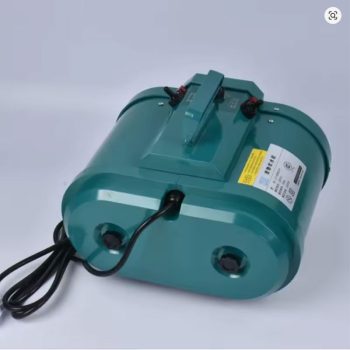

3200W Double Motor Dog Grooming Blower Dryer Complete Guide
Bathing a dog is only part of the grooming process. Removing water efficiently from the coat can take as much time as washing, particularly when working with large breeds, double-coated dogs, long-haired pets, or multiple grooming appointments in a professional salon. The 3200W Double Motor Dog Grooming Blower Dryer is designed for high-velocity pet drying applications where stronger airflow and professional grooming control are more important than the gentle airflow produced by an ordinary household hair dryer.
For U.S. shoppers searching for a professional dog grooming dryer, 3200W dog blower dryer, dual motor pet dryer, high velocity dog dryer, dog grooming force dryer, pet hair blower for large dogs, professional grooming salon dryer, or double motor dog dryer, this type of machine is designed to speed up water removal while giving the groomer control over airflow for different coat types.
The major difference between a professional pet blower and a standard personal hair dryer is how the air is used. Grooming blowers rely heavily on concentrated air velocity to push water away from the skin and through the coat. On thick double coats, that airflow can also help separate loose undercoat during the drying process.
The product family associated with this 3200W configuration uses a dual-motor design and adjustable or multi-stage airflow. Comparable LT-1090C and related professional dryer specifications list airflow ranges around 20 to 80 meters per second, with some closely related versions reaching approximately 85 meters per second. Temperature specifications vary among production versions, so buyers should confirm the exact heat range, voltage, plug type, controls, and included nozzles for the selected unit.
This comprehensive guide explains how a professional dog grooming blower works, why dual motors matter, how high-velocity drying differs from human hair drying, how to use the machine with small and large dogs, how to work with double coats and long hair, how to introduce noise-sensitive pets to a dryer, how to select airflow safely, how to maintain the filters and hose, and what U.S. buyers should verify before ordering a high-powered 3200W pet dryer.
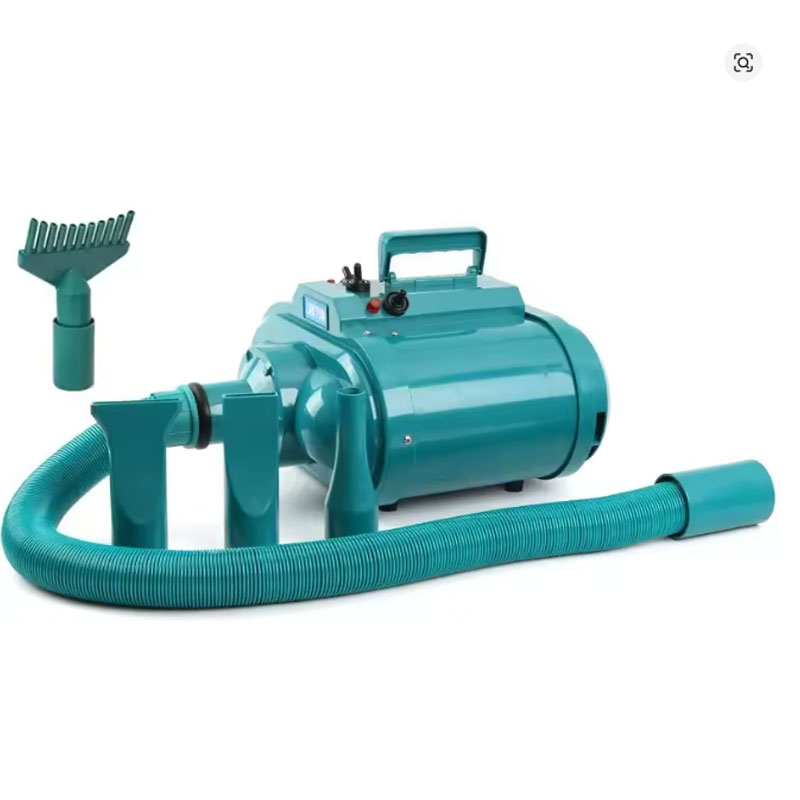
What Is a 3200W Double Motor Dog Grooming Blower Dryer?
A professional dog grooming blower dryer is an electrically powered machine that moves a concentrated stream of air through a hose and grooming nozzle. The air helps push water off the coat and can separate dense hair so moisture trapped near the skin can escape more efficiently.
The 3200W product family uses two motors rather than one, giving the machine greater airflow potential for demanding grooming jobs.
Designed for High-Velocity Pet Drying
Unlike a conventional household dryer that relies heavily on heat, professional pet blowers use moving air as the primary drying tool. This is especially valuable for animals because excessive heat can become uncomfortable long before the groomer realizes how hot the skin feels underneath a thick coat.
Airflow Is the Main Working Force
The groomer directs the nozzle across the coat, allowing the air stream to drive water droplets outward. The machine can therefore remove substantial moisture before the coat is completely dry through evaporation.
3200W Double Motor Pet Dryer Key Features
| Feature | Product Family Information |
|---|---|
| Product Type | Professional pet grooming blower dryer |
| Power Positioning | Up to 3200W depending on exact configuration |
| Motor Configuration | Dual motor |
| Airflow | Adjustable / multi-stage depending on version |
| Published Air-Speed Range | Approximately 20–80 m/s on matching model documentation; related versions may list up to about 85 m/s |
| Temperature | Varies by version; verify exact selected unit |
| Voltage | 110–240V variants are listed within the matching model family |
| Frequency | 50/60Hz on related professional configurations |
| Primary Application | Dog and pet grooming |
| Suitable Coat Types | Short, long, dense, double-coated, and professional grooming applications when airflow is adjusted appropriately |
| Controls | Multi-stage or variable airflow depending on version |
| Included Accessories | Verify hose, nozzles, power cord, filters, and package contents before purchase |
Why Specifications Can Differ Between Similar 3200W Dryers
Professional pet dryers are sometimes produced in several electrical and control versions under a closely related housing or model family. One version may use four-stage airflow while another uses continuous variable adjustment. Temperature limits and included accessories may also differ.
Verify the Exact Unit at Checkout
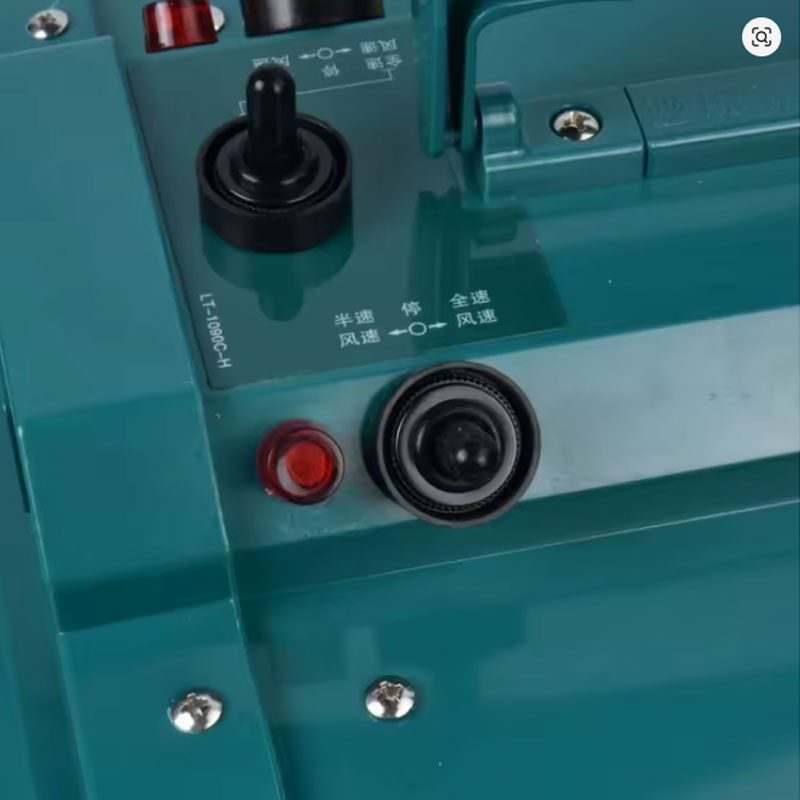
Before ordering, confirm the nameplate voltage, plug, maximum current requirement, heat controls, airflow controls, hose length, nozzle set, and package contents for the exact version being shipped.
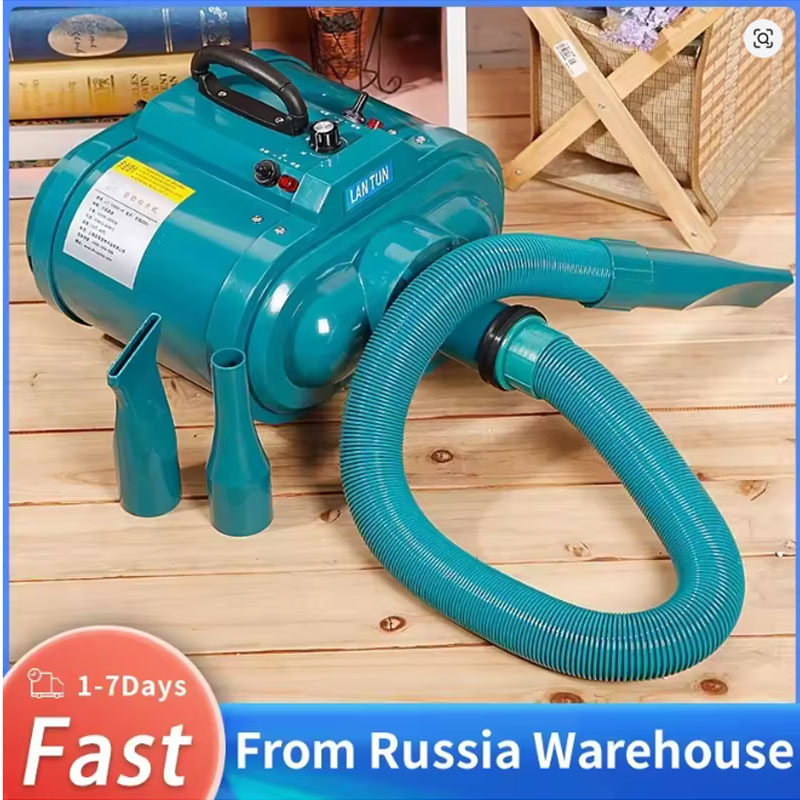
Why Use Two Motors in a Dog Grooming Dryer?
A dual-motor design gives the dryer more airflow capability than many smaller single-motor machines.
More Air for Dense Coats
Thick coats can trap water close to the skin. Greater airflow can help separate hair and push moisture outward instead of relying only on surface evaporation.
Useful for Large Dogs
A large Newfoundland, Golden Retriever, German Shepherd, Husky, Standard Poodle, Bernese Mountain Dog, or similar breed can contain a substantial amount of wet coat after bathing.
High Power Should Still Be Adjustable
Maximum airflow is not appropriate for every pet or every body area. A professional dryer becomes more useful when the groomer can reduce output for small animals, sensitive areas, face work, or noise-sensitive dogs.
What Does 3200W Mean in a Dog Dryer?
The 3200W rating describes the high-power positioning of this dual-motor product family. It should not be interpreted as meaning that every electrical version continuously draws exactly 3200 watts under every control setting.
Power and Airflow Are Related but Not Identical
Motor design, fan geometry, hose restriction, nozzle shape, filter condition, electrical supply, and airflow setting all affect actual performance.
U.S. Electrical Compatibility Deserves Special Attention
A theoretical 3200-watt load at 120 volts would require considerably more current than a typical household 15-amp circuit can provide. For that reason, U.S. buyers should check the actual nameplate voltage, rated amperage, plug configuration, and circuit requirements of the exact unit rather than relying only on the headline wattage.
Why Voltage Matters for U.S. Buyers
The matching dryer family appears in different voltage configurations. A professional machine intended for 220–240V service cannot simply be treated as identical to a 110–120V unit.
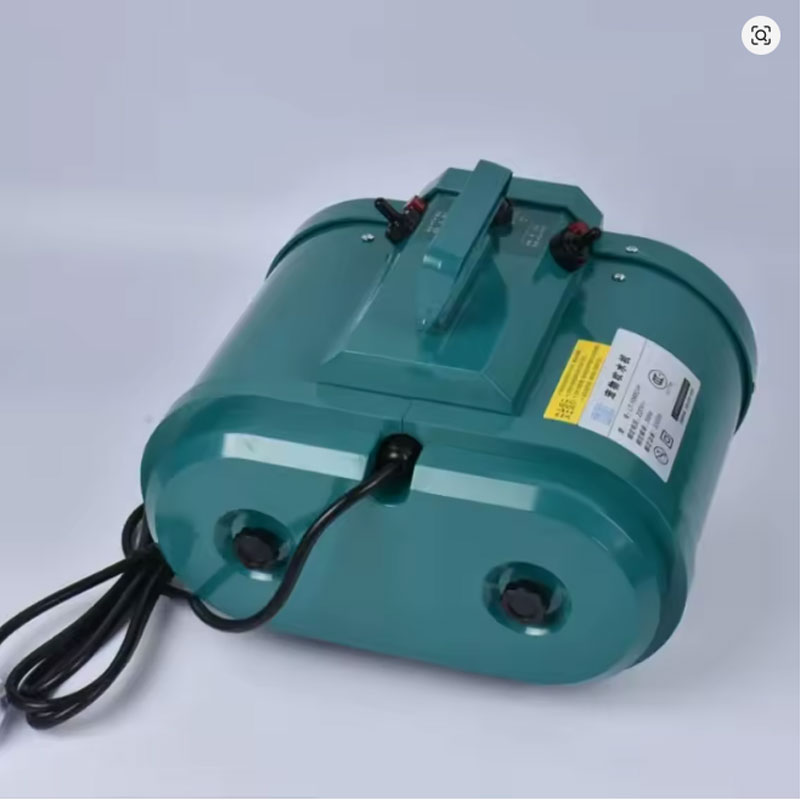
Check the Nameplate
The voltage and current information printed on the actual dryer is more important than a generic marketplace title.
Check the Plug Type
A plug that does not match a standard U.S. receptacle can indicate that the machine was designed for another electrical market or requires a specific dedicated circuit.
Do Not Use Improvised Electrical Adapters
If the dryer requires a different voltage or higher-amperage circuit, have the installation evaluated properly. Do not use lightweight travel adapters, undersized extension cords, or improvised wiring to power a high-output grooming appliance.
What Is a High-Velocity Dog Dryer?
A high-velocity dryer uses a fast concentrated airflow rather than relying primarily on hot air.
Water Is Physically Pushed From the Coat
When the nozzle is directed through wet hair, visible water droplets can be driven away from the dog.
Air Reaches Beneath the Surface Coat
With an appropriate nozzle and angle, the airflow can separate layers of hair and help moisture near the skin move outward.
This Is Why Groomers Call Them Force Dryers
The term “force dryer” refers to the mechanical force of the airflow. It does not mean the pet should be forcibly restrained or exposed to excessive pressure.
Professional Dog Dryer vs Human Hair Dryer
| Feature | Professional Pet Blower | Typical Human Hair Dryer |
|---|---|---|
| Primary Drying Method | High-volume / high-velocity airflow | Airflow plus substantial heat |
| Hose | Long flexible grooming hose | Usually none |
| Nozzle Reach | Designed to move around an animal | Designed for handheld human use |
| Coat Penetration | Designed for thick pet coats | Limited for dense animal undercoat |
| Motor Options | Professional single or dual motor | Compact personal-use motor |
| Professional Salon Use | Designed for repeated pet grooming | Not intended as a high-velocity dog dryer |
Why Ordinary Hair Dryers Are Not Ideal for Large Dogs
A household hair dryer may work for a small area or very small pet when used safely, but drying a dense full coat can take a long time.
A Professional Blower Changes the Grooming Workflow
The ability to push water out rapidly can shorten the wet stage of grooming before brushing, finishing, trimming, or styling begins.
How Adjustable Airflow Helps Different Dogs
One fixed maximum airflow would make a powerful dryer much less useful.
Lower Airflow for Small Dogs
Yorkshire Terriers, Maltese, Chihuahuas, Toy Poodles, puppies, and other small pets may be more comfortable when introduced to lower airflow first.
Medium Airflow for General Drying
Moderate airflow can work well for controlled drying where maximum force is unnecessary.
High Airflow for Dense Coats
Large double-coated breeds can require considerably more air to move water and loosen the undercoat effectively.
Adjust Throughout the Groom
The ideal setting can change as you move from the body to the legs, chest, tail, and more sensitive areas.
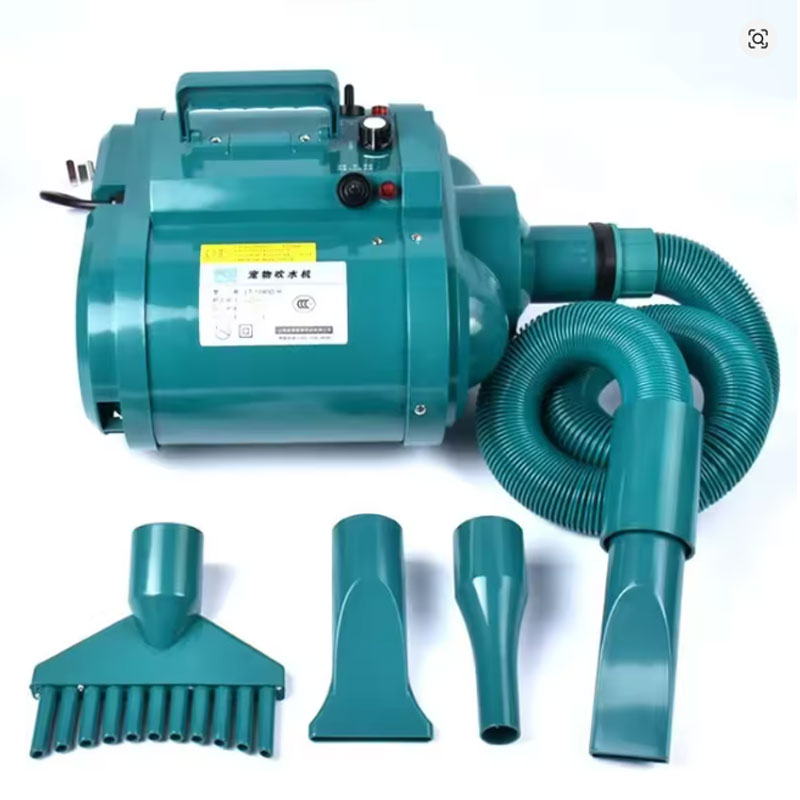
Using a Double Motor Dryer on Large Dogs
Large dogs are one of the strongest use cases for a professional dual-motor dryer.
Start by Towel Drying
Remove as much free water as possible with absorbent towels before turning on the blower. This reduces unnecessary operating time and prevents large amounts of water from spraying across the grooming room.
Begin With a Moderate Setting
Give the dog time to adjust to the sound and airflow before increasing output.
Work Systematically Across the Coat
Dry one section at a time rather than moving randomly. A consistent sequence makes it easier to identify areas that remain damp.
Using the Dryer on Double-Coated Dogs
Double coats are common in Huskies, German Shepherds, Malamutes, Golden Retrievers, Samoyeds, Corgis, Australian Shepherds, and many other breeds.
Undercoat Holds Water
The outer coat can appear partly dry while significant moisture remains underneath.
Airflow Can Separate the Coat
A high-velocity stream allows the groomer to see the coat parting and work deeper than surface-only drying.
Drying Can Also Release Loose Undercoat
During seasonal shedding, substantial loose hair may come free. Use the blower in an area where airborne fur can be managed safely and filters can be cleaned regularly.
Dog Dryer for Huskies and Heavy Shedding Breeds
Huskies illustrate why professional blowers are popular among owners of double-coated dogs.
Bathing Loosens Undercoat
Water, shampooing, conditioning, and drying can release hair that was already ready to shed.
Blowing Can Help Move Loose Coat Away
Proper directional airflow can remove loose fur while drying.
Expect Significant Hair in the Grooming Area
Use appropriate ventilation and clean the machine’s intake filters frequently during heavy deshedding sessions.
Dog Dryer for Golden Retrievers
Golden Retrievers combine undercoat with longer outer hair, feathering, and a water-holding coat.
Use Stronger Airflow on the Torso
The body can generally tolerate more airflow than the face and other sensitive areas.
Use Controlled Direction on Feathering
Blowing long hair randomly can create tangles.
Brush After the Coat Is Appropriately Dry
Finishing with the correct brush or comb can help align the coat and identify remaining tangles.
Dog Dryer for German Shepherds
German Shepherd coats can hold substantial undercoat, especially during seasonal shedding.
Work in Sections
Start at the rear or shoulder area and follow a consistent sequence.
Pay Attention to Loose Undercoat
The blower can expose sections that need additional brushing once drying is complete.
Dog Dryer for Poodles and Doodle Coats
Poodles and many Poodle mixes have coat textures that require a different finishing approach from straight double coats.
Drying Technique Influences the Finished Appearance
Groomers often combine controlled airflow with brushing or coat-straightening techniques when preparing hair for clipping.
Do Not Create Tangles With Random Air Direction
Long curly coats can knot when air whips sections around excessively.
Professional Technique Matters as Much as Dryer Power
A 3200W dual-motor machine can provide strong airflow, but grooming skill determines how that airflow is used to create a clean finish.
Dog Dryer for Newfoundlands and Bernese Mountain Dogs
Very large long-coated breeds can take considerable time to dry.
Remove Surface Water First
Use several towels if necessary before using powered airflow.
Work From the Skin Outward
Part the coat with the air stream and ensure damp undercoat is not hidden beneath a dry-looking outer layer.
Take Breaks During Long Sessions
Long grooming sessions can be tiring for both the dog and groomer. Keep the animal comfortable and monitor stress throughout the process.
Can the Dryer Be Used on Small Dogs?
A powerful dryer can potentially be used on smaller pets when it offers sufficient airflow control and is operated carefully.
Always Start Low
A small dog experiences the physical force and noise differently from a large breed.
Increase Only if the Pet Is Comfortable
Maximum airflow is rarely necessary across the entire body of a small dog.
Distance Matters
Moving the nozzle farther from the coat generally softens the physical impact of the air stream.
Can the Dryer Be Used on Puppies?
Puppies require especially careful introduction to grooming equipment.
Desensitization Is More Important Than Speed
The first experience should build confidence rather than simply finish the groom as quickly as possible.
Introduce Sound at a Distance
Allow the puppy to hear the machine without immediately placing strong airflow against the body.
Use Very Gentle Airflow Initially
Increase only when the puppy remains relaxed and the machine’s operating instructions support the application.
How to Introduce a Nervous Dog to a Blower Dryer
Professional grooming dryers can be noisy. Some dogs become comfortable quickly, while others need a gradual introduction.
Let the Dog See the Equipment
Allow calm inspection while the machine is switched off.
Turn the Dryer On Away From the Dog
This introduces the motor noise without immediately combining it with physical airflow.
Begin With Air Directed Away
Gradually move the airflow toward a less sensitive body area such as the shoulder or side.
Use Positive Reinforcement
Calm praise and appropriate rewards can help create a more positive association with the grooming process.
Recognizing Stress During Drying
A grooming session should never become a contest between the operator and a frightened animal.
Watch Body Language
Attempts to escape, trembling, persistent panting unrelated to temperature, cowering, extreme vocalization, or defensive behavior can indicate distress.
Reduce Intensity
Lower airflow, increase nozzle distance, pause, or change the approach.
Stop When Necessary
Completing the dry is less important than preventing panic or injury.
Protecting a Dog’s Ears During Force Drying
The ear area deserves extra care because concentrated airflow and noise can be uncomfortable.
Do Not Aim the Nozzle Into the Ear Canal
Direct high-velocity air should never be forced into the ear opening.
Reduce Airflow Around the Head
The setting used for a thick torso may be inappropriate near the face and ears.
Use Controlled Hand Positioning
Experienced groomers may gently protect or redirect sensitive areas while drying nearby coat.
Protecting the Eyes and Nose
Avoid Direct Air Into the Eyes
High-velocity airflow can be uncomfortable and may blow debris toward the eye.
Avoid Direct Airflow Into the Nostrils
Use much gentler techniques around the muzzle.
The Face Usually Needs Less Force
A professional dryer is powerful because dense body coats need airflow. That does not mean every part of the dog should receive the same pressure.
Heat Safety With a Professional Pet Dryer
Matching model-family specifications publish warm-air temperatures, but exact temperature ranges vary by configuration.
Monitor Air Temperature Continuously
Air that feels acceptable at the machine may feel different after being concentrated through a nozzle or applied continuously to one area.
Keep the Nozzle Moving
Avoid concentrating warm air on one patch of skin for an extended period.
Use Airflow Rather Than Maximum Heat as the Main Drying Tool
The advantage of a force dryer is the ability to move water mechanically. Excessive heat should not be necessary to achieve effective drying.
Why Nozzle Selection Matters
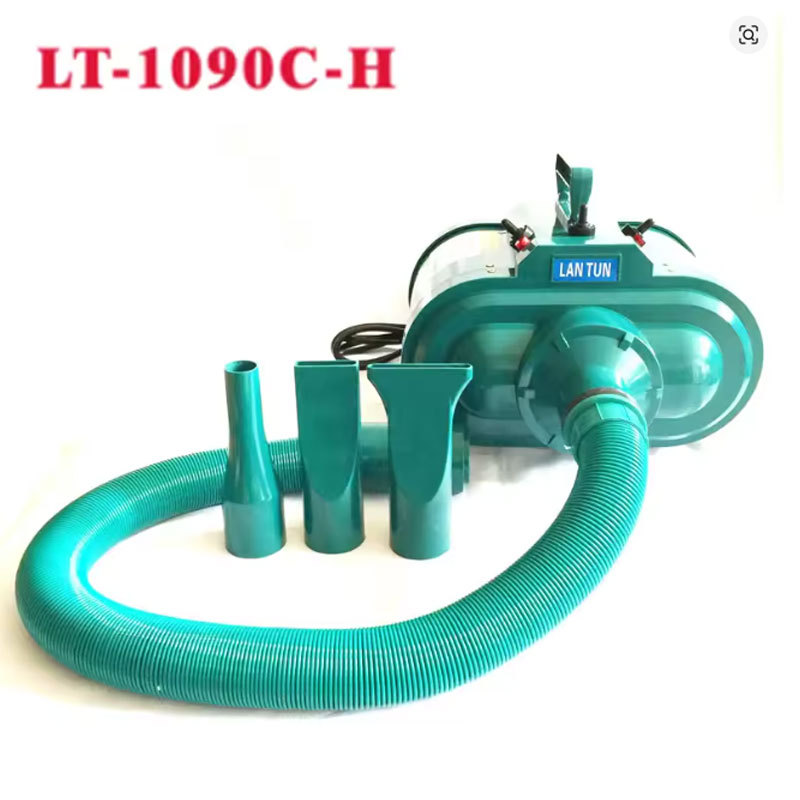
Different nozzle shapes change the width and concentration of the airflow.
Narrow Nozzle
A concentrated opening can create a stronger, more focused stream useful for pushing water from dense coat.
Wider Nozzle
A broader air pattern may be useful for general drying or larger body areas.
Use the Least Aggressive Nozzle That Does the Job
Maximum concentration is not automatically better. Choose based on coat density, body area, and the animal’s comfort.
Why the Flexible Hose Is Important
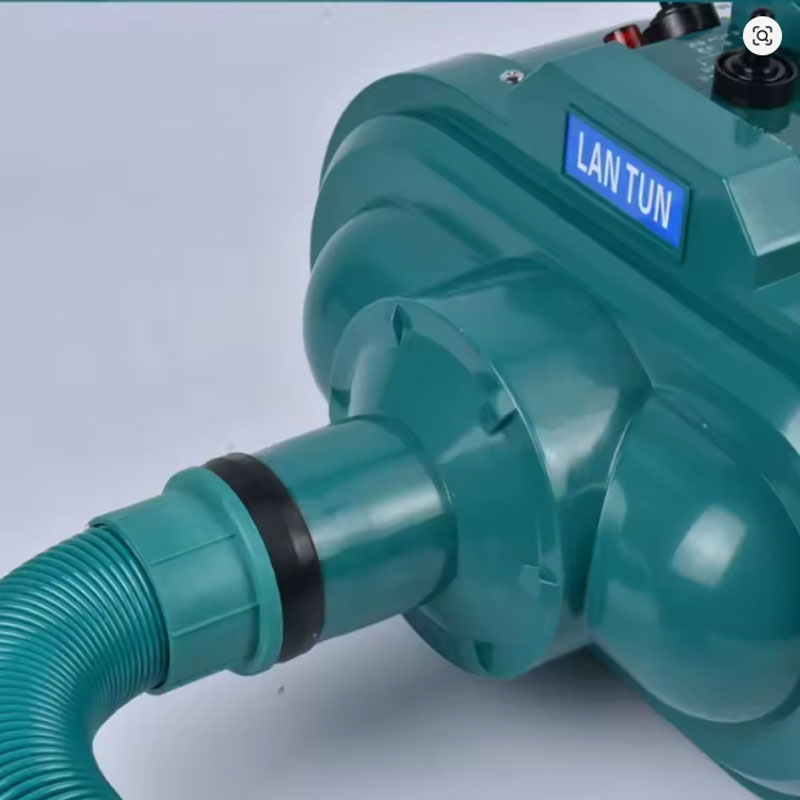
A professional pet dryer normally sits on the floor, table shelf, cart, or other secure location while the operator handles a lightweight hose.
The Groomer Does Not Carry the Motor
This reduces hand and wrist fatigue compared with holding an entire heavy blower body.
The Hose Reaches Around the Dog
The operator can move from one side of a grooming table to another without repeatedly relocating the machine.
Keep the Hose Free From Sharp Bends
Kinks can restrict airflow and place unnecessary stress on the hose material.
Professional Grooming Salon Applications
Commercial grooming salons may dry several dogs in a single day, making speed and control important.
Dual Motors Can Support Demanding Workloads
A high-output dryer is particularly useful when appointments include large breeds or heavy coats.
Adjustability Helps Serve Different Clients
The same salon may groom a small Maltese in one appointment and a large Husky in the next.
Maintenance Becomes More Important With Daily Use
Hair and dust can accumulate rapidly in a commercial environment. Filters should be inspected frequently.
Mobile Dog Grooming Applications
Mobile groomers often need professional equipment inside a limited vehicle workspace.
Electrical Load Must Be Planned Carefully
A high-power dual-motor dryer can place significant demand on a mobile grooming van’s generator, inverter, shore-power connection, or electrical circuit.
Ventilation Matters
Drying releases moisture and loose hair into a relatively small space.
Confirm Power Compatibility Before Installation
Do not purchase a high-output dryer for a grooming van until the electrical system has been checked for the required voltage and current.
Home Grooming Applications
Dog owners who bathe large or heavily coated pets regularly may find a professional blower useful at home.
Reduced Drying Time Can Make Home Baths Easier
A dog that remains wet for hours can track moisture throughout the house and may become chilled in cooler conditions.
Deshedding Can Become More Manageable
Loose undercoat released during drying can be collected in a designated grooming area instead of shedding throughout the home.
Use the Machine in an Appropriate Space
Bathrooms, garages, grooming rooms, or outdoor covered areas may be easier to clean than carpeted living rooms.
Using the Dryer for Deshedding
High-velocity dryers are frequently associated with deshedding because loose undercoat can become visible and blow free as the coat separates.
Bathing Helps Prepare the Coat
Proper shampooing and rinsing can loosen dirt and hair that is ready to shed.
Drying Can Reveal Remaining Loose Coat
As the air parts the hair, sections of packed undercoat can become easier to identify.
Follow With Appropriate Brushing
The blower does not replace every deshedding tool. Brushing and combing may still be required after the coat is sufficiently dry.
Using the Dryer Before Clipping
Professional clipping generally produces a more predictable result when the coat is clean, dry, and prepared properly.
Wet Hair Can Cut Unevenly
Moisture changes how the coat lays and can interfere with clipper performance.
Drying Can Lift and Separate Hair
This helps the groomer prepare the coat for a more even finish.
Coat Preparation Is Part of Professional Grooming
A powerful blower is one tool in a process that may also include bathing, conditioning, brushing, combing, drying, and final clipping.
Using the Dryer for Show Dogs
Show grooming can require careful control of coat direction, volume, and presentation.
Airflow Can Influence Coat Position
Drying technique can help shape how longer hair lays after the bath.
Maximum Power Is Not Always the Best Finishing Setting
High airflow is useful for water removal, while lower controlled airflow may be more appropriate during detailed finishing.
How to Prepare a Dog Before Drying
Rinse Shampoo Thoroughly
Residue left in the coat can affect appearance and skin comfort.
Gently Squeeze Excess Water
Do not aggressively twist long hair.
Use Absorbent Towels
Removing free water reduces how much moisture the dryer must move.
Secure the Grooming Area
Make sure the table, floor, restraint system, and surrounding area are safe before powering on the dryer.
A Step-by-Step Dog Drying Workflow
Step 1: Towel Dry
Blot and squeeze out as much water as practical.
Step 2: Introduce the Dryer
Start at a lower setting and give the pet time to respond.
Step 3: Begin on a Less Sensitive Body Area
The shoulder, back, or side is often easier than starting around the head.
Step 4: Work Section by Section
Direct moisture away from the skin and follow a consistent sequence.
Step 5: Reduce Airflow Near Sensitive Areas
Use extra care around the face, ears, feet, belly, and genital region.
Step 6: Check the Undercoat
Do not assume the dog is dry because the outer surface looks fluffy.
Step 7: Brush and Finish
Once the coat is dry enough for the intended groom, use the appropriate comb, brush, and finishing method.
Why Filter Maintenance Matters
A pet dryer operates in one of the most hair-filled environments imaginable.
Hair Can Restrict Intake Air
When an intake filter becomes clogged, the motor may receive less cooling airflow and the dryer may lose performance.
Professional Use Can Clog Filters Quickly
Heavy deshedding sessions can release large amounts of fine undercoat.
Clean Filters According to the Manufacturer’s Instructions
Do not wait until airflow drops dramatically. Make inspection part of the normal grooming routine.
Double-Filter Designs
Some matching professional 1090C-family dryer specifications describe a double-filter arrangement intended to reduce hair entry into the blower.
Filters Protect the Motor and Fan Area
Hair buildup can interfere with airflow and mechanical operation.
Filters Still Require Cleaning
A more elaborate filter system does not eliminate maintenance. In a high-shedding grooming environment, inspection remains essential.
How to Clean the Hose
Disconnect Power First
Turn off and unplug the dryer according to the manufacturer’s procedure.
Inspect for Hair and Moisture
Keep the interior pathway reasonably clear.
Do Not Use Chemicals That Damage the Hose
Use only cleaning methods compatible with the material and manufacturer guidance.
Inspecting Dryer Nozzles
Look for Cracks
A damaged nozzle can loosen during operation.
Check the Connection
Make sure the nozzle is securely attached before using high airflow.
Remove Hair and Debris
Restricted outlets can alter airflow and create unnecessary pressure within the hose system.
Motor and Housing Maintenance
Listen for Unusual Sounds
Grinding, rattling, squealing, or sudden changes in motor sound can indicate a problem.
Stop if You Smell Electrical Burning
Disconnect power and have the unit evaluated rather than continuing to operate damaged equipment.
Do Not Open Electrical Components Without Appropriate Expertise
High-powered appliances can contain hazardous electrical parts even when the exterior appears simple.
Extension Cord Safety
High-powered grooming equipment should preferably be connected according to the manufacturer’s electrical instructions.
Undersized Cords Can Overheat
A lightweight household extension cord may not be suitable for a high-current appliance.
Longer Cords Increase Electrical Considerations
Voltage drop can become more significant as cord length increases.
Use the Correct Circuit and Cord Rating
If an extension cord is permitted, it must be appropriately rated for the appliance and installation. When uncertain, have the electrical requirements reviewed by a qualified professional.
Keeping Electricity Away From Water
Dog grooming combines electrical appliances with bathing and wet surfaces, so careful setup is essential.
Keep the Dryer Away From the Tub
Place the main electrical unit in a dry location where splashing is unlikely.
Dry Hands Before Handling Plugs or Controls
Normal electrical-safety precautions remain important even when the machine is designed for grooming environments.
Use Appropriate Ground-Fault Protection
Follow applicable electrical requirements for wet or grooming locations and the manufacturer’s instructions for the exact product.
Why Noise Matters in Dog Grooming
High airflow requires rapidly moving air and powerful motors, which inevitably produce sound.
The Dog Hears Differently From the Groomer
Dogs can react strongly to high-frequency and unfamiliar mechanical sounds.
Room Acoustics Can Make Noise Worse
Hard tile walls and small bathrooms can reflect sound and make a dryer seem louder.
Reduce Stress Rather Than Chasing Maximum Speed
A dog that remains calm at moderate power may finish more successfully than one becoming increasingly frightened at maximum output.
Professional Groomer Hearing Protection
Groomers can spend hours around dryers, clippers, barking dogs, and other noise sources.
Long-Term Noise Exposure Deserves Attention
Professional workplaces should manage overall sound exposure rather than considering one appliance in isolation.
Choose Hearing Protection That Still Allows Safe Communication
Workplace safety practices should allow groomers to hear important signals and communicate while reducing harmful exposure when necessary.
Common Dog Dryer Mistakes
Starting at Full Power on a Nervous Dog
This can create an immediate fear response.
Holding the Nozzle Too Close
Concentrated airflow can become uncomfortable.
Blowing Directly Into the Face or Ears
Sensitive areas need a different technique.
Ignoring Heat
Warm air concentrated in one location can become uncomfortable.
Using the Dryer With a Clogged Filter
This can reduce airflow and increase stress on the machine.
Using the Wrong Electrical Supply
High-power equipment must match the actual circuit and voltage.
Assuming More Power Always Means Better Grooming
Professional results come from matching airflow to the dog, coat, body area, and grooming objective.
Dual Motor Dryer vs Single Motor Dryer
| Feature | Dual Motor Dryer | Single Motor Dryer |
|---|---|---|
| Maximum Airflow Potential | Generally higher | Generally lower |
| Large Dog Use | Well suited when properly controlled | Can work but may take longer |
| Dense Double Coat | Strong application | Depends on model |
| Electrical Demand | Potentially higher | Often lower |
| Machine Size | Often larger/heavier | Often more compact |
| Professional Salon Use | Useful for demanding workload | Useful for lighter or general work |
Choose Dual Motor for Demanding Coat Work
A high-output machine makes the most sense when thick or large coats are a regular part of grooming.
Choose Single Motor When Portability Matters More
For occasional home use with small short-haired pets, a smaller machine may be sufficient.
Force Dryer vs Stand Dryer
Force Dryer
A force dryer uses concentrated airflow through a hose and is excellent for driving moisture from the coat.
Stand Dryer
A stand dryer can provide hands-free directed air that is useful for brushing and finishing certain coat types.
Professional Salons May Use Both
The tools solve different grooming problems and can complement each other.
Force Dryer vs Cage Dryer
Force Drying Is Operator-Controlled
The groomer actively directs airflow around the pet.
Cage Drying Uses an Enclosed or Kennel-Based Setup
That is a separate equipment category with different operating considerations.
Do Not Treat the Two Methods as Interchangeable
Equipment designed for one drying approach should be used only according to its intended application.
Who Should Consider a 3200W Dual Motor Pet Dryer?
Professional Grooming Salons
Multiple daily appointments can justify high-output equipment.
Mobile Groomers With Adequate Electrical Capacity
Dual-motor drying can support professional service when the vehicle power system is properly designed.
Owners of Large Double-Coated Dogs
Frequent home bathing can make a professional dryer attractive.
Breeders
Breeders maintaining multiple dogs may benefit from a dedicated grooming setup.
Show-Dog Handlers
Coat preparation can require controlled professional drying.
Pet Owners Who Groom Regularly
The machine makes the most sense when it will be used often enough to justify the size, power demand, storage, and maintenance.
Who May Prefer a Smaller Dryer?
Owners of One Small Short-Haired Dog
A large dual-motor system may provide more capacity than necessary.
Homes Without an Appropriate Electrical Circuit
Electrical compatibility should be solved before purchasing high-power equipment.
People With Very Noise-Sensitive Pets
A smaller low-noise machine may sometimes be easier for a particular dog, although careful desensitization remains important with any dryer.
Occasional Groomers With Limited Storage
A compact single-motor unit can be easier to store and transport.
What to Check Before Buying a 3200W Dog Dryer
Exact Voltage
Confirm that the selected version is designed for your available electrical supply.
Rated Current
Do not determine electrical requirements from wattage marketing alone.
Plug Type
Verify that the plug and receptacle requirements are suitable for your U.S. grooming location.
Airflow Controls
Check whether the model uses four-stage adjustment, continuous variable control, or another arrangement.
Temperature Controls
Determine whether heat is adjustable and what temperature range is specified.
Hose
Confirm hose length and attachment style.
Nozzles
Check which concentrating or widening nozzles are included.
Filters
Find out whether replacements are readily available.
Weight and Dimensions
Make sure the machine fits the salon, grooming cart, van, or home storage location.
Warranty and Replacement Parts
Motors, switches, hoses, heating elements, carbon brushes, filters, and nozzles are easier to manage long term when parts support exists.
Advantages of the 3200W Double Motor Dog Grooming Dryer
- Dual-motor professional grooming design
- High-output airflow positioning
- Up to 3200W product-family power rating
- Adjustable or multi-stage airflow depending on version
- Suitable for demanding grooming jobs
- Useful for large dog coats
- Useful for double-coated breeds
- Can help move water out of dense undercoat
- Can support professional deshedding workflows
- Long hose format makes it easier to work around a grooming table
- Multiple nozzle styles may be available depending on package
- Can be used in professional salons
- Potentially useful for mobile grooming with an appropriate electrical system
- Useful for breeders and show-dog handlers
- Can significantly improve home grooming workflows for large coated dogs
- High airflow can reduce dependence on excessive heat
Important Considerations
- Exact electrical requirements must be verified before U.S. use
- A headline 3200W rating should not be used alone to determine circuit requirements
- 110–240V model-family listings do not mean one unit automatically accepts every voltage
- Air-speed specifications vary slightly among related versions
- Temperature range varies by exact model
- Maximum airflow may frighten small or nervous dogs
- The face and ears require lower, carefully controlled airflow
- Filters require frequent cleaning in grooming environments
- High-output dryers can be noisy
- The machine must be kept safely away from bathing water
- Improper extension cords can create electrical problems
- Large dual-motor dryers may be heavier than simple home-use units
Who Gets the Most Value?
The ideal buyer regularly dries large, thick, long, or double-coated dogs and wants a professional high-velocity machine with substantially more airflow capacity than a basic personal hair dryer or small entry-level pet dryer.
Frequently Asked Questions About 3200W Dog Grooming Dryers
What is the 3200W Double Motor Dog Grooming Blower Dryer?
It is a professional-style high-velocity pet dryer using a dual-motor design to provide strong airflow for drying dogs after bathing.
Why does it have two motors?
A dual-motor configuration provides greater airflow capacity for demanding coat types and larger animals.
Is 3200W the exact continuous power draw?
The product family is marketed around a 3200W maximum-power position, but the exact electrical draw depends on the version and operating mode. Check the unit’s nameplate specification.
Will it work on 110V in the United States?
Related versions are sold in different voltage configurations, including listings that reference 110–240V families. Confirm the exact voltage and amperage of the unit being shipped before purchase.
Can I plug a 3200W dryer into a normal U.S. wall outlet?
Do not assume so. A true 3200W load at 120V would exceed the capability of a normal 15-amp household circuit. Check the actual nameplate current and plug requirements for the exact dryer.
Is it a high-velocity dog dryer?
Yes. The matching model family is designed as a professional pet blower with strong airflow.
How fast is the airflow?
Matching manufacturer documentation for related 3200W dual-motor units lists approximately 20–80 m/s, while another closely related configuration lists a maximum around 85 m/s. Verify the exact selected model.
Does it have adjustable airflow?
Yes. Related models offer multi-stage or continuously adjustable airflow depending on the version.
Does it produce heat?
Matching professional models publish warm-air operation, but exact temperature limits vary by configuration. Check the current product specification.
Should I use maximum heat on my dog?
No. Use only comfortable, appropriate settings and monitor the pet continuously. Professional force drying relies primarily on airflow rather than excessive heat.
Can it be used on large dogs?
Yes. Large and medium-sized pets with long or thick coats are among the strongest applications for high-output dual-motor dryers.
Can it be used on Huskies?
Yes, with appropriate technique. High airflow can help dry the dense double coat and remove loose undercoat.
Can it be used on German Shepherds?
Yes. The airflow can help separate dense coat and release loose undercoat during drying.
Can it be used on Golden Retrievers?
Yes. Use controlled airflow and work carefully around feathering to reduce tangling.
Can it be used on Poodles?
Yes. Drying technique is especially important when preparing curly coats for brushing and clipping.
Can it be used on Doodles?
Yes, but long or curly Doodle coats can tangle. Work systematically and combine drying with appropriate brushing.
Can it be used on Newfoundlands?
A powerful dual-motor dryer can be particularly useful on very large thick-coated breeds when operated safely.
Can it be used on small dogs?
Potentially, when the airflow is reduced appropriately and the animal remains comfortable.
Can it be used on puppies?
Puppies should be introduced gradually using low airflow, increased distance, short sessions, and positive desensitization.
Can it be used on cats?
Some professional pet dryers are marketed for multiple small-animal grooming applications, but cats can be highly sensitive to noise and forced airflow. Use only when the exact machine is appropriate for the animal and the handler has suitable grooming experience.
Does a force dryer remove loose hair?
It can help release loose undercoat during the drying process, particularly after bathing a shedding double-coated dog.
Does it replace brushing?
No. Brushing and combing remain important for removing tangles and finishing the coat.
Should I towel dry first?
Yes. Towel removal of free water can significantly reduce the amount of moisture the blower must handle.
How close should the nozzle be?
There is no single distance for every dog, nozzle, setting, and body area. Start conservatively and adjust while monitoring the pet’s comfort and the machine instructions.
Can I point it at the dog’s face?
Avoid directing strong high-velocity airflow into the eyes, nostrils, mouth, or ear canals.
Can I use maximum airflow on the ears?
No. Ear areas should be handled carefully with reduced airflow and appropriate technique.
Why is my dog scared of the dryer?
The combination of motor noise, air pressure, unfamiliar sensation, and moving fur can be intimidating. Gradual desensitization may help.
How do I introduce a nervous dog?
Begin with the machine farther away, use lower airflow, introduce noise separately, and reward calm behavior.
Should I force a frightened dog to continue?
No. Reduce the intensity or stop when the animal is showing significant distress.
Can the dryer overheat?
Any electrical motor appliance can develop problems if airflow becomes blocked or components fail. Keep filters clean and stop operation if the machine smells hot, loses airflow, or makes abnormal sounds.
How often should the filter be cleaned?
Frequency depends on use. Professional salons and heavy deshedding sessions may require very frequent inspection and cleaning.
Why does a dirty filter matter?
A clogged intake can reduce airflow and interfere with proper motor cooling.
Can I wash the filter?
Use only the filter-cleaning method specified for the exact dryer. Some filters may be washable while others require different maintenance or replacement.
How do I clean the hose?
Disconnect power and use methods approved for the hose material, keeping the airway free from accumulated hair and debris.
Can I replace the hose?
Replacement availability depends on the model and seller. Check parts support before purchasing if the dryer will be used commercially.
Does it come with nozzles?
Professional dog dryers commonly include multiple grooming nozzles, but confirm the exact package before checkout.
Which nozzle should I use?
Use a more concentrated nozzle for dense water removal and a broader or gentler setup when less force is appropriate.
Can I use the dryer outdoors?
Only in a dry, safe environment consistent with the electrical and product instructions. Keep the unit protected from rain and water.
Can I use it in a bathroom?
A bathroom can provide an easy-to-clean grooming area, but the electrical dryer must remain safely separated from tubs, standing water, and splash zones.
Can I use it in a grooming van?
Yes, potentially, if the mobile electrical system can safely supply the required voltage and current.
Can I use an extension cord?
Only when permitted and when the cord is correctly rated for the actual electrical load and length. High-powered equipment should not be connected through lightweight extension cords.
Is it good for a professional grooming salon?
Yes. High-output dual-motor pet dryers are specifically relevant to professional environments handling thick-coated and large dogs.
Is it worth buying for home use?
It can be valuable for owners who regularly bathe large or double-coated dogs. Owners of a single small short-haired dog may find a smaller dryer more practical.
Can it reduce grooming time?
High-velocity water removal can significantly improve drying efficiency compared with passive air drying, although total time depends on coat, dog size, technique, airflow, and environment.
Does it dry completely without heat?
Strong airflow can remove and evaporate substantial moisture even without high heat. Final drying time depends on coat type and environmental conditions.
Can it be used for deshedding?
Yes. High-velocity airflow can help remove loose undercoat during a grooming session.
Does it replace a grooming table?
No. A secure grooming surface and safe handling setup are separate considerations.
How should I store the dryer?
Keep it unplugged in a clean, dry location, protect the hose from crushing or sharp bends, and keep filters free from accumulated fur.
What should I check before every use?
Inspect the cord, plug, hose, nozzles, filter, controls, and housing, and confirm that the grooming area is dry and secure.
What should I check before buying?
Confirm voltage, rated current, plug type, actual power configuration, airflow controls, temperature controls, air-speed specification, hose length, included nozzles, filter design, machine size, warranty, replacement parts, and shipping terms.
Why the 3200W Double Motor Dog Grooming Dryer Stands Out
The strongest reason to consider the 3200W Double Motor Dog Grooming Blower Dryer is the combination of high airflow capacity and professional grooming flexibility.
Dual Motors Provide Capacity for Demanding Coats
Large and heavily coated breeds can require substantially more drying power than small short-haired pets.
Adjustable Airflow Makes the Power More Useful
The ability to reduce intensity allows one machine to handle several grooming situations.
High-Velocity Air Can Support Deshedding
Loose undercoat can be driven outward as the coat dries.
The Machine Can Serve More Than One Grooming Environment
Professional salons, grooming vans with adequate electrical service, breeders, show handlers, and experienced home groomers may all have legitimate uses for a high-output dual-motor pet blower.
How to Decide Whether This Pet Dryer Is Right for You
Choose It if You Regularly Groom Large Dogs
Greater airflow can make the most noticeable difference on large, wet coats.
Choose It if You Groom Double-Coated Breeds
Dense undercoat is one of the strongest reasons to use a professional blower.
Choose It if You Operate a Grooming Business
Reducing drying bottlenecks can improve the overall grooming workflow.
Choose It if You Need More Airflow Than an Entry-Level Dryer
A dual-motor unit belongs to a higher-output category than many basic home pet dryers.
Do Not Buy Until Electrical Compatibility Is Confirmed
For U.S. use, the exact voltage, amperage, plug, and circuit requirements should be verified before purchase. This is particularly important with a product promoted around a 3200W maximum power level.
USA SEO Buying Guide for Professional Dog Dryers
American buyers often search for professional pet-drying equipment using phrases such as high velocity dog dryer, professional dog grooming dryer, dual motor dog dryer, dog blower for Huskies, pet dryer for large dogs, dog dryer for grooming salon, force dryer for double coat dogs, 3200W pet blower, and professional dog hair dryer.
The 3200W Double Motor Dog Grooming Blower Dryer fits naturally into this category because it combines dual motors, high-output airflow, grooming-hose operation, and adjustable power for demanding pet coats.
Start With Electrical Compatibility
For U.S. buyers, this should be the first filter rather than the final detail.
Then Compare Airflow Control
A powerful machine is most useful when it can also operate gently.
Check Noise, Hose, and Nozzle Design
Everyday usability matters as much as maximum output.
Consider Parts Availability
A commercial grooming machine can remain in service longer when filters, hoses, switches, motor brushes, and other wear items are available.
Shop the 3200W Double Motor Dog Grooming Blower Dryer
If you regularly groom large dogs, double-coated breeds, long-haired pets, or multiple salon clients and need more airflow than a basic pet dryer can provide, the 3200W Double Motor Dog Grooming Blower Dryer is worth evaluating.
Before purchasing, confirm the exact voltage, rated amperage, plug configuration, airflow adjustment, temperature controls, hose and nozzle package, filters, dimensions, warranty, and U.S. electrical compatibility of the selected version.
Check Current 3200W Dog Grooming Dryer Details
Final Thoughts on the 3200W Double Motor Pet Dryer
The 3200W Double Motor Dog Grooming Blower Dryer is designed for a specific type of grooming challenge: moving substantial amounts of water and air through coats that take too long to dry with ordinary household equipment.
For U.S. buyers researching a professional dog grooming dryer, dual motor pet blower, high velocity dog dryer, force dryer for large dogs, Husky grooming dryer, double coat dog blower, or professional salon pet dryer, the dual-motor configuration provides the type of airflow capacity associated with demanding grooming work.
The greatest benefit is not simply the number 3200W printed in a product title.
The practical advantage comes from moving air efficiently through the coat.
A wet double-coated dog can hold moisture far beneath the outer layer of hair. Surface towel drying may make the coat look less wet while substantial water remains trapped near the skin.
A high-velocity dryer changes that situation by physically opening the coat and moving moisture outward.
This process can also reveal loose undercoat.
For breeds such as Huskies, German Shepherds, Golden Retrievers, Malamutes, Samoyeds, and many other shedding dogs, that can make the drying stage part of the overall coat-maintenance process.
Dual motors are particularly relevant to these demanding coats.
A small dryer may eventually dry a large dog, but a professional groomer usually cannot dedicate unlimited time to every appointment. Higher airflow capacity can make the process more efficient when the machine is used correctly.
That last point is important.
Maximum power is only one setting, not the goal of every grooming session.
A small dog does not require the same air pressure as a Newfoundland. The face of a Golden Retriever does not need the same airflow used across its wet torso. A nervous puppy should not be introduced to grooming equipment at the most intense setting available.
Adjustability is therefore one of the most valuable characteristics in a professional blower.
A high-output machine becomes much more versatile when the operator can reduce the airflow and gradually increase it according to the animal, body area, coat, and stage of drying.
Noise management also deserves consideration.
High-velocity airflow is inherently audible. The motors create noise and fast-moving air adds another layer of sound.
An experienced groomer works with the animal’s response rather than simply trying to overpower the coat as quickly as possible.
Some dogs adapt immediately. Others need several sessions to become comfortable.
Gradual desensitization can make a significant difference.
Allow the pet to see the dryer while it is off. Introduce motor sound from a distance. Use low airflow. Begin on the shoulder or side rather than the head. Reward calm behavior.
These steps may take longer initially but can make future grooming much easier.
Heat is another area where professional technique matters.
A force dryer is valuable because airflow does much of the work. There is no reason to compensate for poor technique with excessive heat.
Keep the nozzle moving and monitor the pet’s comfort.
The head, eyes, ears, nostrils, and other sensitive areas require special care.
Never direct a concentrated high-velocity stream into the ear canal or eyes.
The hose and nozzle system is what makes a floor-style pet dryer convenient.
The heavy motors remain stationary while the groomer moves a comparatively lightweight hose around the dog.
This can be far more comfortable during a long appointment than holding a large motor assembly in one hand.
Nozzles provide additional control.
A concentrated nozzle can create a powerful stream for pushing water from dense body coat. A wider outlet can soften and spread the airflow for general drying.
The best nozzle is not always the strongest one.
The correct tool is the one that moves moisture effectively while keeping the animal comfortable and the coat manageable.
Professional salons have another concern that home users may underestimate: maintenance.
Pet dryers ingest air from an environment containing enormous amounts of fur.
A Husky undergoing a seasonal blowout can release enough undercoat to cover the floor and surrounding equipment rapidly.
That hair can accumulate on intake filters.
Filters exist to keep contamination away from motors and fan assemblies, but they only work properly when cleaned.
A clogged filter restricts airflow. Reduced airflow can decrease drying performance and interfere with motor cooling.
Professional users should therefore treat filter inspection as part of normal daily equipment care rather than an occasional repair task.
The hose and nozzle should also be inspected regularly.
Look for cracks, poor connections, accumulated debris, and restrictions. A damaged hose can reduce performance and become worse when repeatedly flexed.
Electrical compatibility may be the most important purchasing issue for U.S. buyers.
The 3200W headline is impressive, but wattage cannot be considered separately from voltage and current.
At 120 volts, 3200 watts would mathematically correspond to roughly 26.7 amps before considering other electrical factors. That is beyond the continuous capability of an ordinary 15-amp household receptacle and also beyond a standard 20-amp circuit if the machine truly draws that full amount.
This does not necessarily mean every version draws 3200 watts from a 120V outlet. Product families can use different voltage versions, operating stages, heating arrangements, and rating conventions.
It means buyers should not guess.
Check the actual electrical nameplate of the selected dryer.
Confirm voltage. Confirm rated current. Confirm plug type. Confirm whether a dedicated circuit is necessary.
If the electrical requirements are unusual, have the installation evaluated properly instead of attempting to solve the problem with an inexpensive plug adapter or lightweight extension cord.
This consideration is even more important for mobile groomers.
A grooming van may use shore power, a generator, batteries and inverter, or a combination of electrical sources. A high-output dual-motor dryer can become one of the largest loads in that vehicle.
The van’s electrical system needs to be designed around the real appliance load.
Home groomers should apply the same principle.
A bathroom receptacle, garage outlet, or extension cord should never be assumed suitable solely because the plug physically fits.
Water safety is equally important.
Keep the dryer motor away from the bathing tub and splash zone. Handle plugs with dry hands. Follow appropriate ground-fault protection and local electrical requirements.
Professional grooming involves water and electricity in the same general workspace, making careful layout essential.
For the right buyer, however, a professional high-velocity dryer can substantially improve the grooming process.
Large dogs can be dried more systematically. Double coats can be opened and checked. Loose undercoat can be removed more efficiently. Curly coats can be prepared for clipping. Home grooming can become less dependent on hours of passive drying.
The dryer also provides a cleaner workflow when used in a dedicated space.
Rather than allowing a wet dog to shake water and loose fur throughout the home, the drying and shedding process can occur in a garage, grooming room, salon, or other easy-to-clean environment.
Whether that benefit justifies a large dual-motor machine depends on how often you groom and what type of dogs you handle.
A professional grooming salon processing large coated dogs every week is an obvious candidate.
A breeder or show handler may also benefit.
An owner with two Huskies or a Newfoundland who performs regular home baths may find professional drying equipment extremely useful.
Someone with one short-haired Chihuahua may not need this level of capacity.
The best buying decision therefore starts with the actual grooming workload.
Consider breed, coat density, dog size, grooming frequency, workspace, noise tolerance, electrical capacity, storage, and maintenance.
Then confirm the exact product variation.
Closely related 3200W professional dryers are available with slightly different airflow ranges, heat specifications, controls, weights, and voltages. The current unit should be evaluated according to its own specifications rather than numbers copied from another visually similar model.
If the electrical configuration is appropriate for your U.S. grooming location and the exact dryer provides the airflow control, hose, nozzles, filters, and heat settings you need, the 3200W Double Motor Dog Grooming Blower Dryer can become a valuable tool for faster, more controlled drying of large, dense, long, and double-coated dogs.